
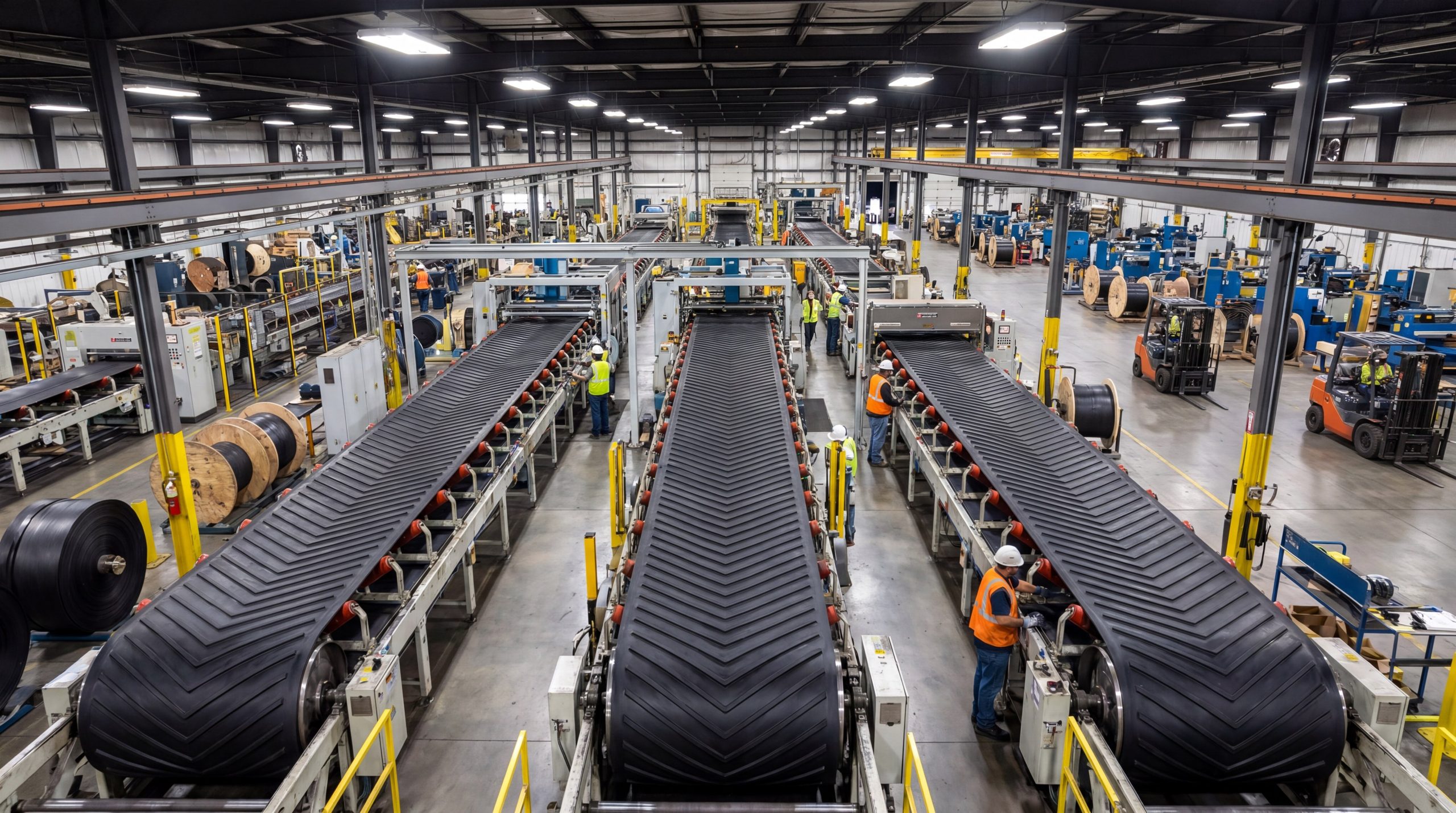
Transporting loose materials on steep conveyor systems can result in serious material rollback, reduced efficiency, and increased operational costs. A professional chevron rubber conveyor belt factory provides specially engineered conveyor belts with precision-molded cleats designed to firmly grip materials during inclined or vertical transport. These high-performance chevron belts help prevent spillage, improve conveying stability, reduce equipment wear, and ensure continuous productivity in demanding industries such as mining, construction, cement, and bulk material handling.
What is a chevron rubber conveyor belt factory?
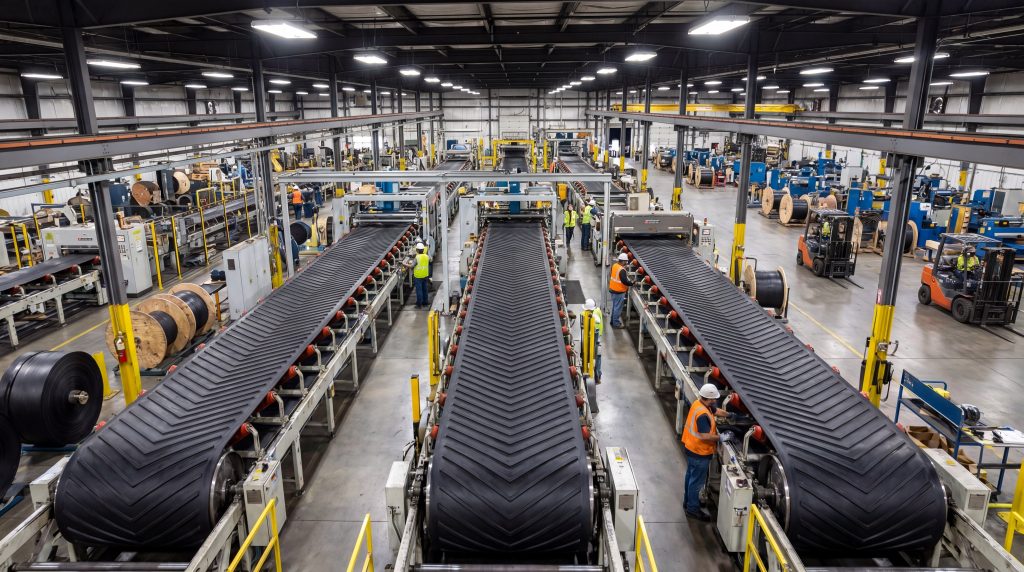
A facility of this type is a specialized manufacturing plant dedicated to producing high-traction, profiled industrial belts. At our chevron rubber conveyor belt factory, we focus on engineering surfaces that prevent material rollback on steep gradients. These belts are essential for any operation requiring an incline angle greater than 18 degrees.
Specialized Design
Think about this:
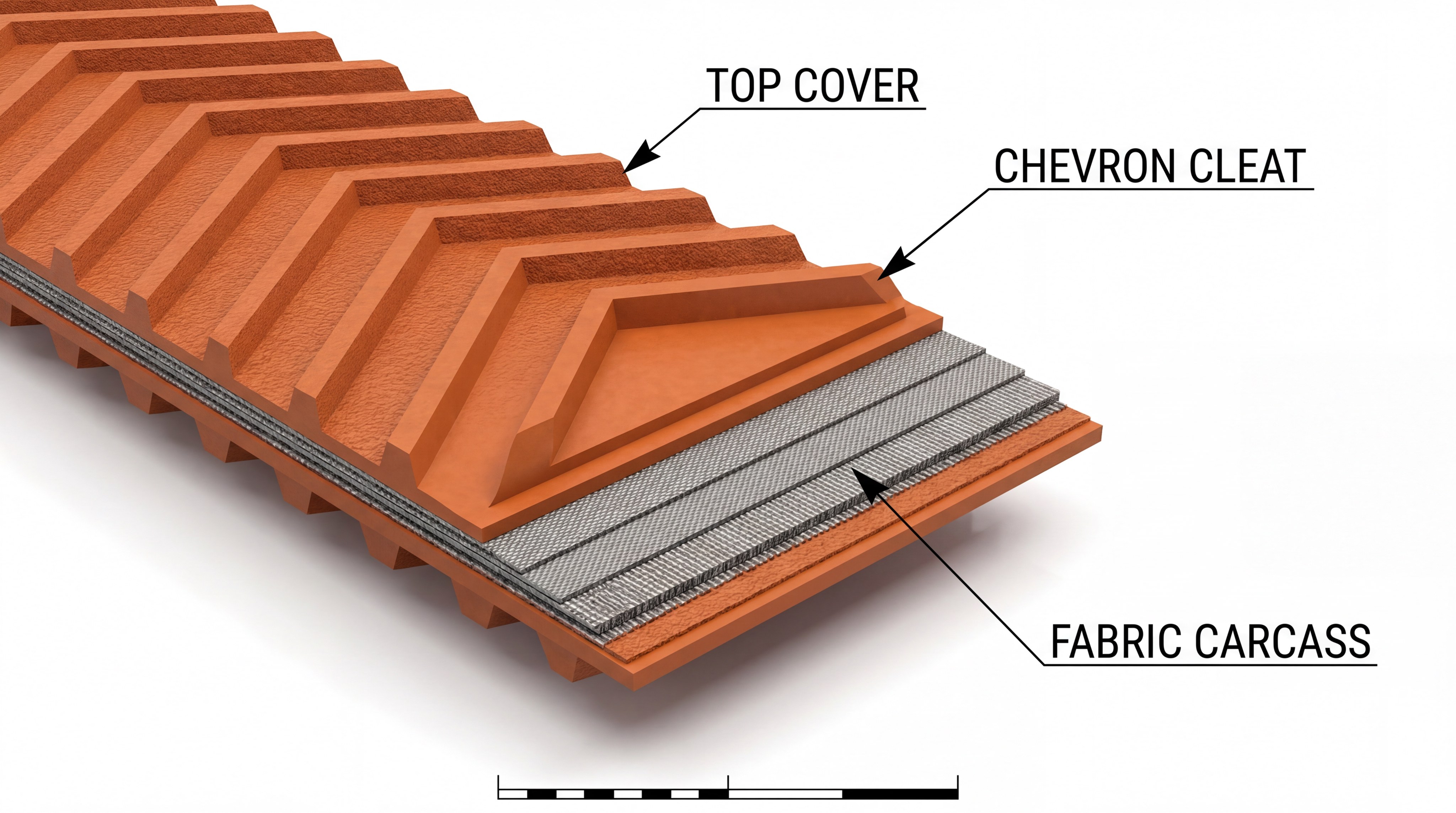
- Cleated profiles are molded directly into the top cover.
- The base belt remains flexible for easy pulley wrapping.
- Multiple textile or steel layers provide internal strength.
Key Takeaway: A specialized factory ensures that the profile and the belt are vulcanized as one unit for maximum durability.
| Component | Description | Benefit | |
|---|---|---|---|
| Top Cover | High-grade rubber compound | Protects the carcass from abrasion | |
| Chevron Cleats | Integrated V-shaped patterns | Increases friction and material grip | |
| Carcass | EP fabric or steel cords | Provides the necessary tensile strength |
The structural analysis shows that integrating the cleats during the initial vulcanization phase significantly reduces the risk of profile detachment.
How does a chevron rubber conveyor belt factory work?
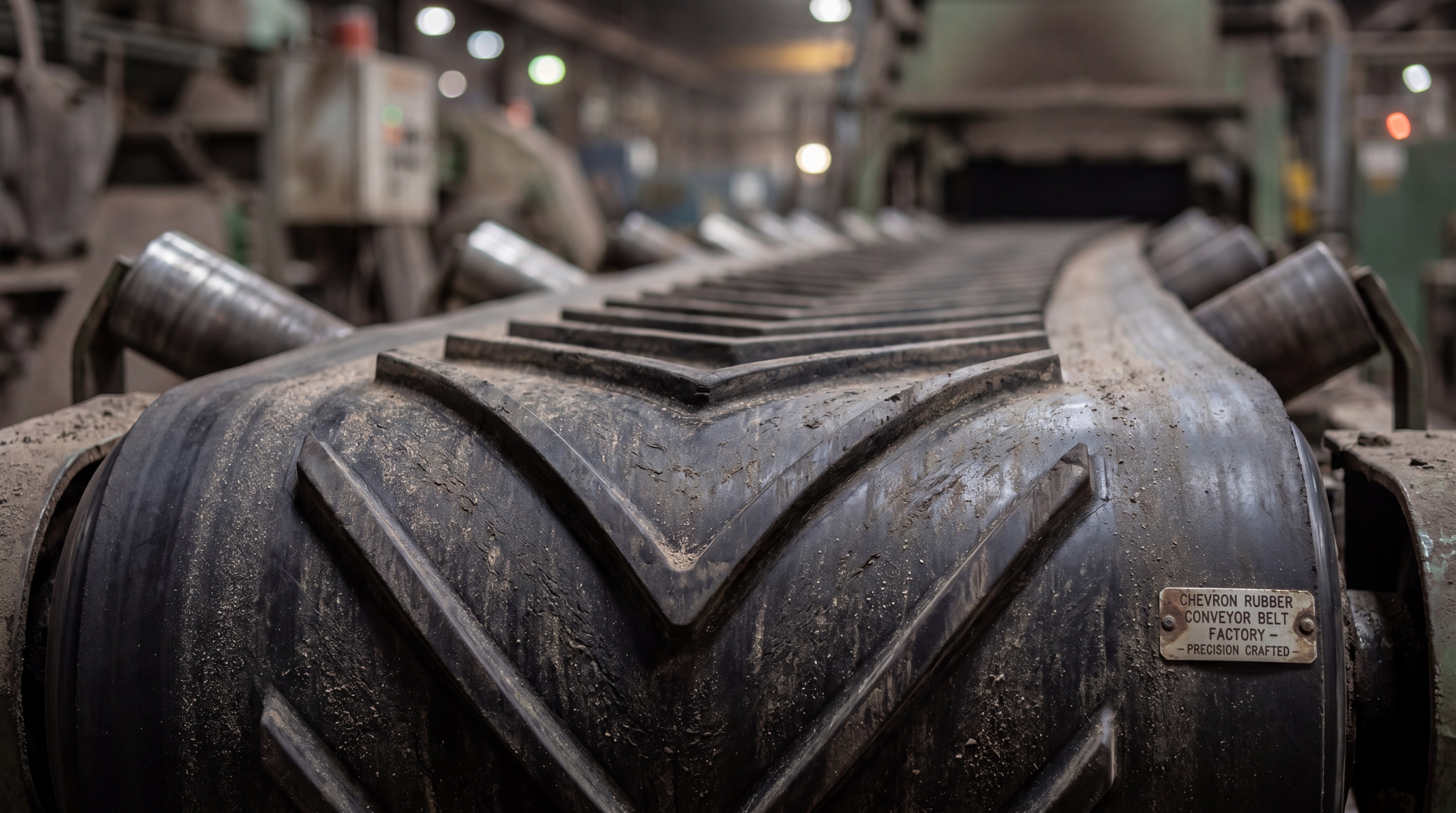
The operation of a chevron rubber conveyor belt factory relies on heat, pressure, and precision molding. Raw rubber compounds are processed through massive vulcanization presses that feature specific “V” or “Y” pattern molds. This process ensures the cleats are an inseparable part of the belt surface rather than being glued on afterward.
The Vulcanization Stage
Here is the deal:
- Unvulcanized rubber is fed into large pattern molds.
- High temperatures soften the rubber to fill every profile detail.
- Intense pressure bonds the rubber to the internal fabric layers.
Key Takeaway: Integrated vulcanization creates a seamless bond that allows the chevron conveyor belt to withstand extreme mechanical stress.
| Process Step | Action | Impact | |
|---|---|---|---|
| Compounding | Mixing rubber with additives | Determines heat or oil resistance | |
| Calendering | Layering rubber onto the fabric | Ensures uniform thickness and strength | |
| Molding | Pressing the chevron pattern | Creates the specific anti-slip geometry |
An analysis of the manufacturing cycle indicates that controlled cooling after vulcanization is critical to maintaining the dimensional stability of the cleats.
Where are products from a chevron rubber conveyor belt factory used?
Belts from a chevron rubber conveyor belt factory are primarily deployed in heavy-duty industries dealing with bulk materials. They are the standard choice for mining, quarrying, and agricultural sectors where space constraints require steep conveyance. Without these specialized profiles, moving sand, grain, or wet aggregate up an incline would be nearly impossible.
Industrial Applications
But wait, there’s more:
- Mining sites use them for transporting coal and ore.
- Agricultural facilities rely on them for grain and fertilizer.
- Construction projects use them to move sand and gravel.
Key Takeaway: These belts serve as the backbone for steep incline solutions across various global industrial landscapes.
| Industry | Material Transported | Incline Capability | |
|---|---|---|---|
| Agriculture | Grains, fertilizer, and seeds | Up to 35 degrees | |
| Mining | Crushed ore, coal, and stone | Up to 45 degrees | |
| Construction | Sand, bark, and wood chips | Excellent high-grip performance |
This table illustrates how specific industry demands dictate the cleat height and pattern used to optimize material throughput.
How is the chevron rubber conveyor belt factory process managed?
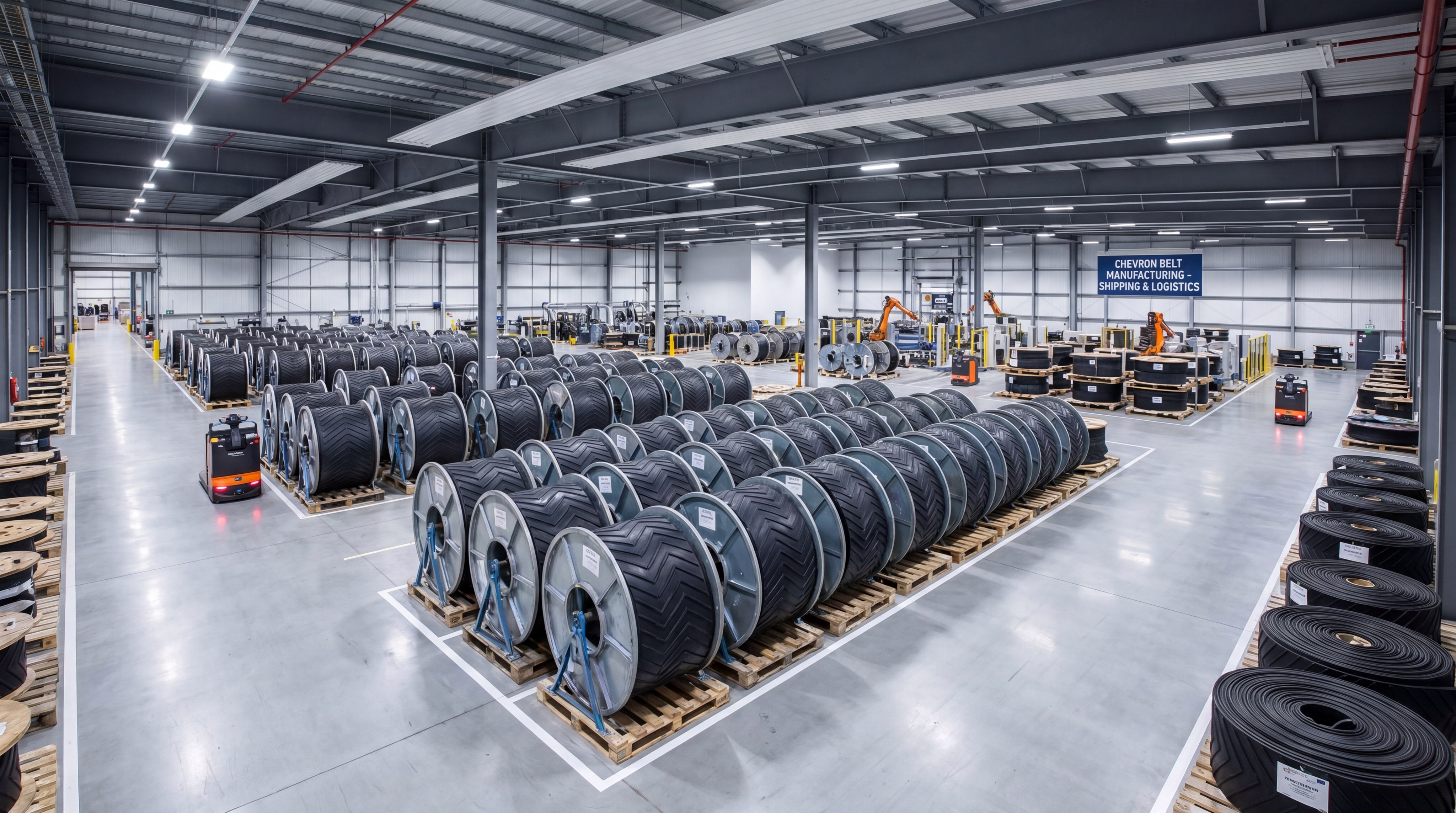
Management at our chevron rubber conveyor belt factory involves strict oversight of material layering and thermal cycles. We track every stage from raw polymer intake to the final cooling phase in our temperature-controlled warehouses. This management ensures that each roll of fabric conveyor belt meets the specific load-bearing requirements of our clients.
Quality Management
Let’s dive deeper:
- Computerized monitoring tracks the vulcanization press pressure.
- Automated systems measure the precision of cleat heights.
- Logistics teams manage massive stockholdings for fast turnaround.
Key Takeaway: Professional management translates to a stable lead time and consistent quality across all belt production runs.
| Management Area | Tool Used | Objective | |
|---|---|---|---|
| Production | Vulcanization press sensors | Maintain heat and pressure consistency | |
| Logistics | ERP inventory tracking | Ensure rapid delivery of stock items | |
| Quality | Tensile strength testers | Verify the durability of the belt carcass |
Efficient management of the manufacturing workflow allows for the production of belts with widths up to 3200 mm without compromising structural integrity.
Why choose a chevron rubber conveyor belt factory for inclines?
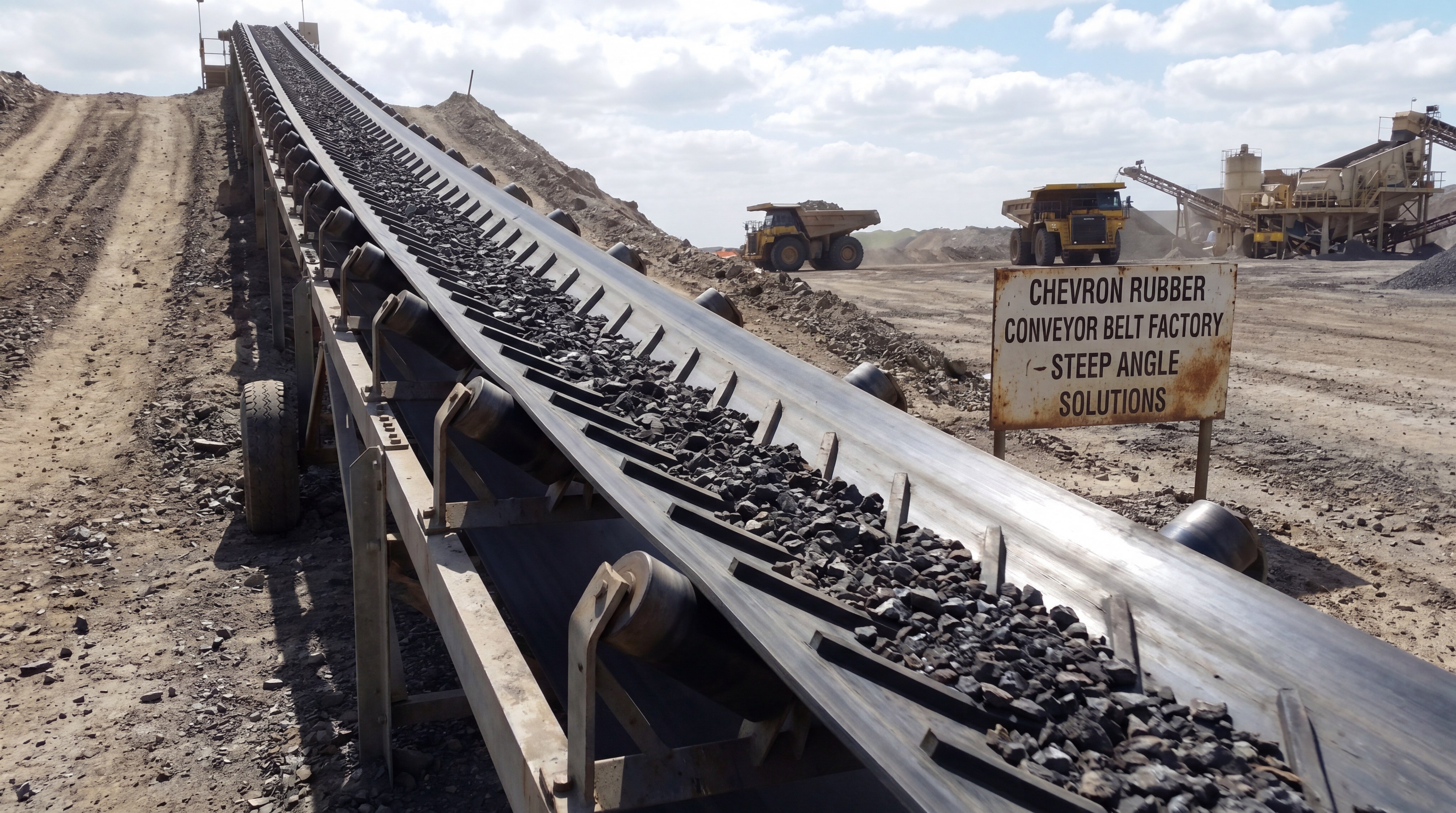
Choosing a professional chevron rubber conveyor belt factory is the only way to ensure your steep incline system functions at peak efficiency. Standard flat belts often fail when the angle of repose is exceeded, leading to material waste and dangerous spills. Our factory designs specialized cleats that act as mini-buckets, carrying bulk solids safely up vertical rises.
Traction Advantages
Check this out:
- Profiles increase the surface area contact with materials.
- Cleats prevent “avalanche” effects during system restarts.
- High-friction compounds are used for oily or wet loads.
Key Takeaway: Professional factory engineering eliminates the unpredictability of material transport on high-angle gradients.
| Feature | Flat Belt Limitation | Chevron Belt Advantage | |
|---|---|---|---|
| Incline Limit | Typically 15-18 degrees | Can exceed 40 degrees | |
| Material Flow | Frequent fallback of solids | Secure material containment | |
| Space Usage | Requires long conveyor runs | Enables compact, steep designs |
Our comparison highlights that opting for a profiled belt reduces the footprint of the conveyor system by allowing for much steeper angles.
What benefits does a chevron rubber conveyor belt factory offer?
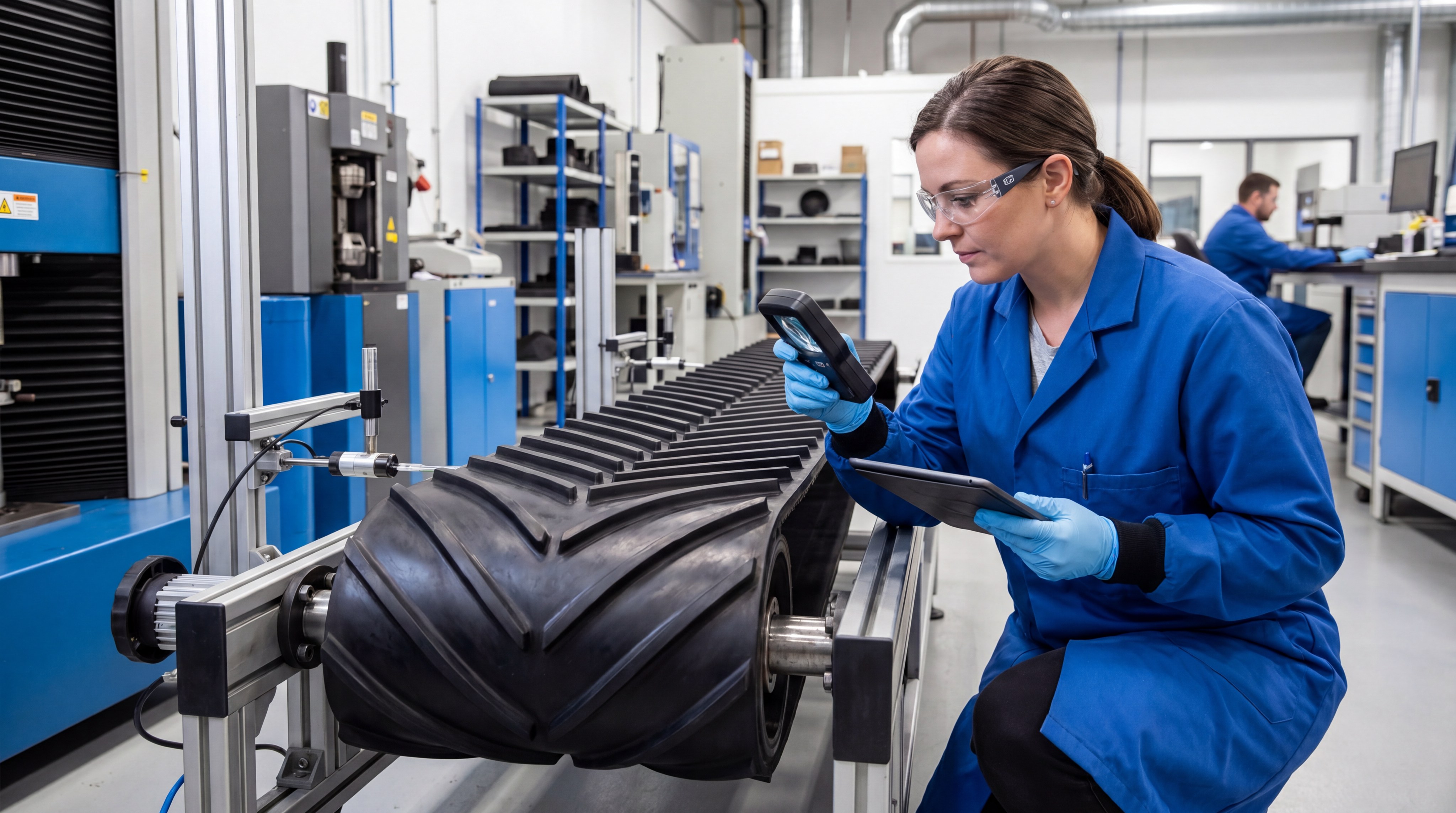
The primary benefit of a chevron rubber conveyor belt factory is the production of space-saving and cost-effective material handling tools. By utilizing our expertise, facilities can design shorter conveyor lengths that reach the same height as much longer flat-belt systems. This leads to lower infrastructure costs and reduced energy consumption due to the shortened conveyor paths.
Operational Gains
It gets even better:
- Eco-friendly rubber constructions are available for sensitive sites.
- Large stockholdings allow for very fast replacement times.
- Integrated cleats require less maintenance than bolted-on alternatives.
Key Takeaway: Investing in factory-molded chevron belts significantly lowers the total cost of ownership over the belt’s lifespan.
| Benefit Category | Specific Advantage | Long-term Impact | |
|---|---|---|---|
| Cost | Reduced system length requirements | Lower capital and maintenance expenditure | |
| Performance | Enhanced grip for wet materials | Higher throughput in all weather | |
| Durability | One-piece molded construction | Zero risk of cleat detachment |
Data analysis confirms that molded-cleat belts last up to three times longer than belts with mechanically attached or glued profiles.
How does a chevron rubber conveyor belt factory ensure quality?
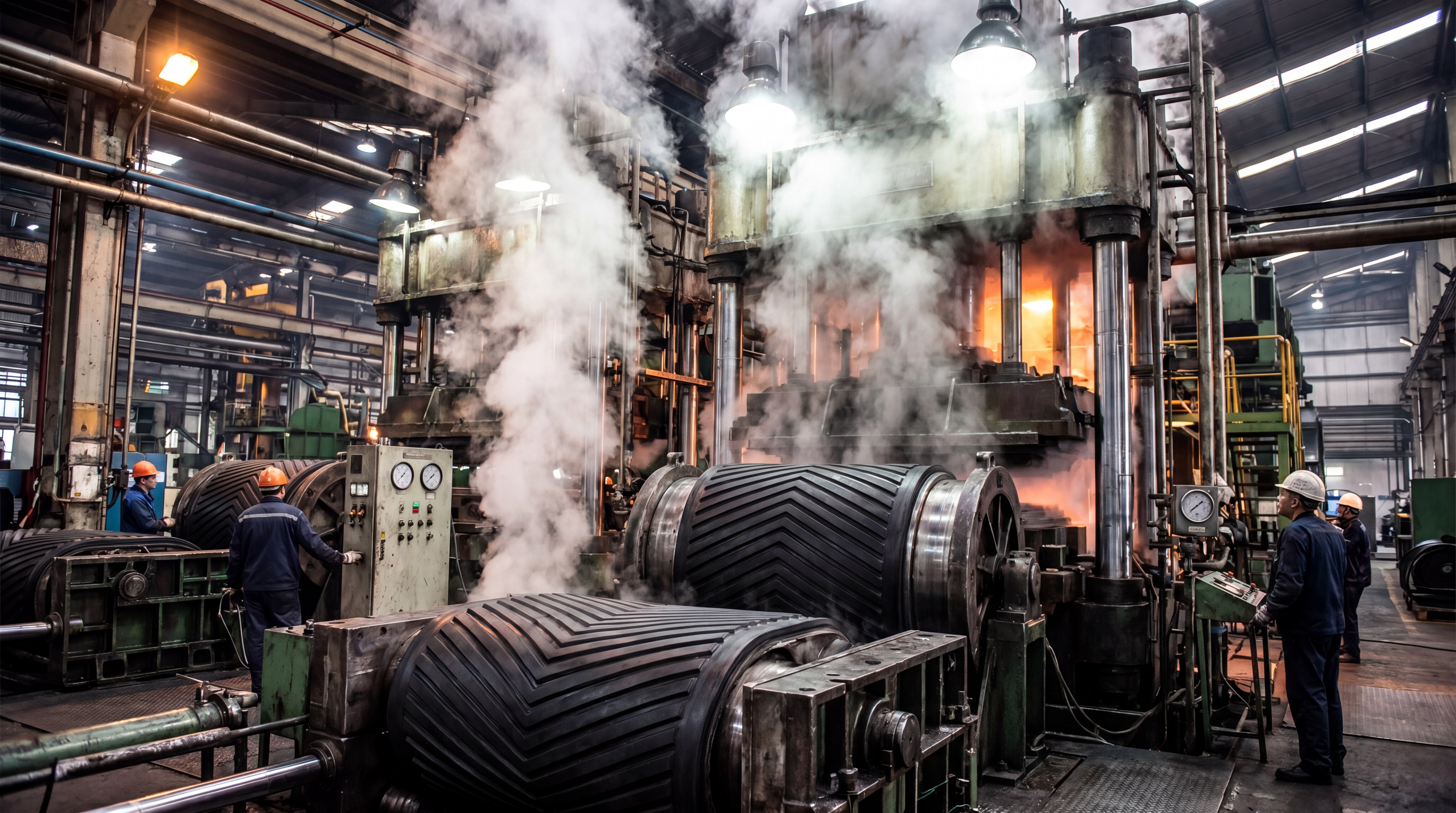
Quality assurance at our chevron rubber conveyor belt factory starts in the laboratory with the testing of cover compounds. Every batch of rubber is verified for abrasion resistance, tensile strength, and aging properties before it ever enters the production line. We also conduct rigorous adhesion tests to ensure the steel cord belt or textile plies are perfectly bonded.
Testing Protocols
Believe it or not:
- Abrasion tests measure material loss under heavy friction.
- Tensile machines pull samples to the point of failure.
- Fire retardant grades undergo strict EN14973 compliance checks.
Key Takeaway: Rigorous testing protocols ensure that every belt leaving the factory carries a 12-month warranty of performance.
| Test Type | Metric Evaluated | Requirement | |
|---|---|---|---|
| Abrasion | Volume loss in cubic mm | Must meet ISO standards for the grade | |
| Adhesion | Force required to separate layers | High bond strength for heavy loads | |
| Heat Resistance | Elasticity after thermal aging | Must remain flexible at high temperatures |
Systematic quality control ensures that the finished product can survive the harshest environments in mining and bulk handling sectors.
What patterns does a chevron rubber conveyor belt factory produce?
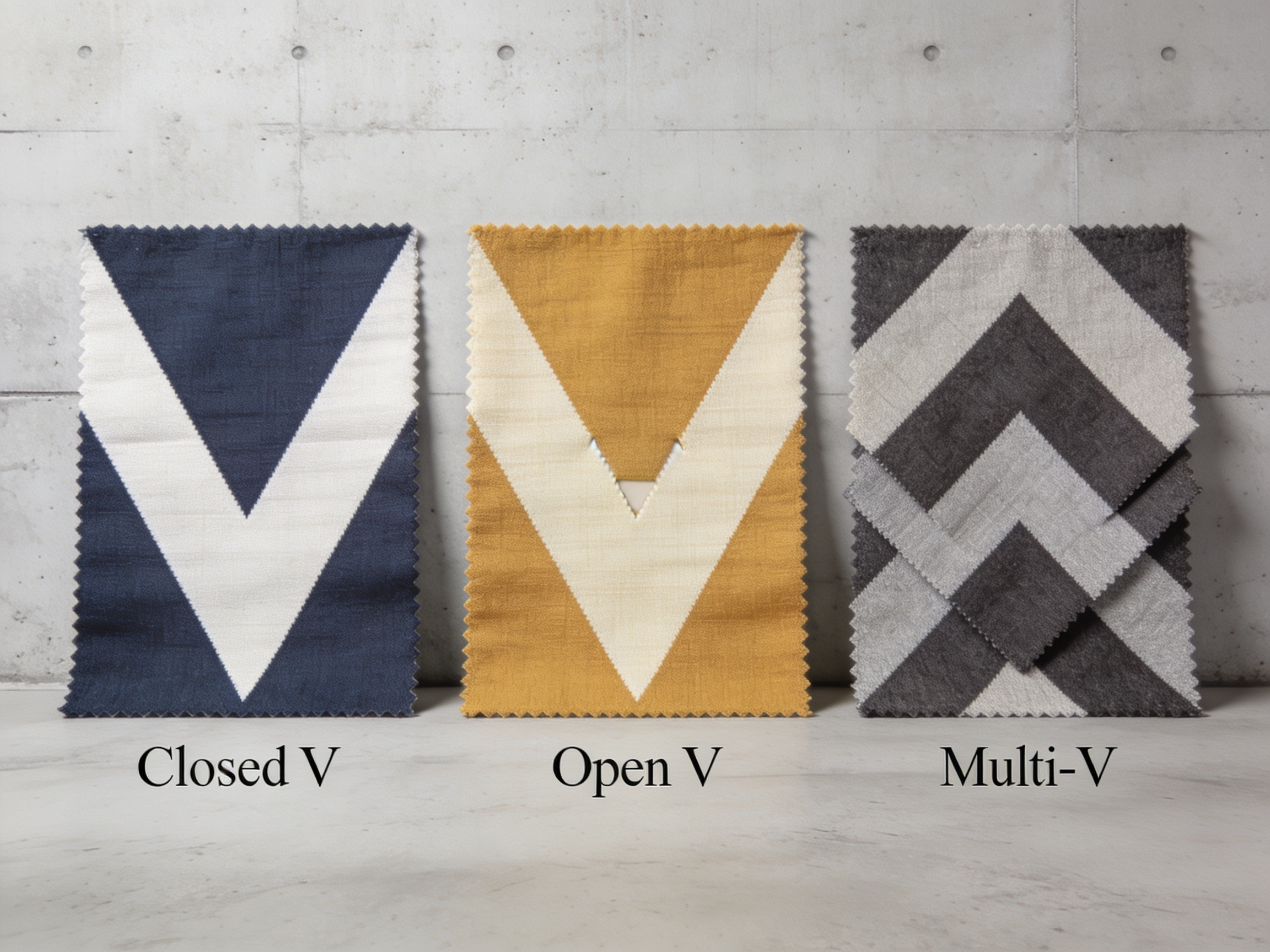
A chevron rubber conveyor belt factory offers various profile geometries to match the specific flow characteristics of different materials. Our catalog includes Open-V, Closed-V, and Multi-V patterns, each designed to optimize the drainage of fluids or the containment of fine particles. Selecting the right pattern is critical for preventing the “backwashing” of slurry or the spillage of dry grains.
Pattern Varieties
The secret is:
- Closed-V: Best for fine materials like sand or small grains.
- Open-V: Allows for liquid drainage in wet applications.
- Multi-V: Provides high-density grip for smaller pulley diameters.
Key Takeaway: Customizing the pattern ensures that the belt is perfectly tuned to the material it is designed to carry.
| Pattern Type | Ideal Material | Key Characteristic | |
|---|---|---|---|
| Open V | Wet sand, fertilizer | Excellent liquid drainage | |
| Closed V | Grain, dry aggregate | Maximum containment of fines | |
| Multi-V | Heavy minerals | High traction density |
This breakdown shows that the geometry of the chevron profile is a strategic choice rather than a simple aesthetic preference.
How does a chevron rubber conveyor belt factory handle installs?
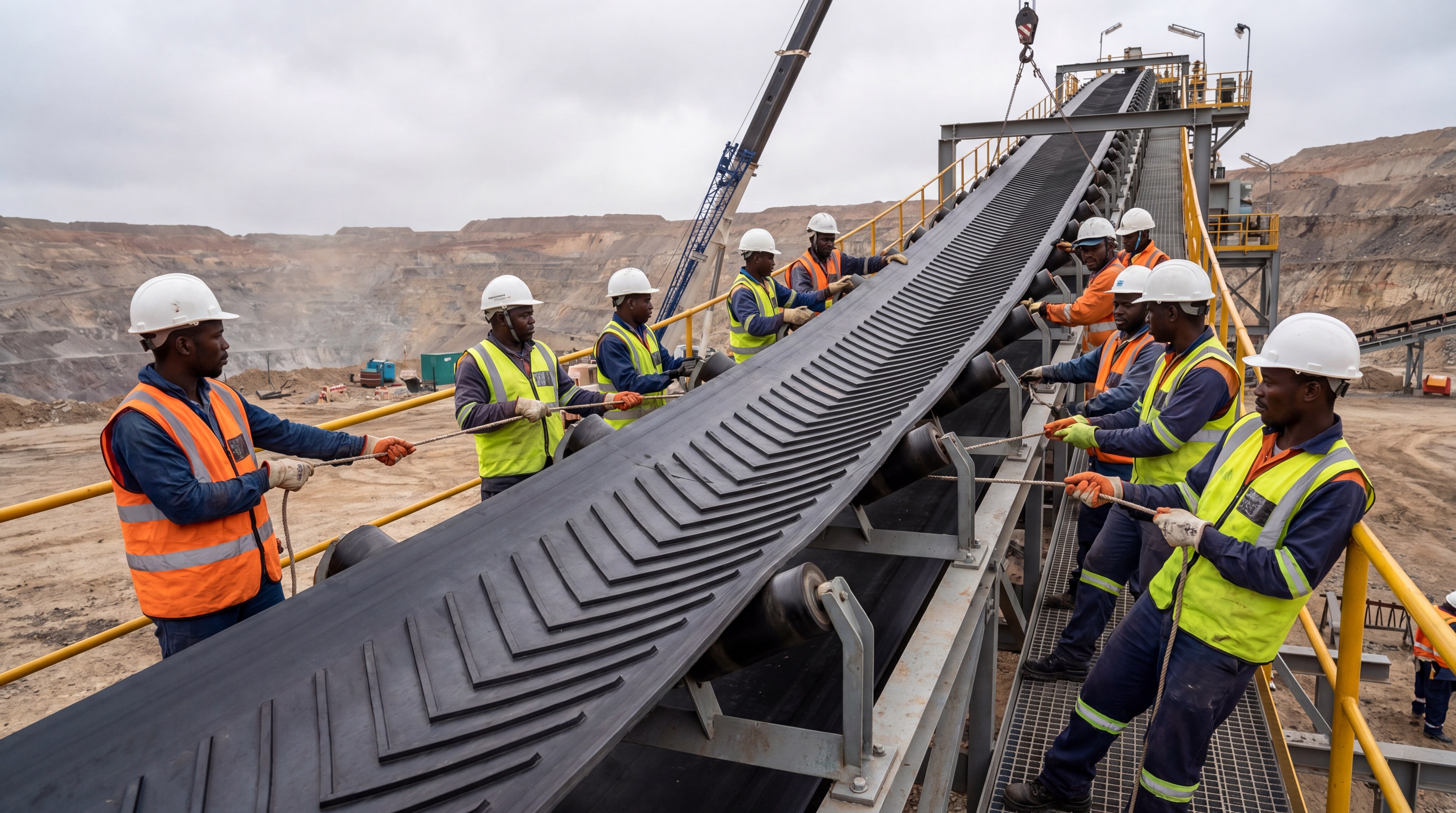
While the chevron rubber conveyor belt factory focuses on manufacturing, we also provide technical guidance for professional installation. Proper splicing is paramount; if the V-patterns are not aligned correctly at the joint, it can cause severe tracking issues and material leakage. We often provide specialized splicing kits and vulcanization tools to ensure the joint is as strong as the rest of the belt.
Installation Precision
Follow this:
- Specialized splicing tools align the chevron profiles perfectly.
- Proper tensioning prevents the belt from slipping on the drive pulley.
- Alignment checks ensure the cleats do not strike the conveyor frame.
Key Takeaway: Professional installation support ensures that the factory-built quality is maintained throughout the system’s operation.
| Install Step | Focus Area | Potential Risk | |
|---|---|---|---|
| Splicing | Pattern alignment at the joint | Off-center tracking and leakage | |
| Tensioning | Proper slack management | Premature wear or pulley slippage | |
| Tracking | Belt path through idlers | Edge damage and profile striking |
Analysis of site failures often reveals that improper installation, rather than belt quality, is the leading cause of premature system downtime.
Can a chevron rubber conveyor belt factory customize compounds?
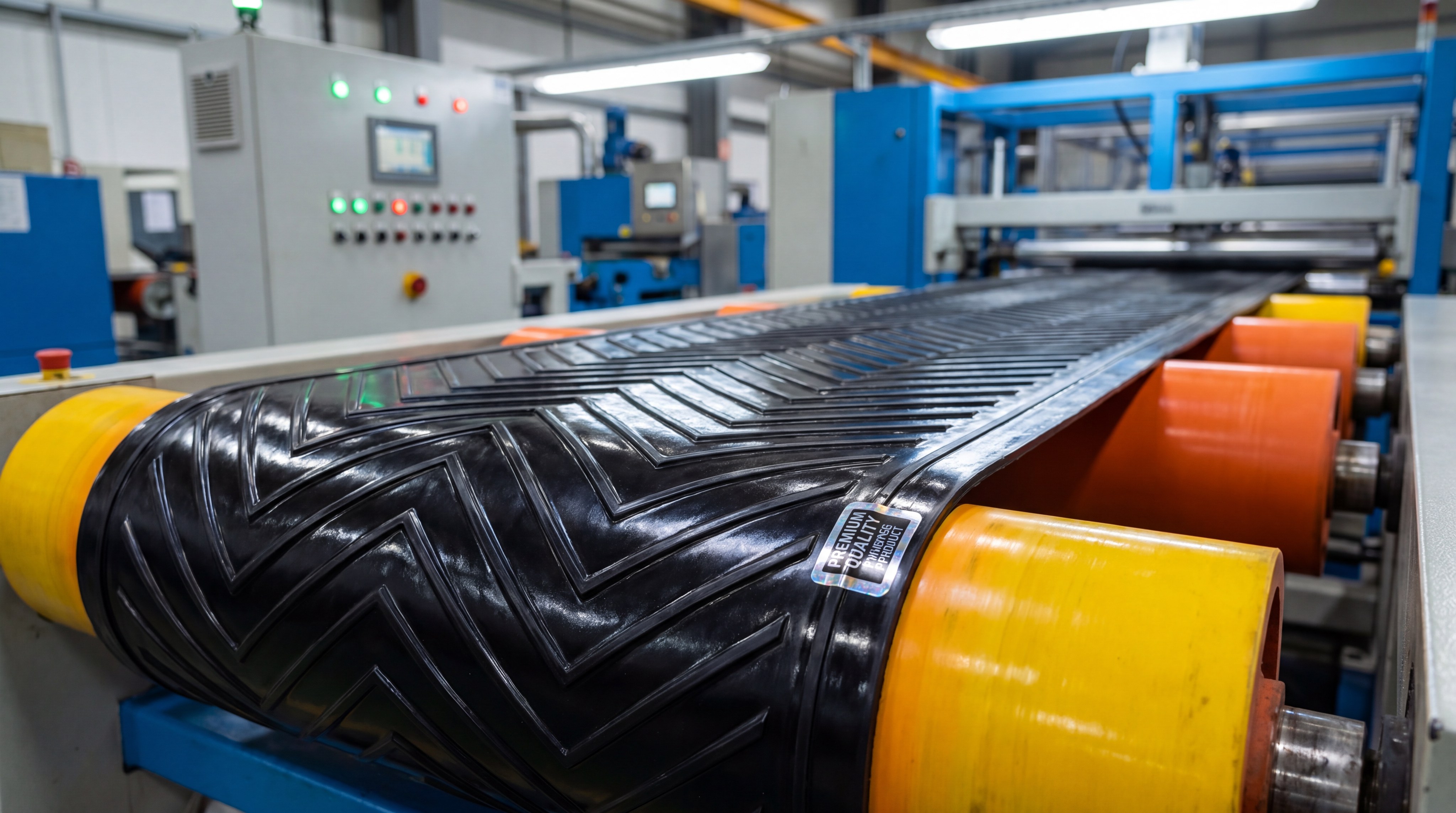
Yes, a chevron rubber conveyor belt factory can engineer specific cover compounds for specialized environments. Whether your application involves high-temperature clinker, oily fertilizers, or underground coal mining requiring flame retardancy, we can adjust the chemical formulation. This level of customization ensures that the belt does not swell, crack, or ignite under extreme industrial conditions.
Rubber Grades
Keep this in mind:
- Grade FR provides fire retardancy for underground safety.
- Grade HR handles heat for cement and power plant ash.
- Grade M is optimized for superior wear and cut resistance.
Key Takeaway: Custom compound engineering allows chevron belts to perform reliably in environments that would destroy standard rubber.
| Compound Grade | Primary Resistance | Typical Use Case | |
|---|---|---|---|
| Grade HR | Heat (up to 200°C) | Cement plants and hot sinter | |
| Grade FR | Fire and static | Underground mining operations | |
| Grade M | Abrasion and cutting | Sharp rocks and glass recycling |
Evaluating these grades confirms that matching the rubber compound to the environmental stressors is the best way to extend belt life.
Frequently Asked Questions
Can I get custom width sizes for chevron belts?Yes, our factory can manufacture specialized widths outside the standard 600 mm to 1000 mm range to fit your unique conveyor frames.
What’s the best way to prevent cleat wear?Selecting a high-abrasion resistance Grade M compound and ensuring proper idler clearance are the most effective ways to extend cleat life.
How do I choose between Open-V and Closed-V patterns?You should choose Open-V if you need to drain water from the load, while Closed-V is superior for containing dry, dusty materials like fine sand.
Can I visit the factory to inspect my order?Our facility in China is open for inspections, allowing you to witness the vulcanization process and the quality control measures firsthand.
What is the standard warranty for these belts?Most professional manufacturers provide a 12-month warranty covering any manufacturing defects or premature profile detachment.
Partner with a manufacturer that understands the complexities of steep angle conveying. Our engineering team is ready to provide a tailored quotation and technical drawing for your next project within 24 hours. To optimize your bulk material handling efficiency, contact us today for expert guidance.