
1. English Description
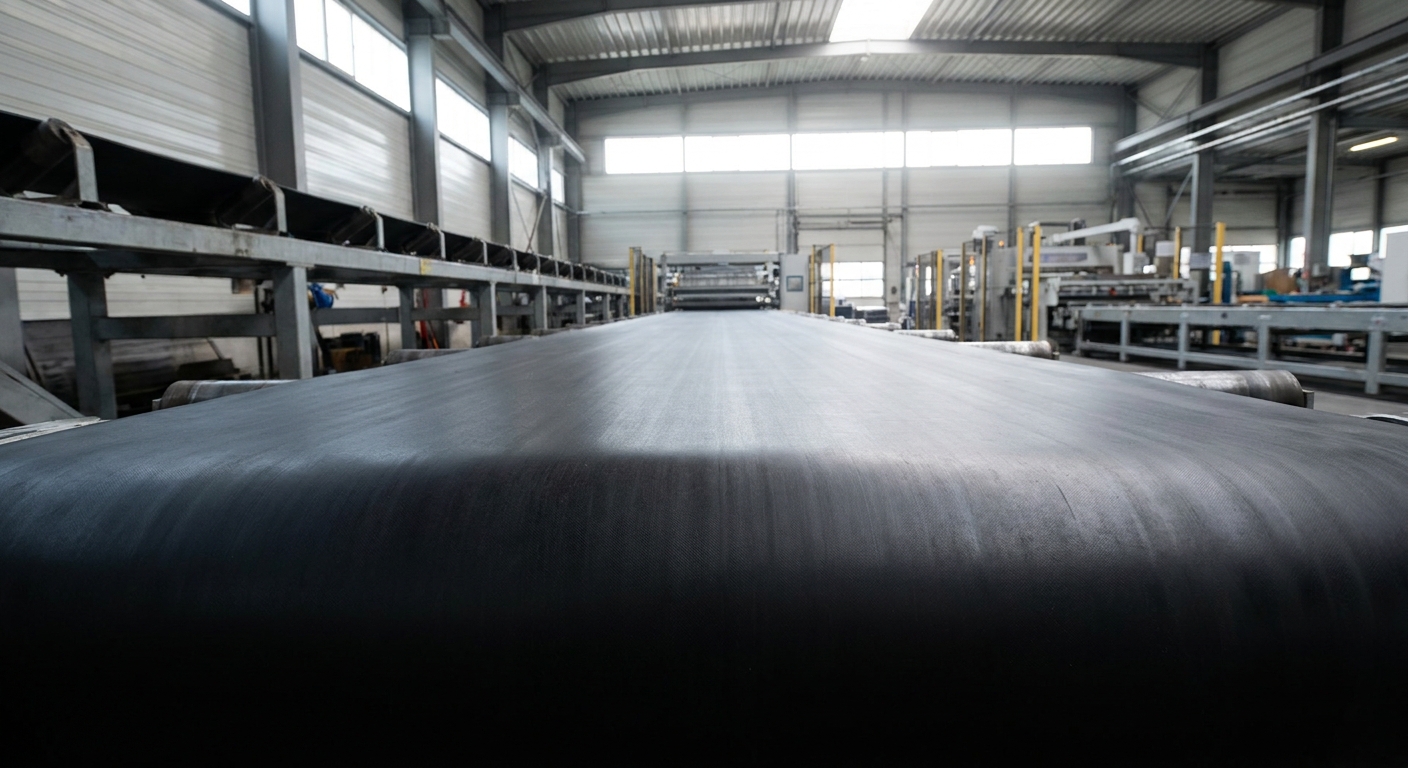
A super wide rubber conveyor belt is a high-capacity material handling solution engineered for large-scale industrial applications that require maximum conveying width, superior load support, and continuous operational reliability. Designed for processes such as plaster casting, slurry transport, dewatering systems, mining, and bulk material handling, these extra-wide conveyor belts provide exceptional carrying capacity while minimizing material spillage and edge overflow. With high-tensile reinforcement and durable rubber compounds, a super wide rubber conveyor belt offers excellent resistance to wear, impact, and splice-related failures. By improving throughput efficiency and reducing maintenance downtime, it helps industrial facilities optimize production performance and lower operating costs.
What is a super wide rubber conveyor belt?
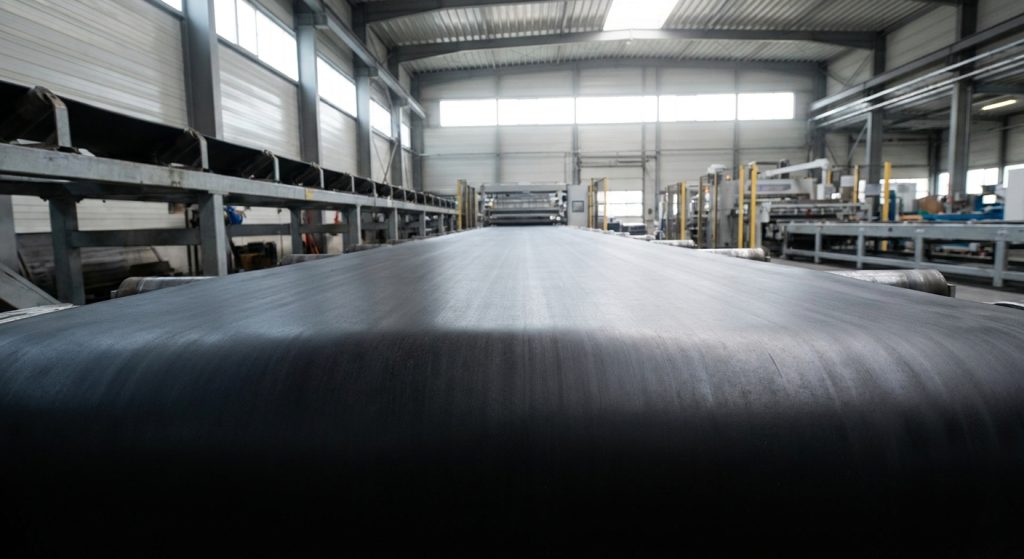
A super wide rubber conveyor belt is an industrially engineered, heavy-duty belt manufactured in widths exceeding standard dimensions to transport extreme volumes of bulk solids. Sourcing a high-quality, seamless carrying format allows you to transport massive, continuous payloads across a single surface. This dimensional advantage completely eliminates the tracking errors and physical split risks common in narrow or multi-splice conveyor setups.
How do dimensional thresholds compare?
Think about it: forcing a high-volume process onto a narrow belt restricts your output and creates daily spillage issues. Custom-fabricated wide formats allow your facility to expand its material flow without running parallel lines. This structural shift allows you to optimize overall factory space and streamline production planning.
What is the core fabric construction?
A wide belt requires a highly balanced internal textile matrix to maintain its shape under tension. Choosing the right reinforcement ensures your belt resists stretching and remains flat.
- Polyester (EP) Fabrics: Provide excellent dimensional stability and low longitudinal stretch.
- Nylon (NN) Fabrics: Offer superior impact absorption and outstanding flexibility.
- Steel Cord Carcasses: Deliver the ultimate tensile strength for extra-long bulk routes.
Key Takeaway: You can dramatically scale up your plant’s hourly production volume and reduce structural strain by choosing a wide-span layout tailored to your specific load profiles.
| Width Range | Reinforcement Type | Primary Application | |
|---|---|---|---|
| 2400mm – 3200mm | EP / NN Textile | Heavy casting & bulk mining | |
| 3200mm – 6800mm | Steel Cord / EP | Vacuum filtration & overland transit |
Selecting the appropriate dimensional and carcass specifications ensures optimal tension distribution across the wide face.
Is a super wide rubber conveyor belt for casting?
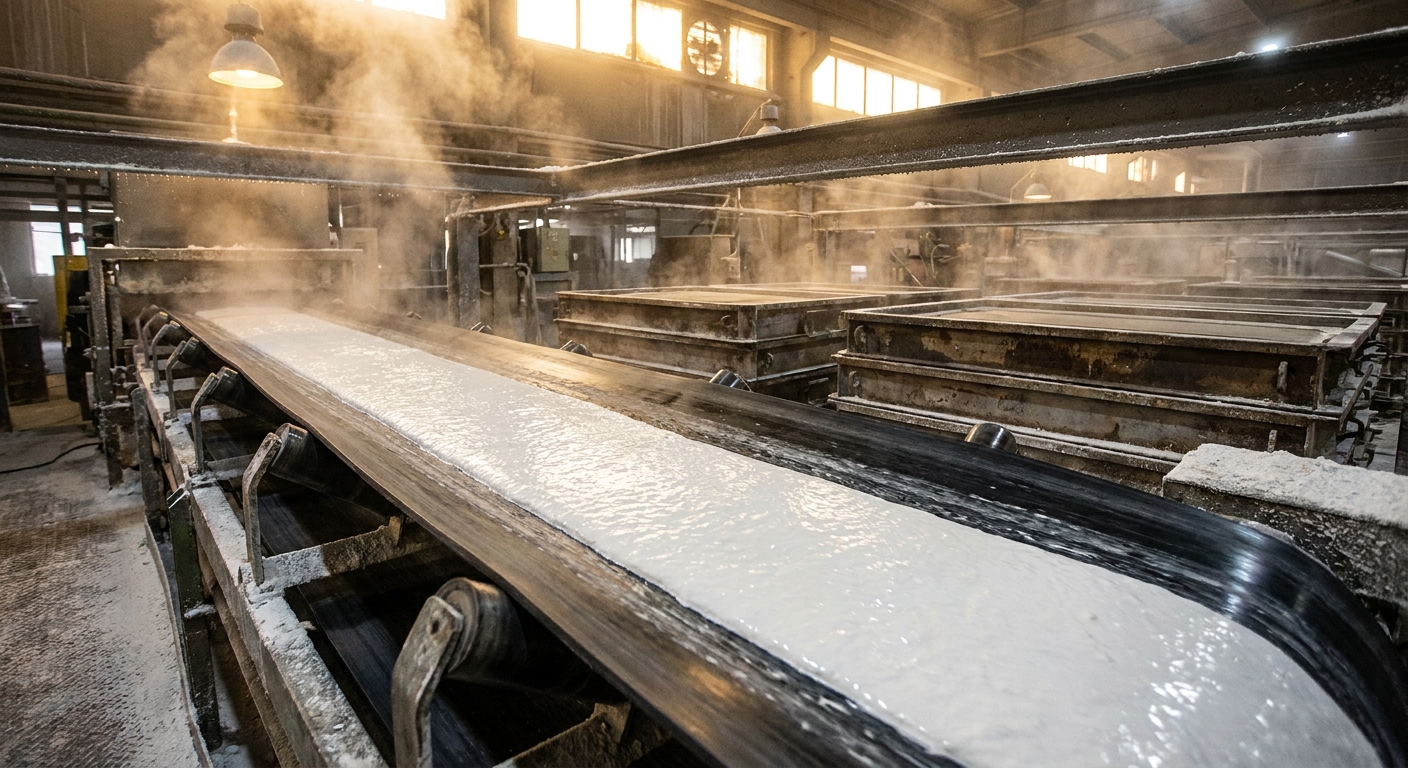
Yes, a super wide rubber conveyor belt is highly suited for plaster casting applications because it provides the vast, stable surface area required to support heavy molds and prevent wet slurry from spilling over the edges. Utilizing this heavy-duty system allows your casting production line to run continuously without the vibration or alignment shifts that ruin sensitive plaster molds. It keeps your plant clean and efficient by containing all waste safely on the belt cover.
How does it stabilize mold transport?
Here is the deal: wet plaster molds are highly sensitive to sudden movements and structural vibrations during the curing phase. A flat, wide carrying surface keeps your molds level and prevents product defects. This horizontal stability allows you to preserve complex casting profiles without risk of distortion.
Can it survive highly abrasive casting slips?
Dry plaster dust and wet chemical slips are highly abrasive and can quickly wear down low-grade rubber. Opting for a premium wear-resistant cover grade ensures long-term durability.
- Abrasion Resistance: Protects the belt from the scratching action of casting aggregates.
- Moisture Barriers: Prevent water and chemical additives from rotting the core.
- Easy-to-Clean Cover: Stops wet plaster buildup from creating tracking errors.
Key Takeaway: You can safeguard your delicate plaster casting molds from structural fractures and eliminate raw material waste by transitioning to an extra-wide, flat-bed layout.
| Casting Challenge | Standard Belt Risk | Wide Rubber Belt Solution | |
|---|---|---|---|
| Mold vibration | Slurry spill & cracked molds | Perfectly flat, vibration-free bed | |
| Slip abrasion | Rapid cover wear & tearing | Highly wear-resistant rubber grades |
Protecting your casting system against mold instability and material abrasion directly translates into superior product quality.
How does a super wide rubber conveyor belt work?
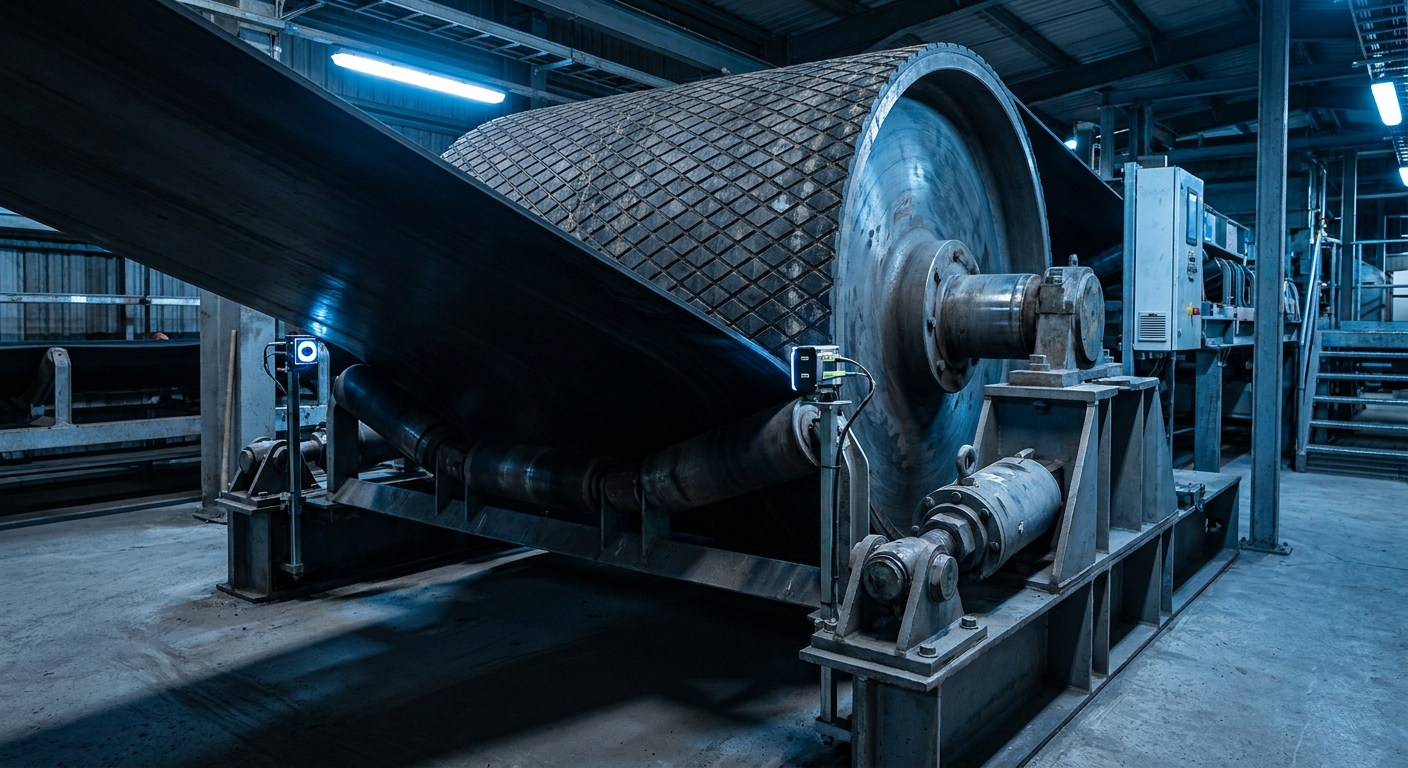
A super wide rubber conveyor belt works by distributing high-tonnage materials across a wide horizontal surface, utilizing balanced drive pulleys and advanced tracking systems to maintain stable alignment under maximum tension. Operating this heavy-duty system requires precise tension controls to prevent uneven elongation across its massive width. It relies on symmetrical pulling forces to ensure a long operational lifespan.
How is lateral tension balanced?
The best part? Advanced multi-ply fabrics distribute tension evenly across the entire surface of the belt. This prevents the belt from sagging in the center or slipping off the drive rollers. Proper lateral balance ensures that the belt surface remains flat under heavy loads.
What drives the low-friction bottom?
Sliding a wide rubber belt across a long conveyor bed requires massive motor power if the friction is too high. Selecting a low-friction fabric underside solves this energy challenge.
- Bare-Back Undersides: Minimize sliding resistance on steel support beds.
- Dual-Drive Systems: Maximize pulley grip without requiring excessive belt tension.
- Self-Cleaning Rollers: Prevent debris from packing under the belt surface.
Key Takeaway: You can lower your plant’s power bills and reduce mechanical strain on your conveyor motors by choosing a low-friction, bare-back belt design.
| Mechanical Component | Specific Function | Performance Result | |
|---|---|---|---|
| Crowned Pulleys | Automatic self-centering | Zero edge wear and tear | |
| Bare-Back Underside | Reduces sliding friction | Lower energy consumption |
Maintaining equal tension across the entire width of the belt is the key to preventing mistracking and edge damage.
Why buy a spliceless super wide rubber conveyor belt?
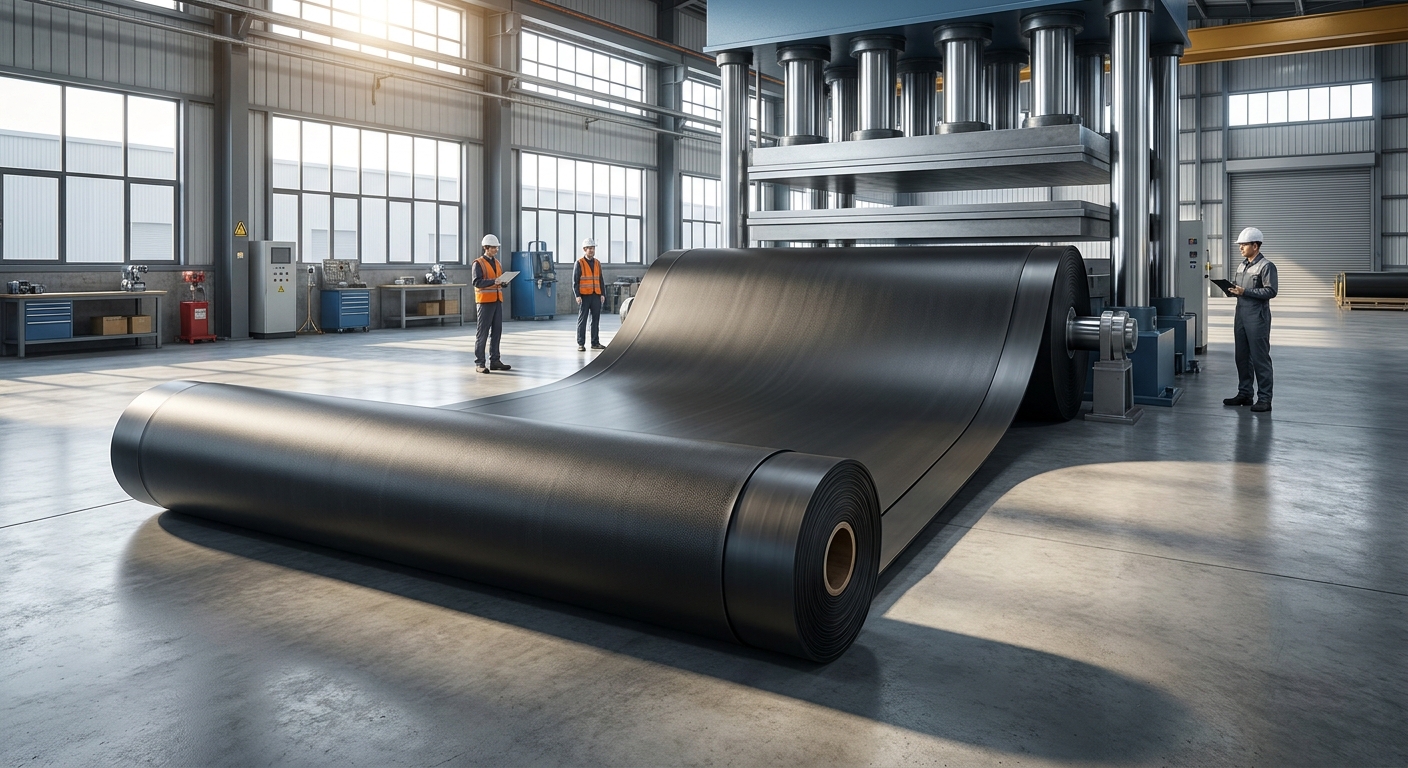
You should buy a spliceless super wide rubber conveyor belt to completely eliminate joint failures and ensure a perfectly smooth carrying surface across your entire casting operation. A spliceless, one-piece vulcanized design distributes tensile stress uniformly, removing the weak points common in traditional spliced configurations. This ensures your casting lines remain continuous and worry-free.
Why do traditional splices fail?
What does this mean for you? Mechanical joints and manual splices are the primary failure points on heavy-duty conveyors. Eliminating these seams prevents unexpected breakdowns and keeps your casting line running. This structural integrity guarantees that moisture cannot seep into the inner plies to cause rot.
What are the benefits of a smooth surface?
A seamless rubber surface allows your scrapers to clean the belt perfectly without snagging or leaving residue. This keeps your production line clean and efficient.
- Perfect Cleaning: Scrapers glide smoothly over the jointless surface.
- No Material Traps: Prevents wet plaster or dry dust from settling in crevices.
- Quiet Operation: Reduces noise and vibration across the conveyor rollers.
Key Takeaway: You can secure a virtually maintenance-free conveying process and protect your material scrapers from wear by investing in a seamless, one-piece molded design.
| Belt Type | Joint Strength | Lifetime Risk of Failure | Cleaning Efficiency | |
|---|---|---|---|---|
| Spliceless Vulcanized | 100% (seamless) | Negligible | Excellent (smooth scraper) | |
| Spliced / Jointed | 60% – 80% | High (especially in moisture) | Poor (scraper catches) |
Eliminating joint vulnerabilities from your conveyor path guarantees longer runtimes and lower repair costs.
What reinforces a super wide rubber conveyor belt?
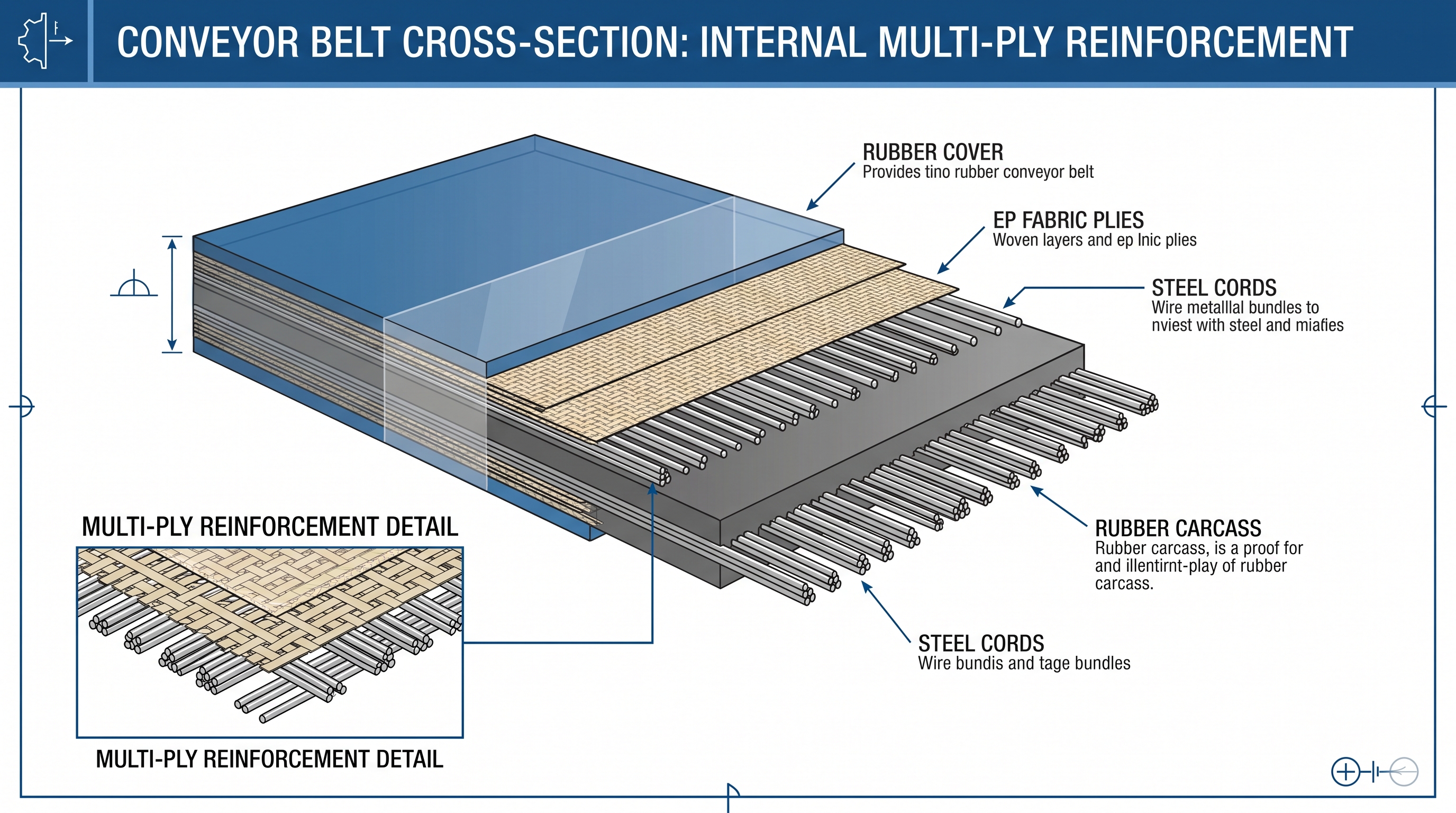
A super wide rubber conveyor belt is reinforced with multi-ply synthetic fabrics or high-tensile steel cords to provide the structural strength needed to support high-tonnage materials over long spans. Sourcing a heavy-duty system with custom fabric plies ensures minimal longitudinal stretching under heavy loads. This maintains the belt’s overall flatness and stability during high-volume operations.
How does EP fabric compare to NN?
Believe it or not: the internal carcass is the actual backbone of your belt’s load-carrying capacity. Choosing between Polyester (EP) and Nylon (NN) depends on your specific tension and elasticity needs. Correct carcass selection prevents premature elongation and mechanical failure.
When are steel cords necessary?
For extremely long spans and high-tension systems, steel cords outperform textile plies. They provide unmatched strength and reduce the need for long take-up systems.
- Ultimate Strength: Galvanized wire cords support the heaviest bulk loads.
- Zero Elongation: Prevents the belt from stretching out over long distances.
- High Damage Resistance: Resists severe punctures from falling rocks.
Key Takeaway: You can ensure consistent belt tension and avoid frequent adjustments by matching your load requirements to either polyester plies or high-strength steel cords.
| Carcass Material | Longitudinal Elongation | Best For | |
|---|---|---|---|
| EP (Polyester) | ≤ 2.0% | High-stability casting & medium spans | |
| NN (Nylon) | ≤ 4.0% | Heavy impact dumping & short spans | |
| Steel Cord | ≤ 0.2% | Long-haul mining & high-tension lines |
Matching the internal reinforcement to your system’s load profile prevents excessive belt stretching and tracking errors.
How does a super wide rubber conveyor belt filter?
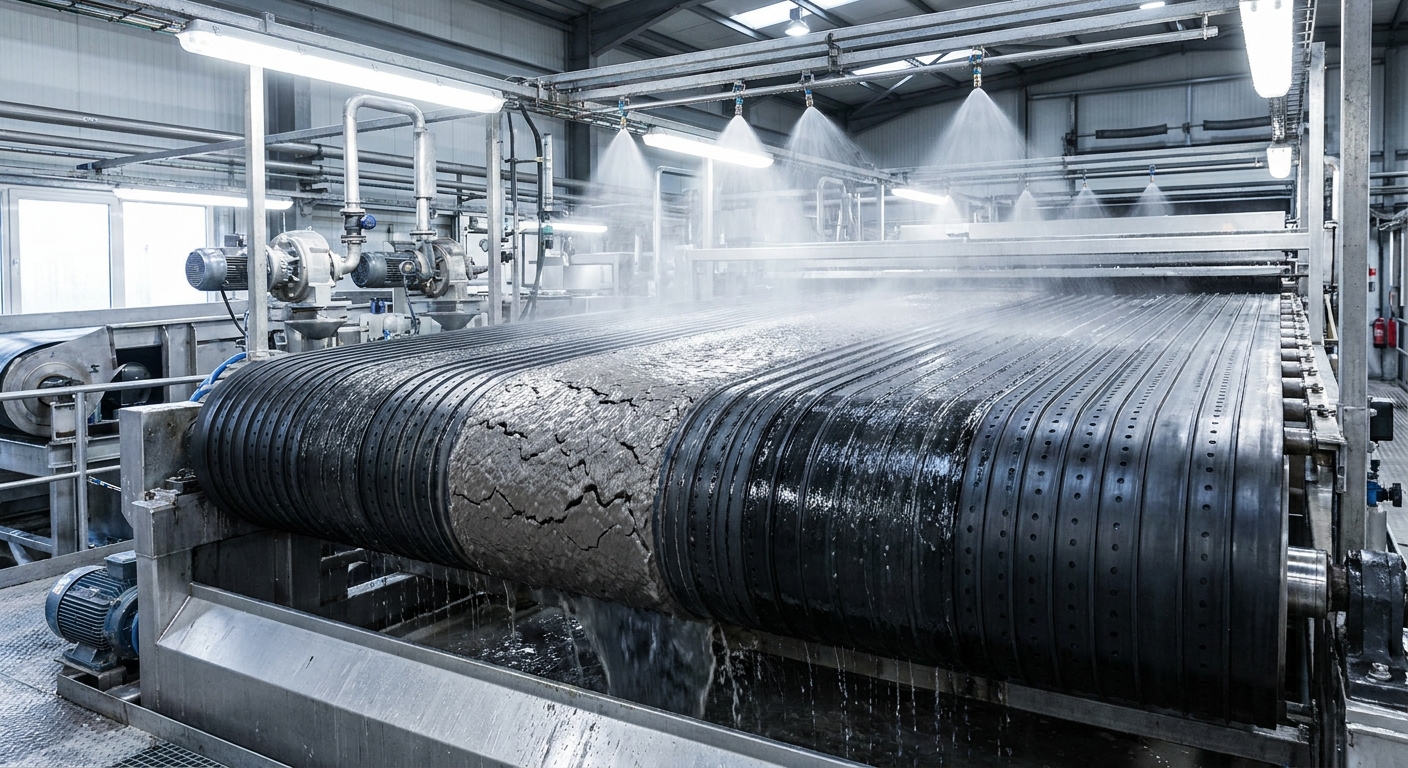
A super wide rubber conveyor belt filters slurries and wet mixtures by running across vacuum dewatering boxes, utilizing custom-grooved top covers and drainage holes to quickly draw out moisture. Specifying a vacuum-grade system allows you to dewater mineral concentrates, plaster slurries, or chemical compounds in a single, continuous process. It is the gold standard for high-capacity liquid separation.
How do drainage grooves work?
As you can imagine: fast dewatering requires a precise pattern of surface grooves to route water away from the solids. A custom-engineered top cover ensures rapid, efficient liquid separation. This active drainage design accelerates overall cycle times.
What chemical resistances are needed?
Filtering slurries often involves exposure to corrosive chemical additives and high temperatures. Your belt’s rubber compound must be formulated to withstand these harsh elements.
- Acid-Alkali Resistance: Prevents chemical wear from corrosive agents.
- High-Heat Stability: EPDM compounds resist degradation from hot slurries.
- Anti-Clogging Design: Prevents fine particles from blocking the drainage path.
Key Takeaway: You can automate liquid-solid separation and drastically speed up plaster curing times by deploying a custom-grooved vacuum filtration belt.
| Filter Belt Feature | Design Style | Operational Benefit | |
|---|---|---|---|
| Center Grooves | V-shape / U-shape | Rapid liquid routing | |
| Specialty Polymer | EPDM / SBR | Corrosion & chemical survival |
An optimized drainage design speeds up dewatering times and ensures a consistent moisture level in your final product.
What covers a super wide rubber conveyor belt?
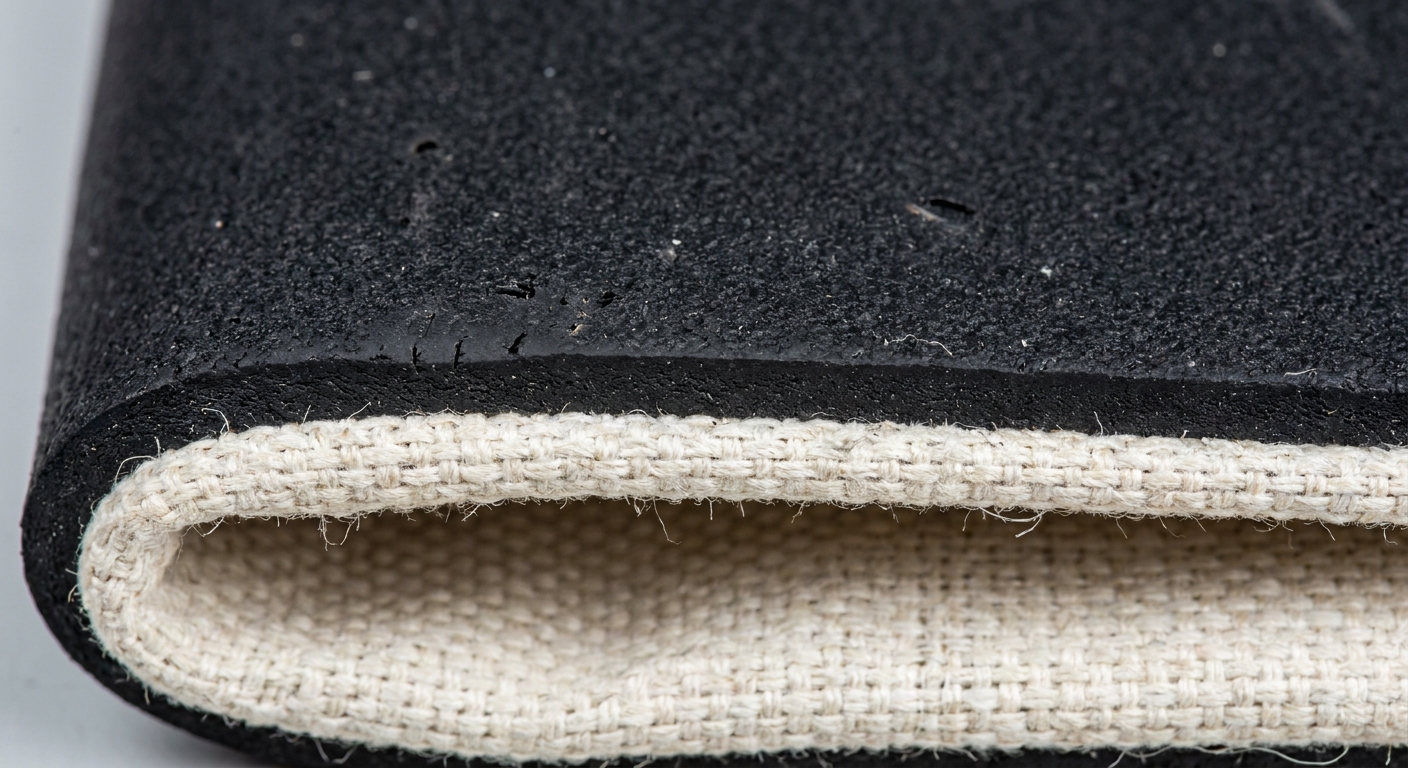
A super wide rubber conveyor belt is covered with high-grade, wear-resistant rubber compounds designed to shield the internal fabric plies from abrasion, heat, and physical impacts. Selecting the right rubber compound directly determines its resistance to cut, gouge, and wear damage. This ensures the belt can survive the most demanding physical environments.
What do rubber cover grades mean?
Think about it: matching the cover grade to your material is the only way to prevent premature wear. International standards define the exact performance level of different rubber compounds. Choosing the wrong grade leads to rapid cover loss.
Why use a bare back bottom?
Running a wide rubber cover over a flat conveyor bed creates high friction and wastes energy. A raw fabric underside allows the belt to slide smoothly with minimal resistance.
- Low Sliding Resistance: Raw fabric glides easily over steel beds.
- Prevents Sticking: Stops wet dust and residue from gumming up the bed.
- Saves Power: Reduces motor wear and energy consumption.
Key Takeaway: You can prolong your belt’s service life and lower replacement costs by choosing a cover grade that matches your material’s abrasiveness.
| Rubber Cover Grade | Tensile Strength | Abrasion Loss (Max) | Primary Material | |
|---|---|---|---|---|
| DIN Grade X | 25 MPa | 120 mm³ | Heavy ores, sharp rocks | |
| DIN Grade Y | 20 MPa | 150 mm³ | Limestone, sand, gravel | |
| DIN Grade W | 18 MPa | 90 mm³ | Fine minerals, glass cullet |
Matching your cover grade to your material’s physical traits is the most effective way to prevent premature wear.
What are super wide rubber conveyor belt benefits?
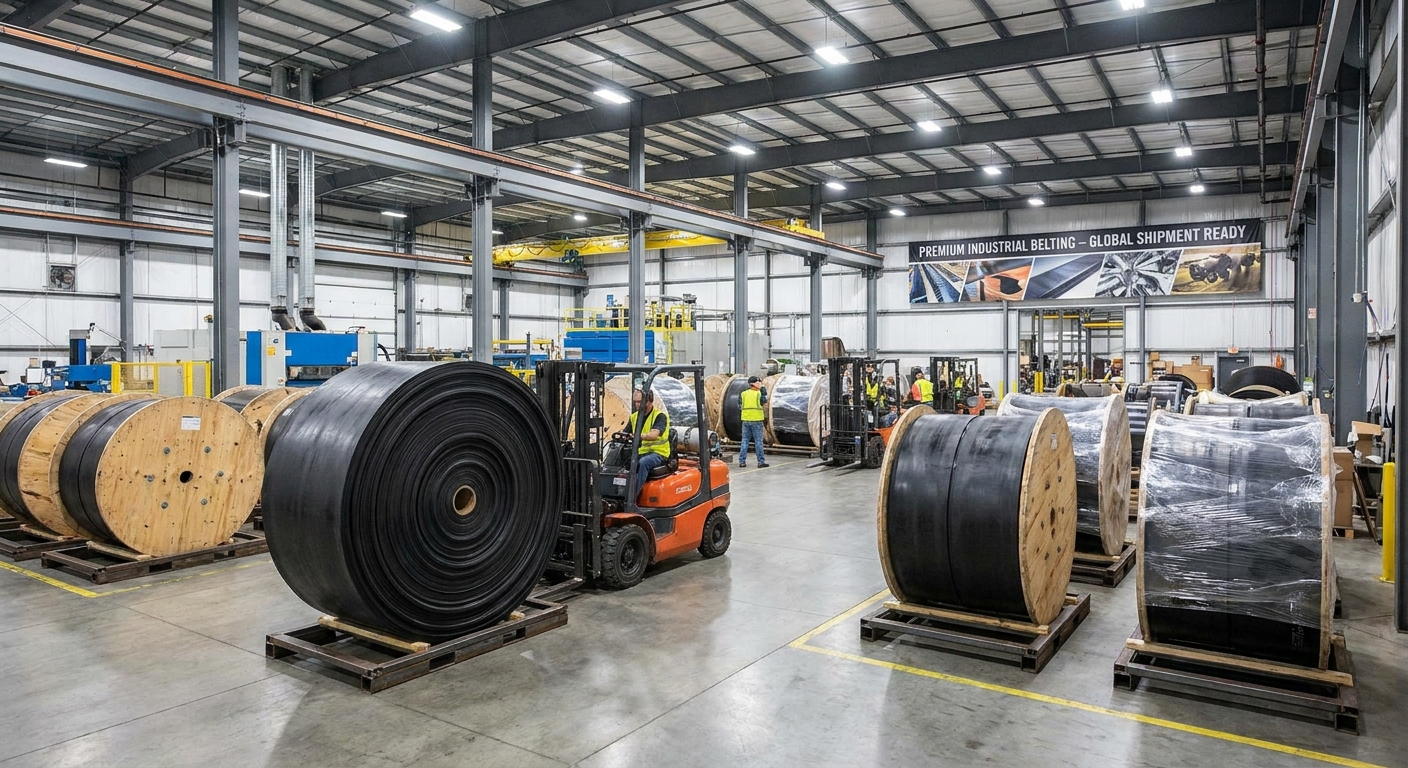
The primary benefits of a super wide rubber conveyor belt include unmatched volumetric carrying capacity, zero material edge spillage, and a highly streamlined conveyor framework that reduces maintenance costs. Upgrading your facility to this high-capacity setup allows you to replace multiple narrow lines with a single, highly efficient material transport system. This consolidated layout significantly increases overall plant productivity.
How does it reduce spillage?
The best part? An extra-wide flat carrying zone keeps your payload securely centered on the belt. This prevents dry plaster dust and wet mixtures from slipping over the edges. It ensures your walkways remain clean and completely hazard-free.
What are the energy savings?
Running a single wide conveyor is far more energy-efficient than operating parallel narrow systems. You can consolidate your drive systems and reduce overall power draw.
- Fewer Motors: Cuts the number of gearboxes and electrical lines.
- Lower Operating Speeds: Moves the same volume at slower, safer speeds.
- Optimized Carcass: Reduces rolling resistance and motor strain.
Key Takeaway: You can boost your daily plant throughput while cutting maintenance labor and electricity costs by choosing a centralized wide-belt system.
| Performance Metric | Narrow Multi-Line System | Single Wide Belt System | |
|---|---|---|---|
| Spillage Risk | High (constant cleanups) | Negligible (centered payload) | |
| Energy Demand | High (multiple drives) | Low (single optimized drive) |
Consolidating your bulk transport into a single, wide-span layout simplifies operations and improves plant profitability.
How to choose a super wide rubber conveyor belt?
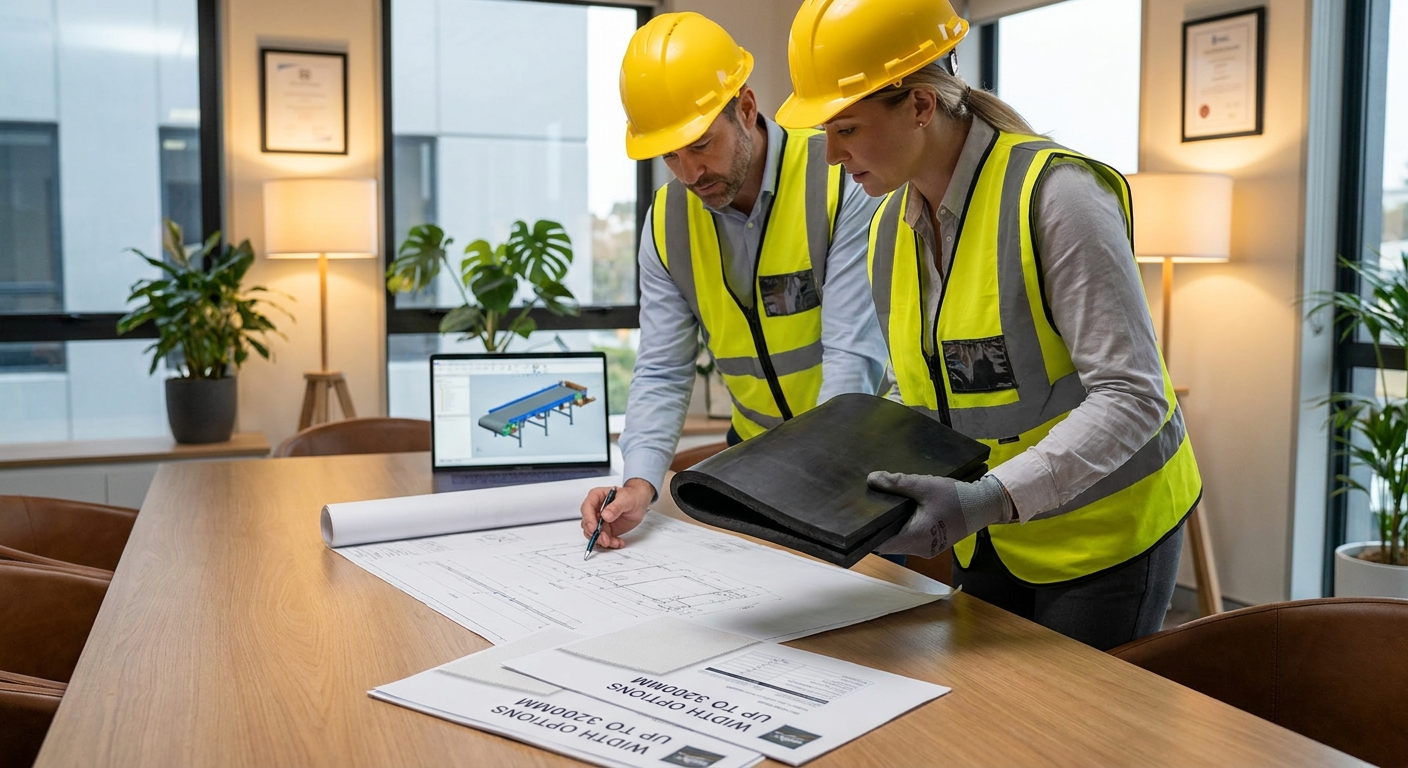
To choose the best super wide rubber conveyor belt , you must analyze your material’s physical properties, daily tonnage requirements, and your conveyor’s specific mechanical layout. Consulting with experienced engineers before ordering guarantees that your belt’s width, plies, and rubber compounds match your operational needs. This prevents premature wear and ensures continuous high-capacity performance.
What width calculation is required?
Think about it: choosing a belt that is too narrow will cause spillage, while an oversized belt adds unnecessary weight and cost. Precise calculations ensure an optimal fit for your facility. This process must account for surge loads and structural clearance.
How do you select cover compounds?
The wrong cover compound will wear out quickly or degrade under chemical exposure. Sourcing a custom-blended rubber ensures your belt stands up to your specific process environment.
- EPDM for High Heat: Prevents cracking when conveying hot clinker or plaster.
- Acid-Alkali Compounds: Resist corrosion from casting slip chemicals.
- High-Wear Rubber: Extends belt life when handling highly abrasive sands.
Key Takeaway: You can eliminate purchasing risks and ensure high system performance by matching your belt’s specifications directly to your material’s physical traits.
| Step | Factor to Analyze | Target Specification | |
|---|---|---|---|
| 1 | Volume & mold size | Belt width (B2400 to B6800) | |
| 2 | Load & span length | Carcass plies (EP/NN/Steel Cord) | |
| 3 | Heat & chemicals | Rubber compound (EPDM/Nitrile) |
An engineering audit ensures your custom belt will run smoothly without premature failures.
How to maintain a super wide rubber conveyor belt?
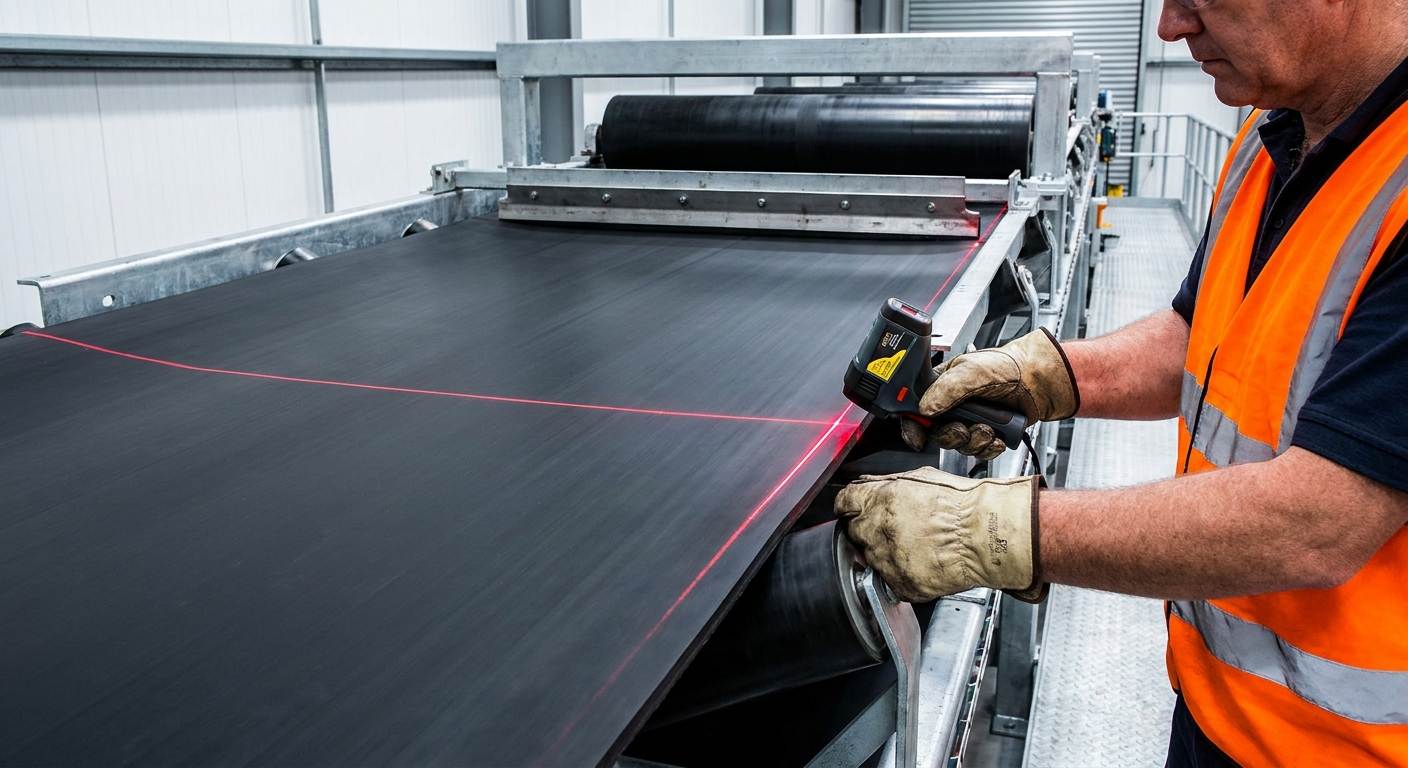
Maintaining a super wide rubber conveyor belt requires regular laser alignment, continuous scraper maintenance, and immediate repairs of any minor edge wear. Establishing a preventative maintenance schedule prevents tracking errors from causing expensive edge tears or structural damage. This systematic care keeps your high-capacity production lines running smoothly.
How to keep the belt aligned?
Here is the deal: a wide belt is highly sensitive to uneven tension, which can cause severe tracking shifts. Regular mechanical checkups keep the belt centered and running smoothly. Laser tool scans verify that all pulleys are perfectly square.
What is the best cleaning strategy?
Wet plaster and abrasive dust can build up on the belt surface, causing tracking errors and wear. Installing high-performance cleaning accessories keeps the belt spotless.
- Continuous Scrapers: Remove sticky residues before they dry on the rubber.
- High-Pressure Washes: Flush out grooved filter belts to prevent clogging.
- Debris Inspection: Stops abrasive particles from packing under the belt.
Key Takeaway: You can maximize your belt’s lifetime and avoid costly emergency repairs by keeping your pulleys aligned and your scrapers properly adjusted.
| Maintenance Task | Frequency | Direct Benefit | |
|---|---|---|---|
| Laser Alignment | Quarterly / Post-splice | Prevents edge wear & tears | |
| Scraper Adjustment | Monthly | Removes abrasive material buildup |
Consistent maintenance prevents minor tracking or wear issues from turning into catastrophic failures.
Conclusion
Running narrow, low-capacity conveyor belts restricts your plant’s production capacity and increases spillage and maintenance costs. Upgrading to a premium, seamless, extra-wide conveyor belt optimizes material flow, simplifies your system layout, and eliminates high-maintenance parallel lines.
Ready to optimize your bulk material handling system? For custom belt selection, engineering support, or a fast factory quote, contact us today .
At Zhenxing Rubber, we manufacture high-performance conveyor belts certified to ISO 9001 and international safety standards. Our vision is to empower global industries with robust, high-capacity conveying systems that drive sustainable operational growth and absolute process reliability.
High-Capacity Conveyor Belt FAQ
Can I customize my belt width up to 6800mm?
Yes, you absolutely can. Our advanced factory is equipped with massive, wide-mold vulcanizing presses designed to produce high-strength seamless rubber belts in any custom width from 2400mm up to 6800mm.
What’s the best cover rubber compound for high-temperature casting?
An EPDM-based compound is the ideal choice. This premium synthetic rubber resists thermal aging and cracking under continuous exposure to hot aggregates and curing plaster up to 200°C, significantly extending your belt’s life.
How do I know if my plant requires an extra-wide belt?
You need an ultra-wide belt if you suffer from high spillage or need to increase throughput. Expanding your belt’s width is the most effective way to eliminate narrow bottlenecks, contain surges, and simplify parallel line setups.
Can I order a wide belt with low bottom-side friction?
Yes, you can specify a bare-back bottom fabric. This design replaces the bottom rubber cover with raw textile, minimizing sliding friction on conveyor support beds and cutting your overall drive power costs.