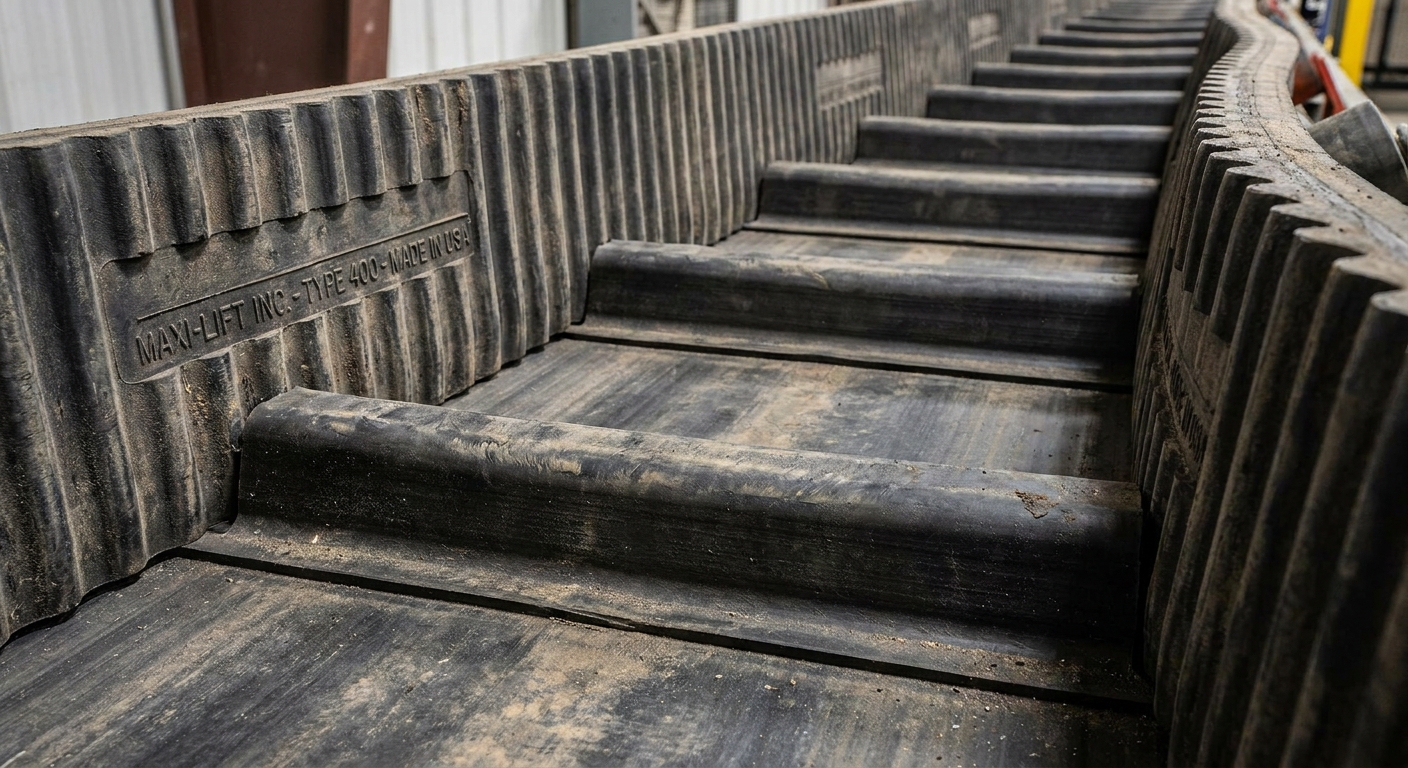
A rubber sidewall belt conveyor is an advanced bulk material handling solution designed for steep incline and vertical conveying applications. Equipped with corrugated sidewalls and durable horizontal cleats, this conveyor system effectively prevents material spillage and rollback during transport at angles up to 90 degrees. Ideal for industries facing limited installation space and high transfer costs, a rubber sidewall belt conveyor helps reduce factory footprint, minimize dust pollution, and improve conveying efficiency. Its reliable design lowers maintenance requirements, enhances operational productivity, and ensures safe, continuous material transport in mining, cement, ports, and industrial processing facilities.
What is a rubber sidewall belt conveyor system?
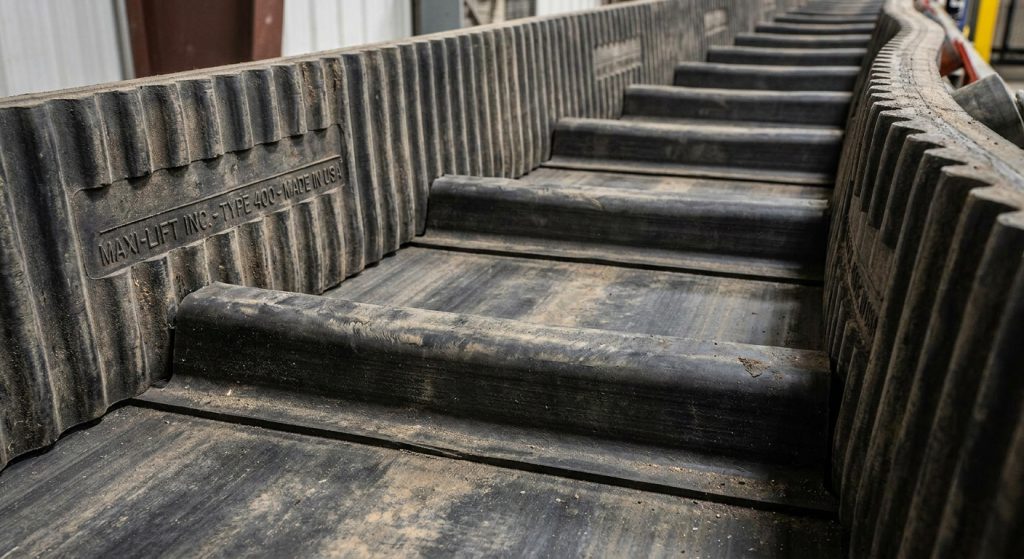
A rubber sidewall belt conveyor is a specialized conveying solution that features flexible corrugated sidewalls and transverse cleats to create secure pockets for material transport. This unique design enables you to move bulk solids on steep inclines that would be impossible for standard flat belts. The base belt is engineered with high cross-rigidity to prevent sagging while supporting the weight of vertical loads.
How does the pocket design work?
The best part? The interaction between the corrugated walls and the cleats creates a series of moving “buckets” that trap your material securely.
- Corrugated Walls: Provide lateral containment and flex around pulleys.
- Transverse Cleats: Act as floor supports to prevent material sliding.
- Base Belt: Offers the tensile strength needed for high vertical lifts.
Why is cross-rigidity important?
Here is the deal: without a cross-rigid base, the belt would bow between idlers under the pressure of a full load. High-quality manufacturing ensures the belt maintains a flat profile while the walls and cleats do the heavy lifting.
- Stability: Prevents the belt from collapsing in the center.
- Alignment: Ensures the belt tracks correctly through the conveyor frame.
- Load Support: Allows for wider belt widths and higher volume capacity.
Key Takeaway: The combination of walls and cleats transforms a standard belt into a high-capacity vertical lifting machine.
| Component | Primary Function | Operational Impact | |
|---|---|---|---|
| Sidewalls | Edge Containment | Eliminates lateral spillage | |
| Cleats | Vertical Support | Prevents material rollback | |
| Base Belt | Structural Integrity | Enables heavy load transport |
The integration of these three components creates a seamless pocket system for high-angle efficiency.
Why use a rubber sidewall belt conveyor for steep angles?
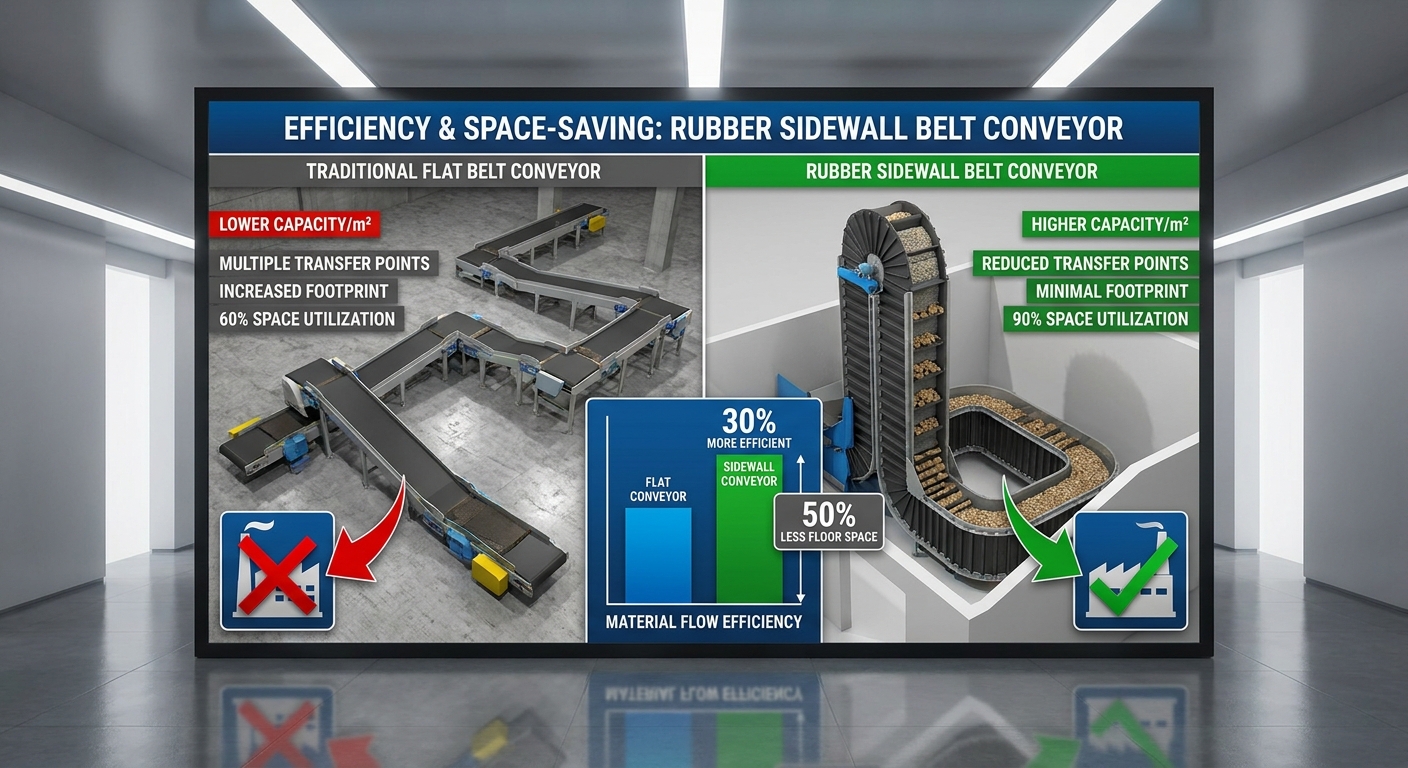
You should use a rubber sidewall belt conveyor when your facility requires a vertical lift but lacks the horizontal space for a long, shallow-incline system. These belts are specifically engineered to handle angles from 30 to 90 degrees without the risk of material falling backward. By utilizing this technology, you can replace multiple traditional conveyors with a single, compact vertical unit.
Can it handle 90-degree vertical lifts?
The best part? These systems are the only belt-based solutions capable of a true 90-degree lift while maintaining high throughput.
- Space Saving: Reduces the horizontal footprint by up to 80%.
- Cost Efficiency: Eliminates the need for expensive transfer towers.
- Versatility: Can be configured in S-shapes or L-shapes for complex routes.
How does it prevent backflow?
Look: the transverse cleats act as solid barriers that physically scoop and hold the material against gravity.
- Pocket Integrity: Cleats are hot-vulcanized to ensure they never detach.
- Seal Quality: Corrugated walls form a continuous seal against the belt.
- Containment: Even fine powders are kept secure within the moving pockets.
Key Takeaway: Vertical lifting capabilities allow you to maximize your facility’s cubic space rather than wasting floor area.
| Incline Angle | Standard Flat Belt | Sidewall Belt | |
|---|---|---|---|
| 0 – 15° | Recommended | High Efficiency | |
| 15 – 30° | High Spillage Risk | High Efficiency | |
| 30 – 90° | Not Possible | Designed Solution |
Switching to a vertical configuration reduces structural costs and simplifies your overall plant layout.
How does a rubber sidewall belt conveyor improve efficiency?
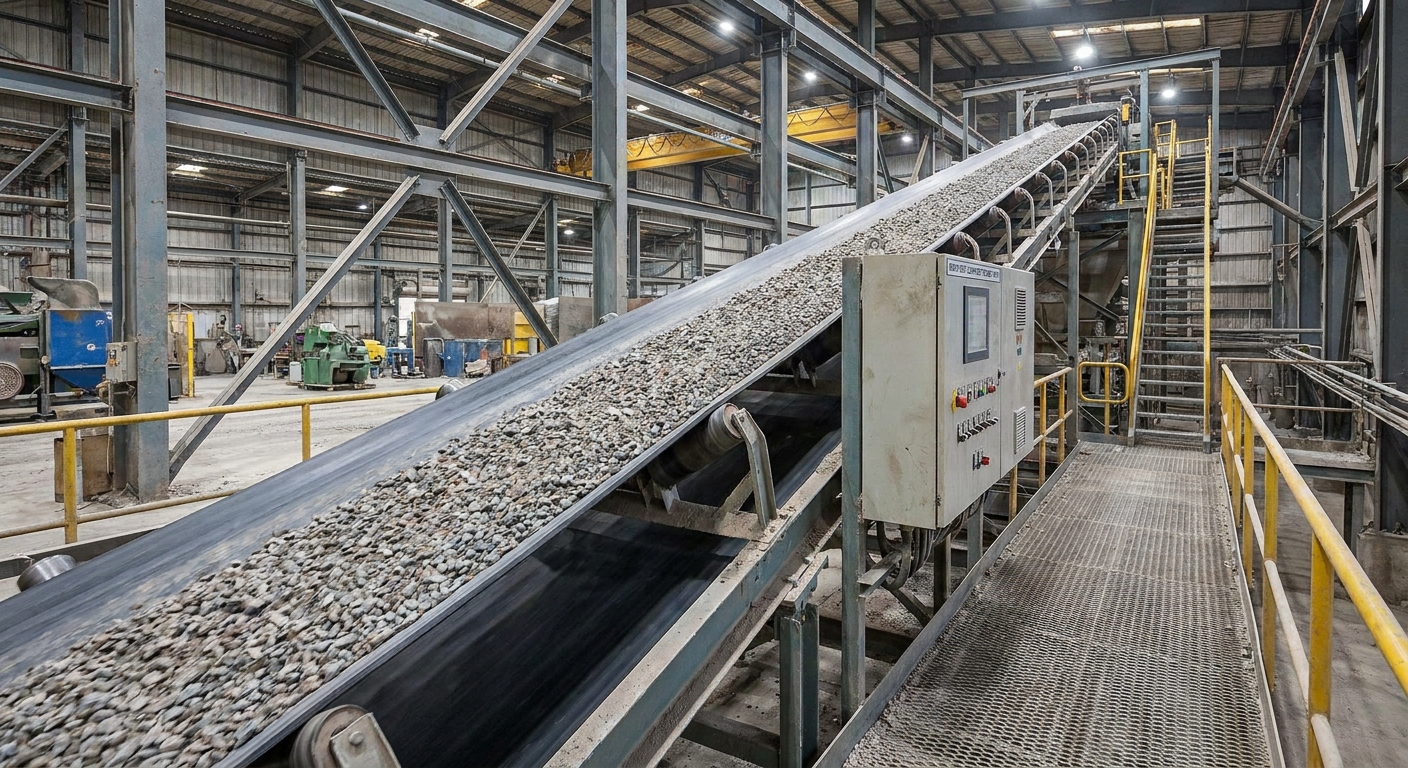
A rubber sidewall belt conveyor improves efficiency by eliminating transfer points and consolidating multiple conveyor stages into one continuous belt run. This direct transport method significantly reduces the energy consumption and maintenance costs associated with running multiple motors and gearboxes. You will also see a dramatic reduction in dust emission and material degradation because the load remains undisturbed in its pocket from start to finish.
Does it reduce total power consumption?
Here is the deal: running one vertical motor is far more energy-efficient than powering three or four horizontal transfer belts.
- Single Drive System: Reduces electrical infrastructure and wiring costs.
- Lower Friction: Fewer pulleys and idlers result in less mechanical resistance.
- Optimized Loading: High-speed vertical transport moves more material per hour.
How are transfer points eliminated?
Look: because the belt can change direction from horizontal to vertical, you no longer need “drop points” where material falls from one belt to another.
- Zero Spillage: Eliminates the mess typically found at belt junctions.
- Dust Control: A closed-loop vertical system keeps particulates contained.
- Gentle Handling: Prevents fragile materials from breaking during drops.
Key Takeaway: Consolidating your conveyor line into a single belt run maximizes uptime and slashes operational overhead.
| Efficiency Factor | Traditional System | Sidewall Belt System | |
|---|---|---|---|
| Transfer Points | 2 – 5 Points | 0 – 1 Points | |
| Dust Levels | High at Drops | Minimal | |
| Energy Loss | Multiple Motors | Single Motor Source |
Reducing complexity in your material flow leads to a more reliable and profitable production environment.
What are the rubber sidewall belt conveyor components?
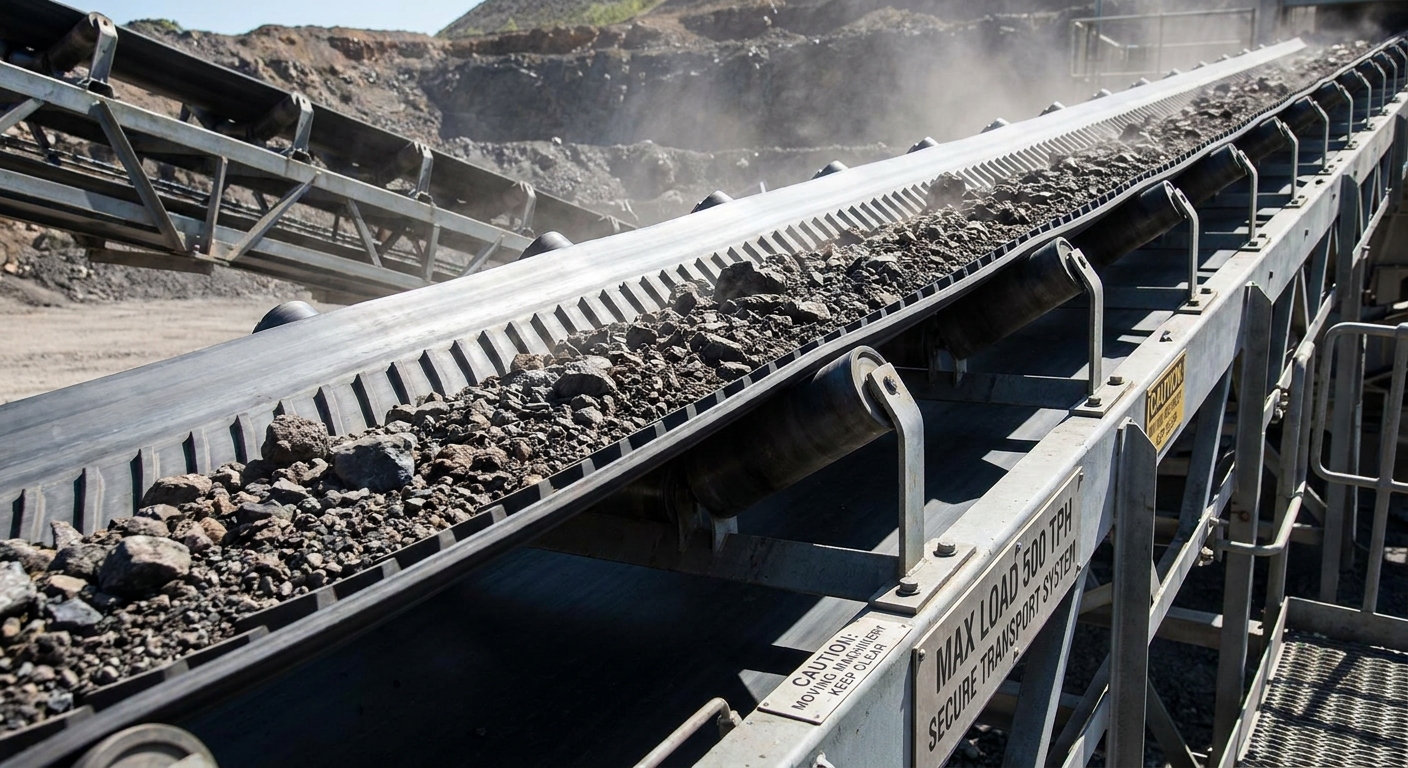
The core components of a rubber sidewall belt conveyor include the cross-rigid base belt, the corrugated sidewalls, and the transverse cleats that form the carrying pockets. Each of these parts must be manufactured with high-precision rubber compounds to ensure they can withstand the constant flexing around pulleys. Understanding the synergy between these components is vital for selecting the right belt for your specific material weight and density.
What is the role of the corrugated walls?
The best part? The “wavy” shape of the sidewalls allows them to compress on the inner radius and expand on the outer radius without cracking.
- Flexibility: Allows for high-speed operation over small pulleys.
- Edge Sealing: Prevents fine materials from leaking out of the pockets.
- Custom Heights: Walls can be sized from 40mm up to 600mm.
Why are transverse cleats essential?
Here is the deal: cleats are the “steps” of your vertical conveyor that prevent the product from sliding back down the belt.
- T-Type Cleats: Best for moderate inclines and standard bulk.
- C-Type Cleats: Curved shape for high-volume scooping of heavy ore.
- TC-Type: Reinforced design for the most demanding vertical lifts.
Key Takeaway: High-quality components must be vulcanized together to form a single, inseparable unit for heavy-duty use.
| Component | Material Property | Benefit | |
|---|---|---|---|
| Sidewall | High Elasticity | Prevents fatigue cracking | |
| Cleat | Impact Resistance | Withstands heavy loading | |
| Base Belt | Transverse Rigidity | Keeps the belt flat |
A well-engineered component set ensures your belt lasts for years even under extreme mechanical stress.
Which materials suit a rubber sidewall belt conveyor?
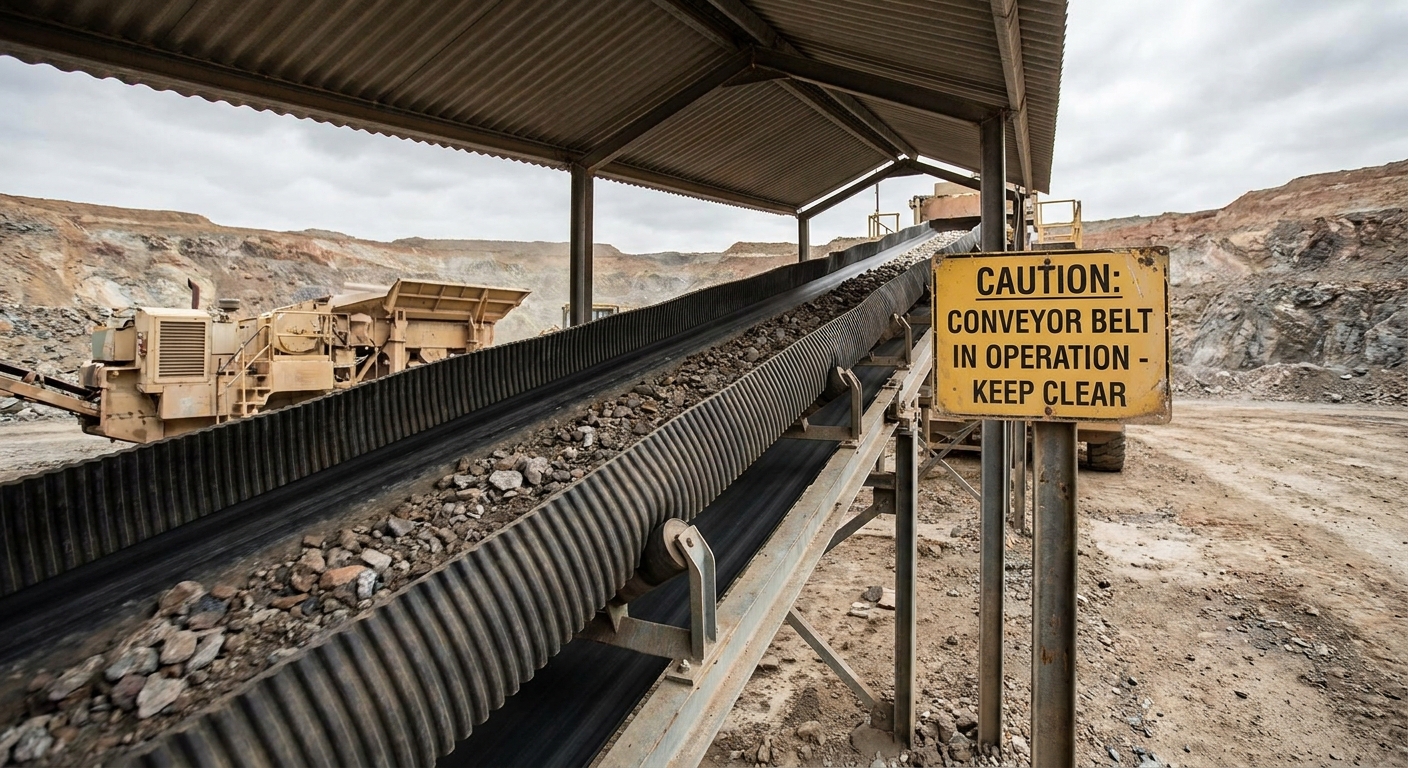
A rubber sidewall belt conveyor is suitable for a vast range of bulk materials, including fine powders, heavy ores, wet sludge, and large aggregate rocks. Because the pockets provide total containment, even “difficult” materials that would normally slide off a flat belt can be transported with ease. You can customize the rubber compound to handle specific material challenges like high temperatures or corrosive chemicals.
Can it handle heavy mining ores?
The best part? These belts are reinforced with steel cords or heavy-duty fabric to transport thousands of tons of ore per hour.
- Impact Resistance: Handles large, sharp rocks without puncturing.
- Tear Strength: High-tensile base belts prevent longitudinal ripping.
- High Volume: Deep pockets allow for massive throughput in vertical shafts.
Is it safe for fine chemicals or food?
Look: the sealed pocket design prevents windage from blowing away fine powders or contaminating the surrounding environment.
- Containment: Keeps 100% of the product within the belt edges.
- Cleanliness: Reduces the need for constant cleaning under the conveyor.
- Custom Covers: Food-grade or chemical-resistant rubber options are available.
Key Takeaway: Whether you move sand, coal, or chemicals, the pocket system ensures your material arrives safely.
| Material Type | Recommended Cleat | Advantage | |
|---|---|---|---|
| Fine Sand | T-Type | Total containment | |
| Crushed Ore | C-Type | Maximum scooping | |
| Hot Clinker | TC-Type | High-temperature support |
Matching the belt configuration to your material properties is the secret to maximizing operational lifespan.
Is a rubber sidewall belt conveyor better than flat belts?
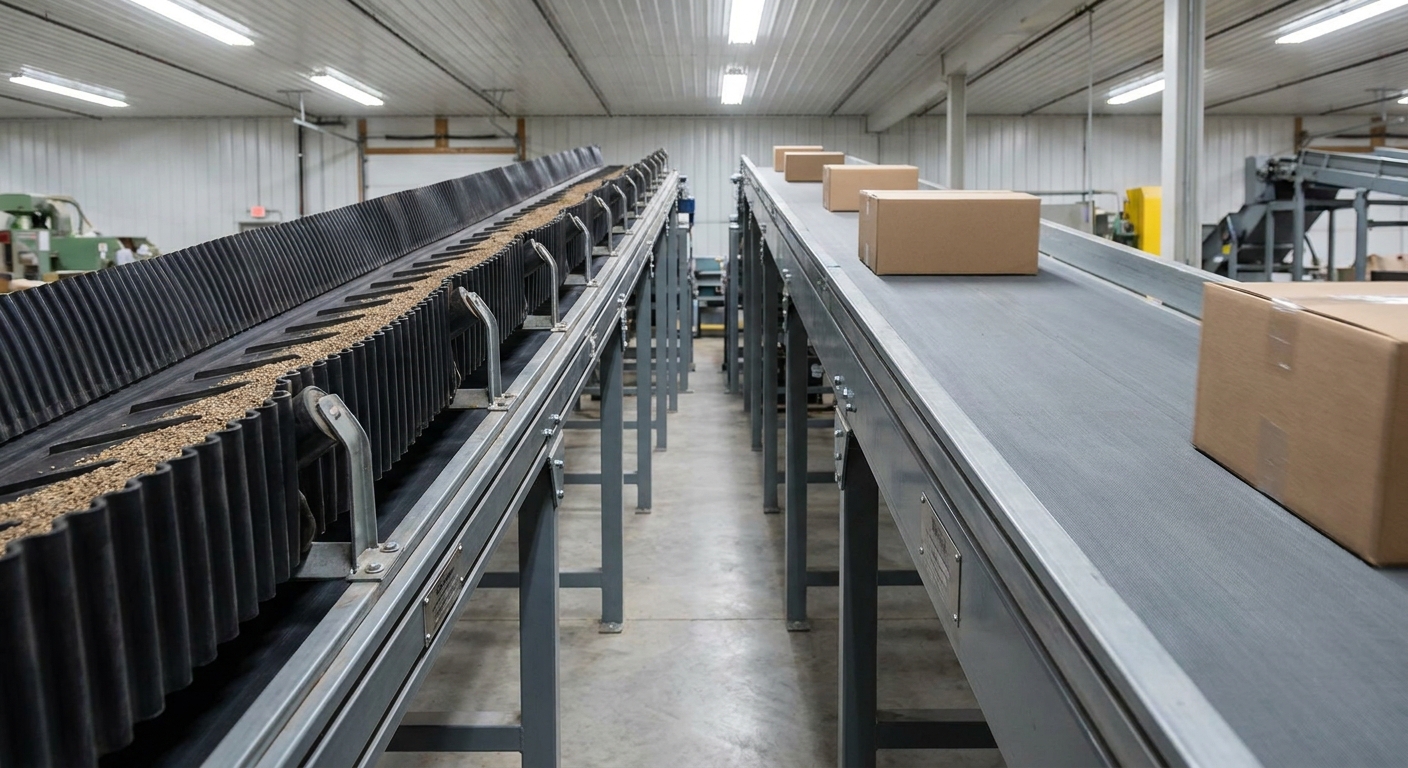
A rubber sidewall belt conveyor is superior to flat belts when you need to overcome steep inclines or transport material vertically in a confined space. While flat belts are limited by the “angle of repose” of the material, sidewall belts bypass this physical limit through physical entrapment. You will find that the initial investment in a sidewall system pays off through massive space savings and reduced infrastructure costs.
How do incline limits compare?
Here is the deal: standard flat belts rarely exceed 18 degrees, whereas sidewall belts can reach a full 90 degrees.
- Steep Inclines: Overcomes terrain or building constraints effortlessly.
- Vertical Lifts: Functions like a bucket elevator but with higher capacity.
- Compactness: Replaces 50 meters of flat conveyor with 10 meters of vertical.
Which offers better material containment?
Look: flat belts often suffer from material “spilling” over the sides, but corrugated walls act as a permanent barrier.
- Edge Sealing: The walls are bonded directly to the belt for zero leakage.
- No Side Spillage: Eliminates the need for external skirting systems.
- Dust Reduction: Keeps the entire transport process much cleaner.
Key Takeaway: When space is tight and material containment is critical, the sidewall belt is the clear winner.
| Feature | Standard Flat Belt | Sidewall Belt | |
|---|---|---|---|
| Max Angle | 15° – 20° | Up to 90° | |
| Footprint | Very Large | Minimal | |
| Spillage Risk | High | Very Low |
The sidewall system provides a modern, compact alternative to the sprawling footprints of traditional belts.
How to maintain a rubber sidewall belt conveyor properly?
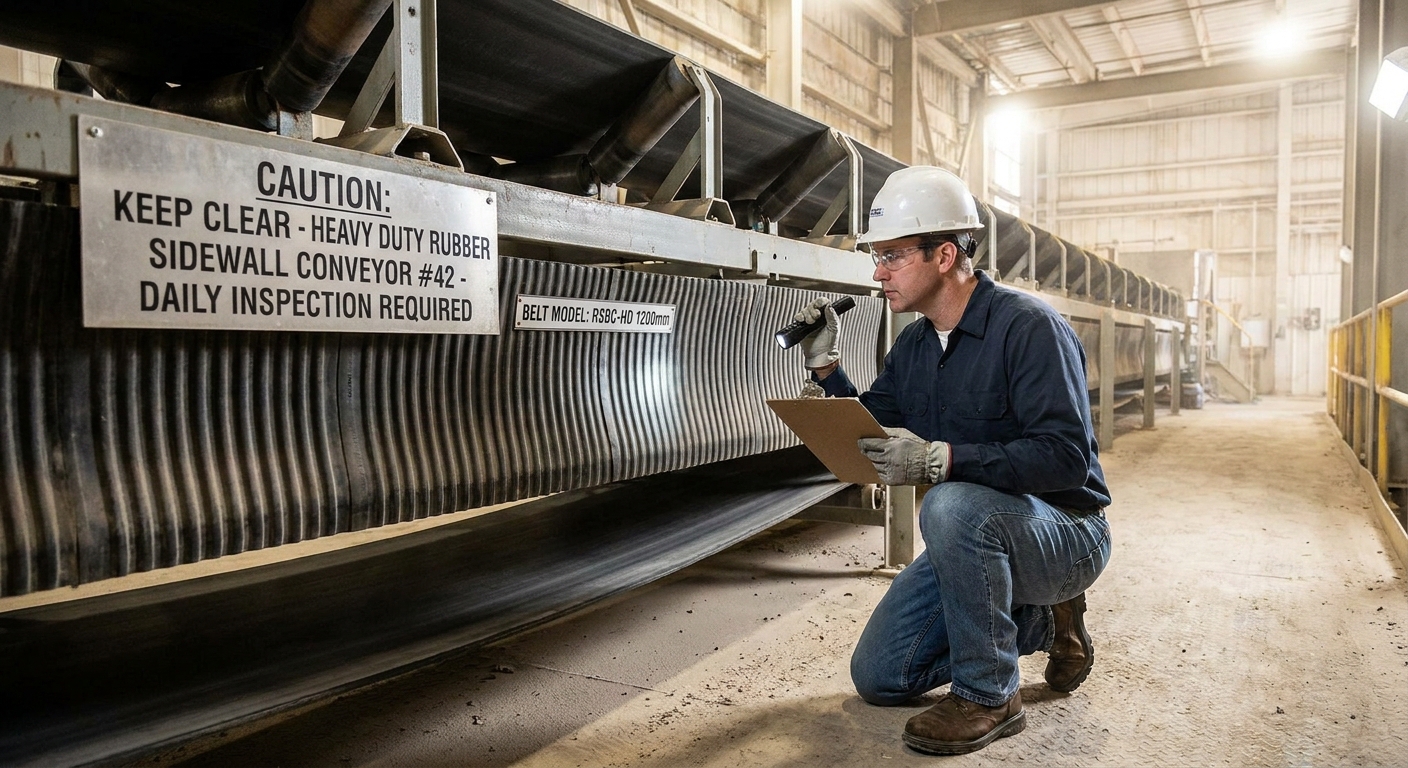
Maintaining a rubber sidewall belt conveyor requires regular inspection of the bonding points between the base belt, walls, and cleats to ensure no separation is occurring. You should also check for material buildup behind the corrugated walls, which can cause excessive wear during pulley transitions. Proper tensioning and alignment are critical to prevent the sidewalls from rubbing against the conveyor frame or return idlers.
How to check for sidewall separation?
Look: you should manually inspect the base of the walls for any signs of “lifting” or small cracks in the rubber.
- Daily Visuals: Quick checks prevent small tears from becoming total failures.
- Cleaning: Remove trapped stones that can puncture the corrugated folds.
- Bond Testing: Ensure the vulcanization remains solid across all joints.
Why is alignment so critical?
Here is the deal: if the belt drifts even slightly, the tall sidewalls will hit the support structure and tear off.
- Tracking Sensors: Install automatic alignment switches for safety.
- Idler Condition: Check that return idlers are clean and rotating freely.
- Tensioning: Keep the belt tight enough to prevent sagging between rollers.
Key Takeaway: Preventive maintenance focused on bonding and alignment can double the service life of your belt.
| Maintenance Task | Frequency | Purpose | |
|---|---|---|---|
| Bond Inspection | Weekly | Prevent component separation | |
| Alignment Check | Daily | Avoid structural damage | |
| Cleaning Folds | Weekly | Prevent premature wear |
A disciplined maintenance routine is the best insurance policy for your high-angle conveying system.
What industries need a rubber sidewall belt conveyor most?
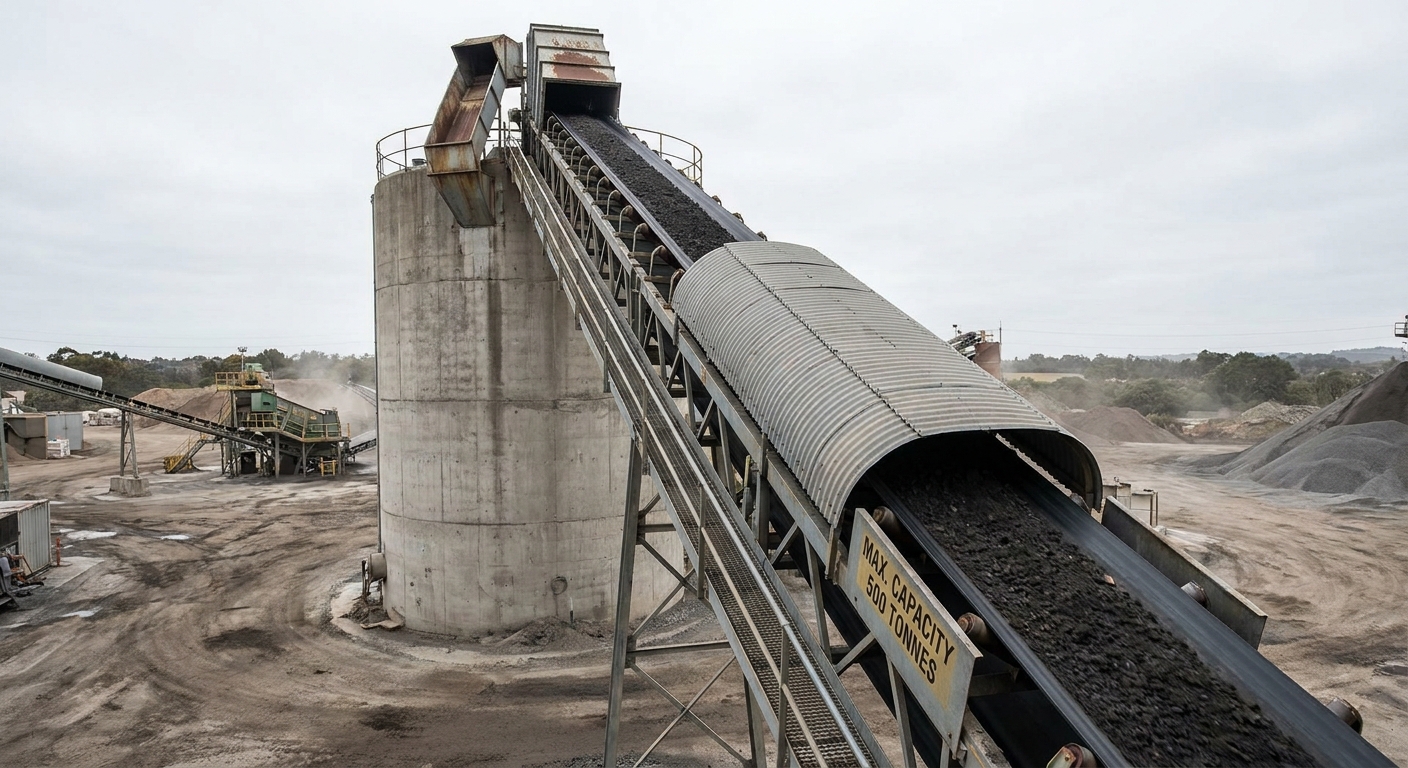
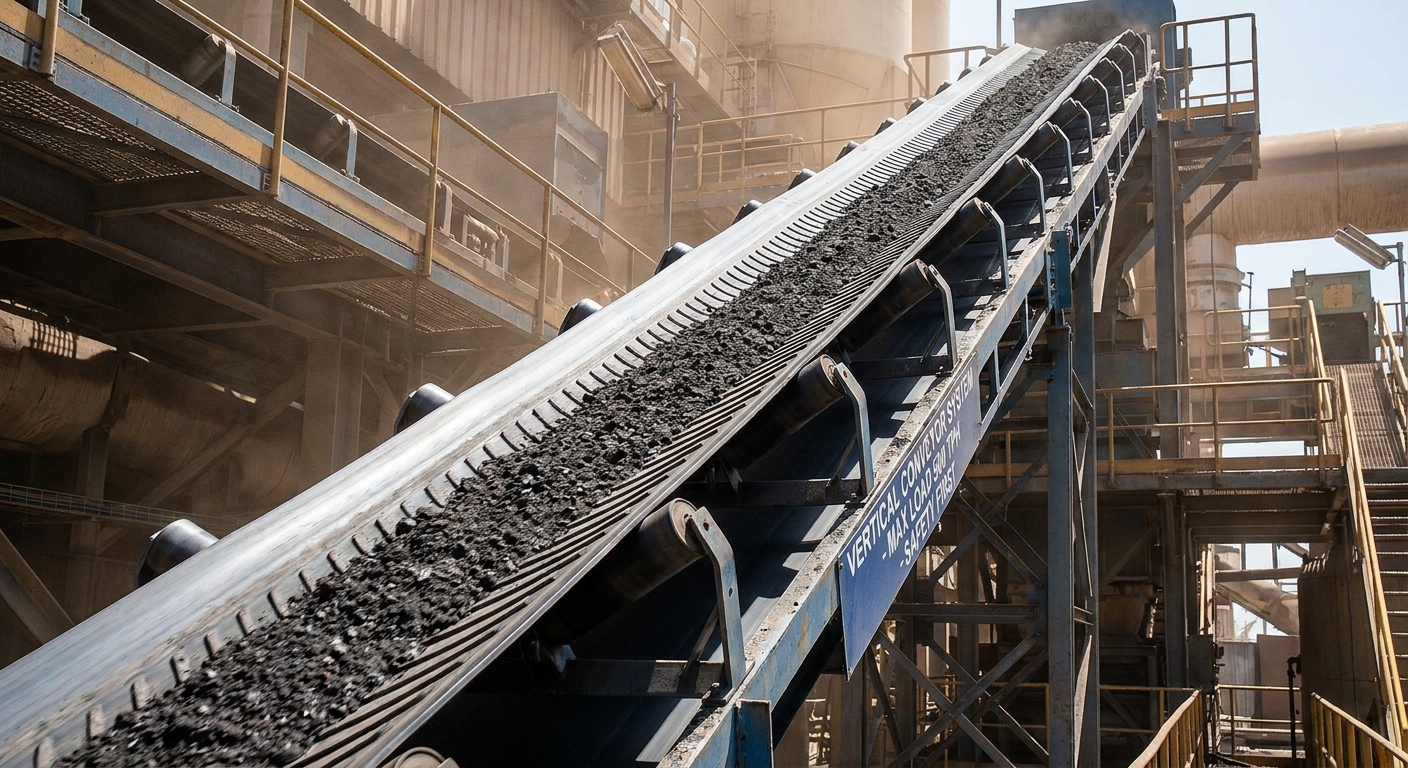
The industries that benefit most from a rubber sidewall belt conveyor include mining, cement production, power plants, and chemical processing facilities. These sectors often deal with heavy bulk materials and have strict space constraints that make vertical transport a necessity. You will also see these systems used in urban tunneling projects where excavated dirt must be brought to the surface through narrow vertical shafts.
Why is it essential for mining?
The best part? Mining operations use these belts to move thousands of tons of coal or ore from deep pits to surface storage silos.
- High Capacity: Moves massive volumes in small vertical shafts.
- Durability: Withstands the abrasive nature of raw mineral ores.
- Flame Retardancy: Specialized rubber compounds meet underground safety codes.
How do power plants use them?
Look: power facilities use sidewall systems to lift coal into boilers or move fly ash into storage tanks with zero dust.
- Vertical Silo Loading: Replaces inefficient and maintenance-heavy bucket elevators.
- Clean Operation: Prevents ash from leaking into sensitive electronics.
- Heat Resistance: Can handle hot ash directly from the furnace area.
Key Takeaway: Any industry moving high volumes of bulk material in a small area needs this vertical technology.
| Industry | Primary Use | Core Benefit | |
|---|---|---|---|
| Mining | Ore Transport | High throughput in narrow shafts | |
| Cement | Clinker Lifting | Handles heat and vertical height | |
| Power | Coal/Ash Handling | Dust-free vertical transport |
These belts are the backbone of modern industrial facilities looking to optimize their vertical logistics.
What are rubber sidewall belt conveyor design options?
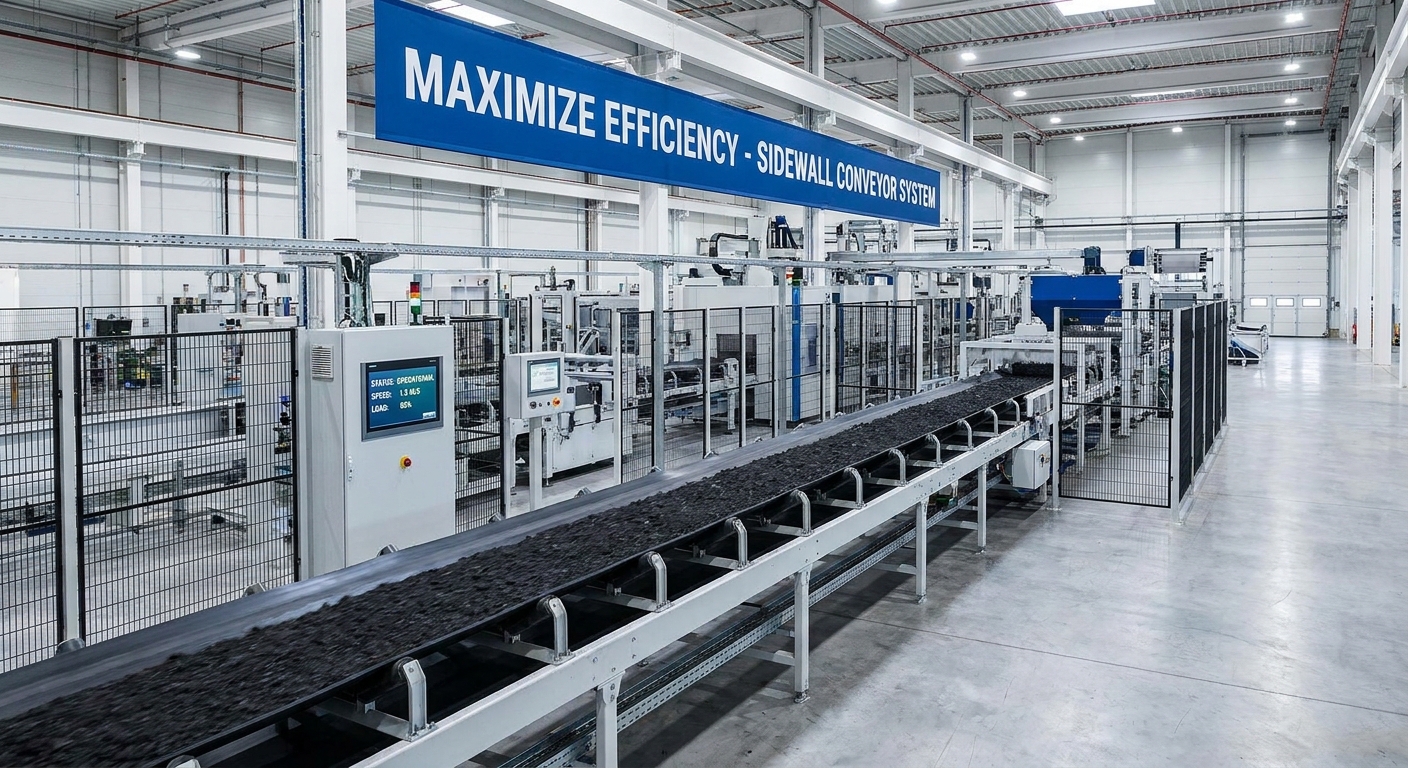
Design options for a rubber sidewall belt conveyor include a variety of rubber compounds, wall heights, and cleat profiles tailored to your specific application. You can choose oil-resistant rubber for agricultural grains or heat-resistant EPDM for hot clinker transport in cement plants. Additionally, the base belt can be reinforced with steel mesh or specialized fabric layers to provide the exact level of cross-rigidity your system requires.
What rubber compounds are available?
Here is the deal: the right rubber compound can extend your belt’s life by 300% if matched correctly to the environment.
- Heat Resistant (HR): For materials up to 200°C.
- Oil Resistant (OR): Prevents swelling when moving oily seeds or fertilizers.
- Flame Retardant (FR): Essential for underground mining and power safety.
How do you choose wall and cleat sizes?
Look: the height of your material pieces determines the minimum wall and cleat height needed for containment.
- Wall Heights: Range from 40mm for fine sand to 600mm for large rocks.
- Cleat Spacing: Determined by the incline angle to ensure no material fallback.
- Reinforcement: Optional steel cords for the highest vertical tension loads.
Key Takeaway: Customization allows your belt to perform in environments that would destroy a standard conveyor.
| Option | Variety | Best Use Case | |
|---|---|---|---|
| Material | Heat Resistant | Cement clinker/Foundries | |
| Wall Height | 300mm+ | Large aggregate/Coal | |
| Cleat Type | TC-Reinforced | Vertical heavy mining |
Investing in custom design ensures your conveyor system is built for the specific rigors of your job site.
How to choose a rubber sidewall belt conveyor manufacturer?
To choose the right rubber sidewall belt conveyor manufacturer, you must verify their vulcanization technology and their ability to provide custom engineering drawings. A reliable partner will not just sell you a belt; they will analyze your conveyor’s pulley diameters and load requirements to ensure long-term reliability. You should also look for certifications like ISO 9001 and CE to guarantee that the manufacturing process meets international quality standards.
Why is factory experience important?
The best part? Experienced manufacturers understand the chemistry of rubber bonding, ensuring your cleats never fall off mid-operation.
- In-House Testing: Ensures tensile strength and abrasion resistance are verified.
- Custom Engineering: Provides precise drawings for your unique conveyor frame.
- Quality Control: 100% inspection of every bonding point before shipping.
What certifications should you look for?
Look: globally recognized standards ensure that the belt you receive will perform as promised in heavy-duty environments.
- ISO 9001: Guarantees a consistent and high-quality production system.
- CE/EN Standards: Ensures the belt meets rigorous safety and health codes.
- Mining Safety: Crucial if your belt is operating in underground or fire-prone areas.
Key Takeaway: Choosing a manufacturer with direct factory engineering ensures you get a solution, not just a product.
| Selection Criteria | What to Verify | Why it Matters | |
|---|---|---|---|
| Vulcanization | Hot vs Cold Bond | Hot bonding lasts 3x longer | |
| Engineering | Drawing Support | Ensures fit with existing frames | |
| Certificates | ISO/CE/SGS | Third-party quality assurance |
A strategic partnership with a professional manufacturer like ZHENXING ensures your vertical conveying goals are met with precision.
Frequently Asked Questions (FAQ)
Can I use a sidewall belt on my existing flat conveyor frame?Direct judgment: No, you usually cannot without significant modifications because sidewall belts require “stub” idlers that do not touch the cleats. Standard rollers would crush the corrugated walls and cleats on the return side.
What’s the best way to clean a sidewall conveyor belt?Direct judgment: Using a specialized “beater” roller on the return side is the most effective method. This creates a gentle vibration that shakes loose material out of the pockets without damaging the rubber.
How do I know if my base belt has enough cross-rigidity?Direct judgment: If you see the belt “cupping” or sagging in the middle when loaded, the rigidity is insufficient. A professional manufacturer will calculate the required transverse stiffness based on your belt width and material density.
Can I repair a broken cleat or sidewall section?Direct judgment: Yes, you can perform temporary repairs using cold-bonding adhesive kits for small tears. However, for a permanent fix, hot vulcanization is required to restore the full structural integrity of the bond.
How long does a high-quality sidewall belt typically last?Direct judgment: You should expect 3 to 5 years of service in heavy-duty mining and up to 8 years in lighter industrial applications. The lifespan depends entirely on proper pulley sizing and consistent cleaning.
Conclusion
A high-quality rubber sidewall belt conveyor is the ultimate solution for facilities looking to maximize vertical space and eliminate material spillage. At ZHENXING, we position ourselves as the premier engineering partner for vertical material handling, providing custom-designed belts that solve the most complex incline challenges. Whether you are facing extreme heat in a cement plant or tight space constraints in a mining shaft, our belts are built to keep your production moving.
Ready to transform your vertical material handling efficiency? To get a custom engineering consultation and a competitive quote for your project, please contact us today.