
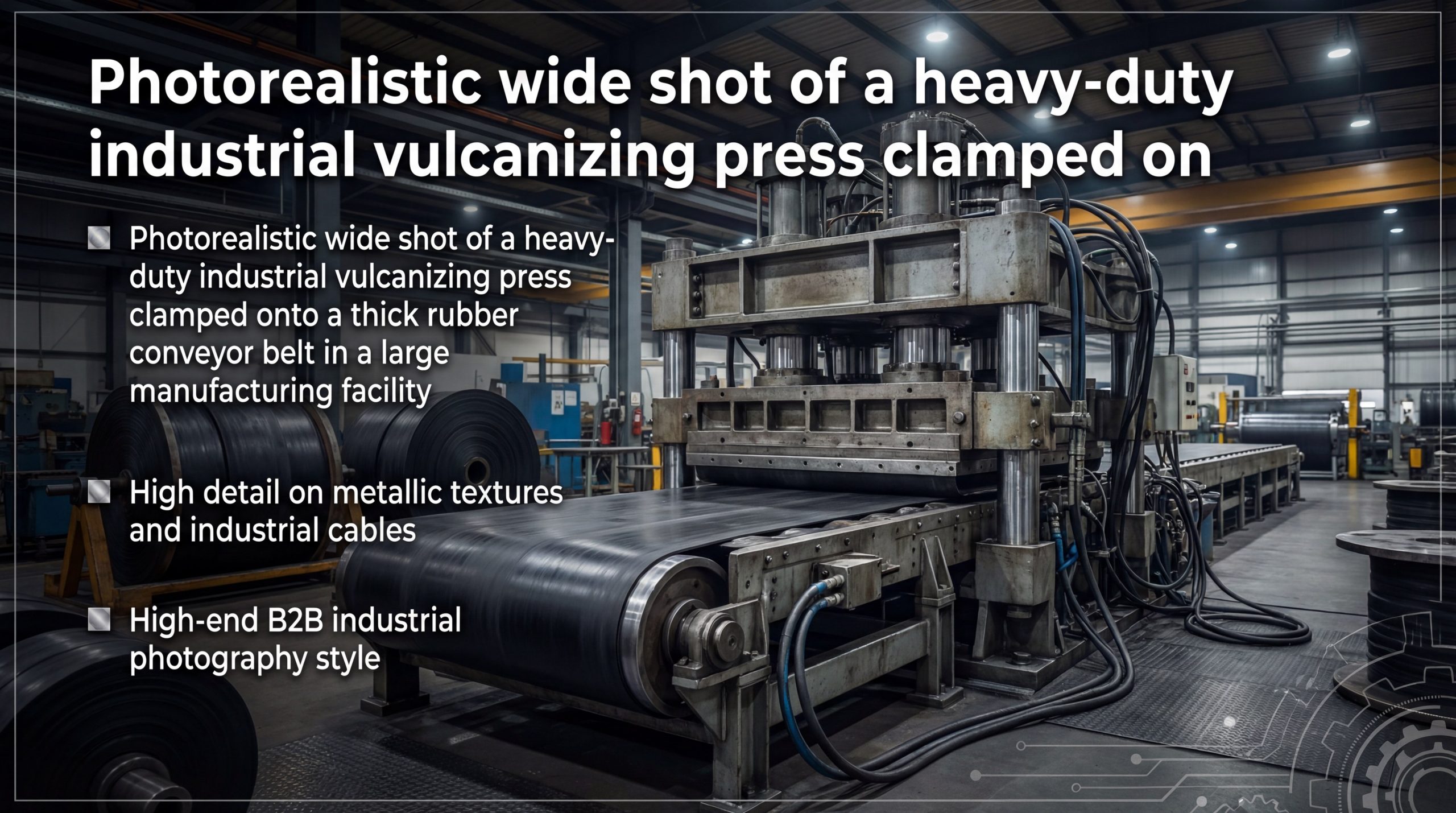
A vc rubber conveyor belt splicing machine provides strong, seamless belt joints through vulcanization, reducing downtime and ensuring reliable, long-term performance in heavy industrial operations.
What is vc rubber conveyor belt splicing machine?
A vc rubber conveyor belt splicing machine is a heavy-duty vulcanizing press that uses heat and pressure to create a unified molecular bond between two belt ends. This equipment is essential for maintaining the structural integrity of heavy-duty transport systems across various industrial sectors. You rely on this technology to ensure that the belt remains “endless” and capable of carrying massive loads without the risk of joint separation.
Is it built for heavy industrial use?
You might be wondering if these machines can truly handle the rigors of a 24/7 manufacturing plant. The answer is a resounding yes, as modern units are constructed from high-strength alloys to provide uniform pressure across the entire splice area. This ensures that every square inch of the rubber is cured at the correct temperature.
- High-strength aluminum alloy frames for portability.
- Precision heating elements for even thermal distribution.
- Pressure bags or hydraulic systems for consistent force.
- Digital control boxes for automated curing cycles.
But here is the kicker: without this specific machinery, your belt joints would remain the weakest link in your entire production line.
Key Takeaway: A vulcanizing machine transforms separate belt ends into a single, continuous, and high-strength component.
| Feature | Specification | Benefit | |
|---|---|---|---|
| Construction | Aluminum Alloy | Lightweight and easy to move | |
| Pressure Type | Uniform Pressure Bag | Prevents air bubbles in the joint | |
| Control System | Digital PLC | Ensures precise curing time |
The use of high-grade materials in the machine’s frame allows you to achieve shop-quality splices directly on the conveyor gantry.
How does vc rubber conveyor belt splicing machine work?
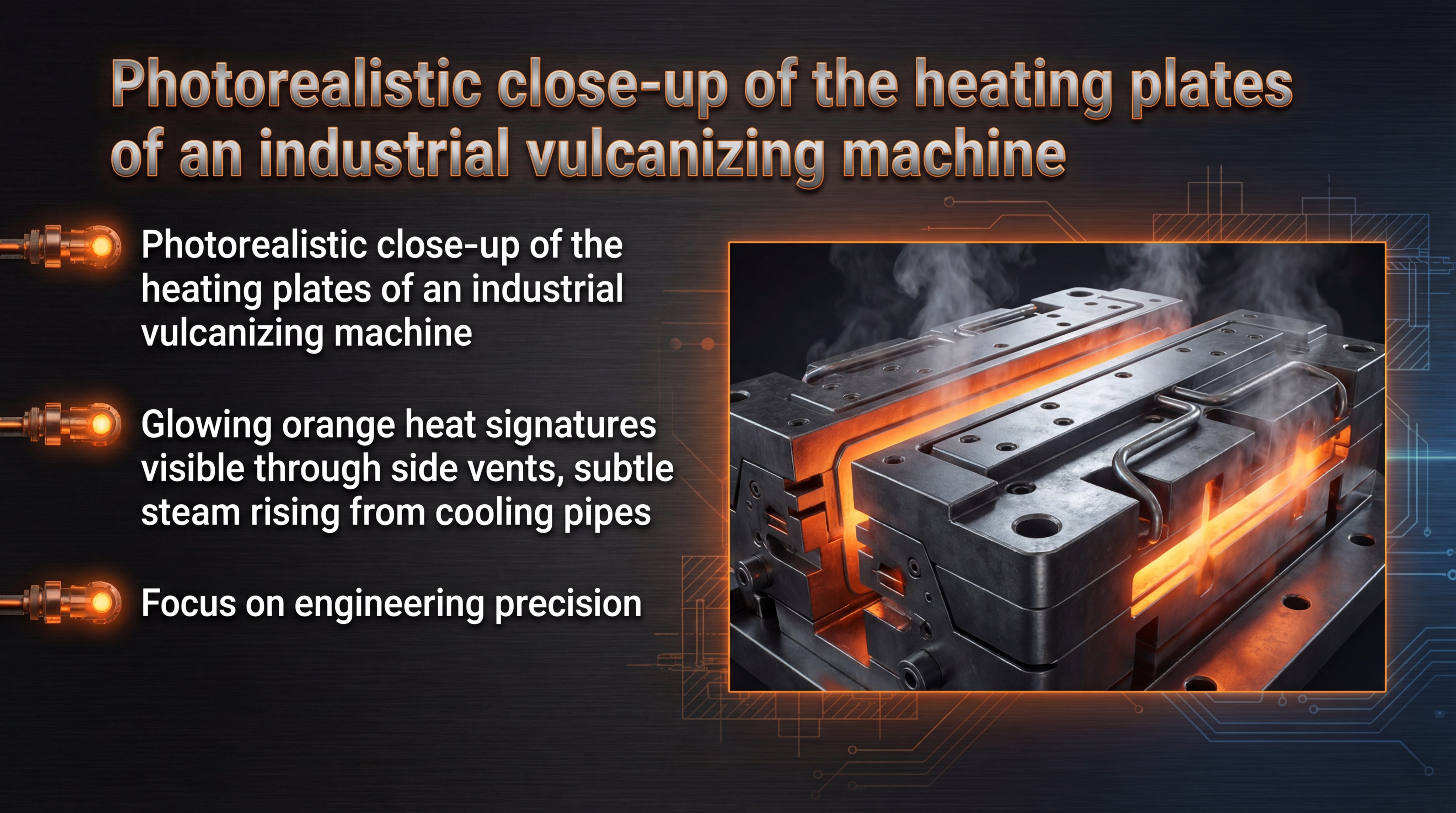
The vc rubber conveyor belt splicing machine works by sandwiching the prepared belt ends between two heated platens and applying intense pressure to fuse the materials. This process triggers a chemical reaction in the raw rubber and bonding agents, effectively “cooking” the joint until it reaches a cured state. You must maintain specific temperature and pressure levels for a set duration to ensure the molecules cross-link correctly.
What happens during the heating cycle?
You should know that the heating cycle is the most critical phase of the entire splicing procedure. If the temperature fluctuates even slightly, the rubber may under-cure, leading to a brittle joint that fails under tension.
- Initial rise to the vulcanization temperature (usually 145°C).
- Dwell time held constant based on belt thickness.
- Rapid cooling to stabilize the molecular structure.
You may find it hard to believe, but the cooling phase is just as important as the heating phase for joint longevity.
Key Takeaway: Precise thermal and pressure control is the foundation of a successful, high-tension conveyor belt splice.
| Process Phase | Action | Goal | |
|---|---|---|---|
| Heating | Thermal energy application | Triggers chemical cross-linking | |
| Pressurizing | 100-200 PSI application | Removes voids and air pockets | |
| Cooling | Water or air circulation | Sets the rubber structure |
Maintaining a strict adherence to the curing parameters ensures your conveyor system remains operational for years.
Why use vc rubber conveyor belt splicing machine in mines?
In mining, you use the vc rubber conveyor belt splicing machine because it provides the only jointing method strong enough to survive the abrasive and high-tension environment of ore transport. Mechanical fasteners often fail in mines due to corrosion or the physical impact of heavy rocks, but a vulcanized joint becomes part of the belt itself. This reduces the risk of catastrophic belt breaks that could cause injury or massive equipment damage.
Can it handle underground environments?
You probably realize that underground mines present unique challenges, such as limited space and explosive dust. Fortunately, specialized vulcanizing units are designed with explosion-proof controls and compact sectional frames to fit into tight quarters.
- Compact sectional design for manual transport.
- Rugged electrical components for high-humidity areas.
- Flame-retardant materials for safety compliance.
But here is the real secret: using a vulcanizing press in a mine can extend your belt life by up to 300% compared to clips.
Key Takeaway: Vulcanization is the gold standard for mining belts because it eliminates the physical profile of the joint.
| Mining Challenge | Machine Solution | Result | |
|---|---|---|---|
| High Tension | Seamless Fusion | Zero mechanical slippage | |
| Dust/Moisture | Sealed Joint | Prevents core corrosion | |
| Tight Spaces | Sectional Parts | Easy on-site assembly |
Investing in a high-quality press for your mining site ensures that your primary haulage routes remain uninterrupted.
Is vc rubber conveyor belt splicing machine portable?
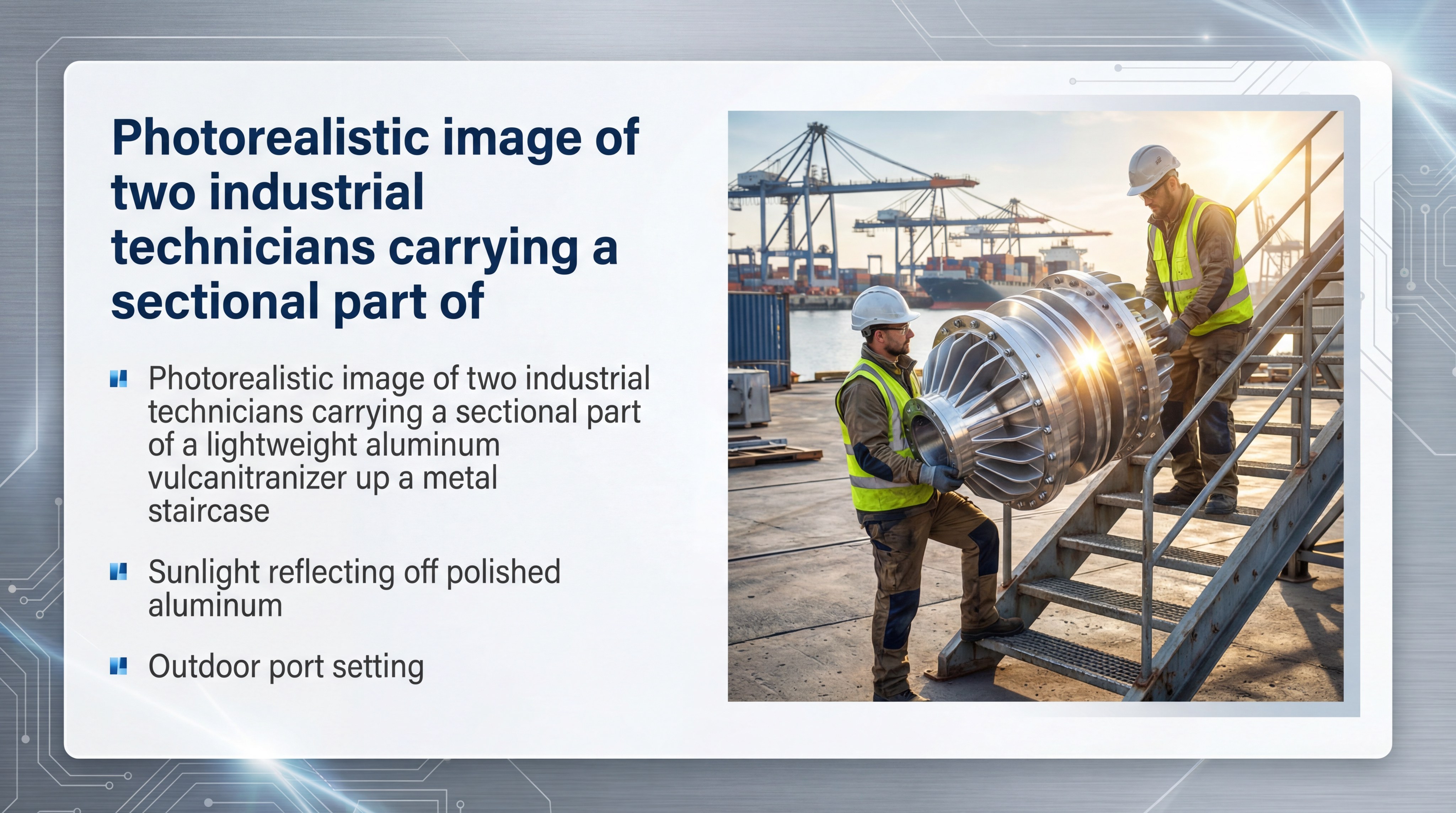
Yes, the modern vc rubber conveyor belt splicing machine is designed with portability in mind, featuring lightweight sectional components that you can transport easily to remote locations. Instead of one massive block, the machine is broken down into cross-beams, heating platens, and pressure bags that can be carried by a small crew. This modularity allows you to perform professional-grade repairs on top of high gantries or in deep tunnels where heavy machinery cannot reach.
How easy is the assembly process?
You might be wondering if a modular machine is difficult to set up on a windy port terminal or a dusty job site. In reality, the sectional design uses quick-connect bolts and standardized electrical plugs to make assembly straightforward for any trained technician.
- Lightweight aluminum beams for manual handling.
- Plug-and-play electrical connections for heating plates.
- Flexible pressure bags that conform to belt variations.
But here is the kicker: a portable machine allows you to fix a belt in half the time it takes to bring in external contractors.
Key Takeaway: Portability does not mean a sacrifice in power; these machines deliver the same pressure as shop-based units.
| Component | Material | Portability Factor | |
|---|---|---|---|
| Cross Beams | High-grade Aluminum | High (two-person carry) | |
| Platens | Flexible Alloy | High (stackable) | |
| Pressure Bag | Reinforced Rubber | High (lightweight) |
The ability to move your splicing equipment directly to the point of failure drastically reduces your mean time to repair.
Can vc rubber conveyor belt splicing machine fix PVC?

While primarily intended for rubber, a specially calibrated vc rubber conveyor belt splicing machine can effectively join PVC and PU belts by adjusting the temperature and pressure profiles. PVC belts require lower temperatures and specific cooling rates to prevent the synthetic material from melting or becoming too rigid. You must use a control system that allows for these fine adjustments to ensure the thermoplastic layers fuse without losing their mechanical properties.
What are the temperature requirements for PVC?
You should be aware that PVC belts typically vulcanize at temperatures between 160°C and 180°C, which is different from standard rubber. If you use a machine without a precise digital thermostat, you run the risk of scorching the belt surface.
- Lower pressure requirements compared to rubber.
- Specific “finger” or “overlap” splice geometries.
- Fast cooling is often required to set the plastic.
You might be wondering: is it worth having one machine for both rubber and PVC?
Key Takeaway: Versatile vulcanizers with wide temperature ranges allow you to maintain diverse conveyor fleets with a single tool.
| Belt Material | Curing Temperature | Pressure Level | |
|---|---|---|---|
| Natural Rubber | 145°C | High (100+ PSI) | |
| PVC | 165°C – 175°C | Low to Medium | |
| Polyurethane | 155°C | Medium |
Using the correct settings for PVC ensures that your food-grade or light-industrial belts remain sanitary and seamless.
Where is vc rubber conveyor belt splicing machine used?

The vc rubber conveyor belt splicing machine is a staple in high-throughput facilities such as shipping ports, cement plants, and power generation stations. Any industry that relies on a continuous flow of bulk materials requires this equipment to prevent long-term shutdowns. You will find these machines in maintenance shops for belt preparation or on the conveyor line for emergency repairs and routine belt replacements.
Is it vital for port terminal operations?
You probably know that port terminals operate on tight schedules where a single belt failure can delay an entire vessel’s loading process. Having an on-site vulcanizing press allows your maintenance team to respond immediately to wear and tear.
- Used on ship loaders and stacker-reclaimers.
- Essential for heavy-duty steel cord belts in ports.
- Critical for repair of high-speed overland conveyors.
But here is the real secret: the most successful ports in the world keep a dedicated splicing crew and machine on standby.
Key Takeaway: Vulcanizing machines are the backbone of maintenance for any large-scale material handling infrastructure.
| Industry | Primary Use Case | Key Benefit | |
|---|---|---|---|
| Power Plants | Coal feed line repair | Prevents fuel shortages | |
| Cement Plants | High-heat belt splicing | Resists thermal degradation | |
| Logistics | Sortation belt maintenance | Ensures high-speed accuracy |
By integrating these machines into your facility, you take control of your uptime and reduce reliance on third-party service providers.
Which vc rubber conveyor belt splicing machine is best?
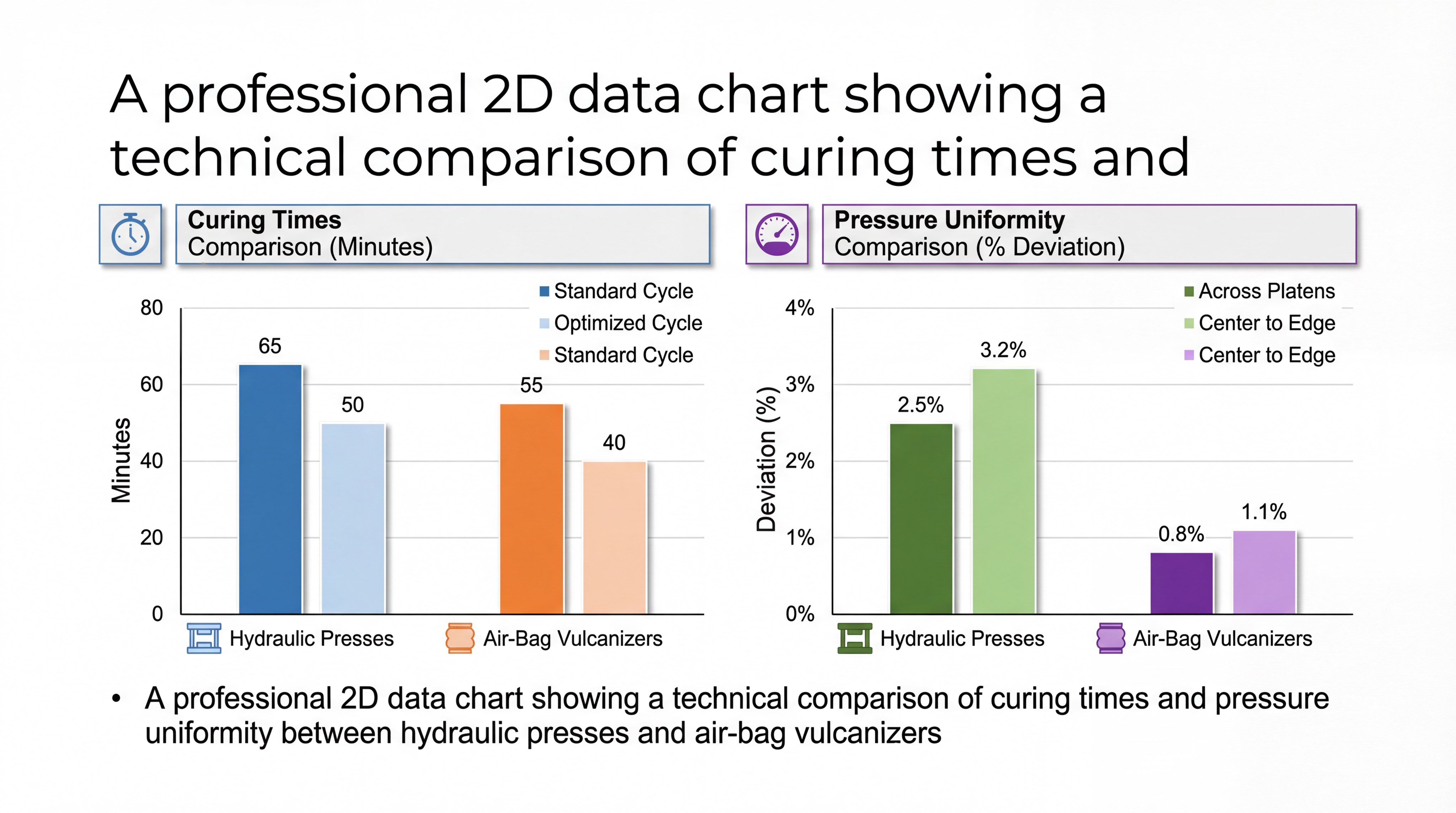
Choosing the best vc rubber conveyor belt splicing machine depends entirely on your belt width, the material being transported, and your site’s power availability. For high-tension steel cord belts, a hydraulic frame press is often the superior choice due to its massive pressure capacity. However, for standard fabric belts, a lightweight sectional aluminum press with a pressure bag system offers the best balance of performance and ease of use.
Should you choose hydraulic or air pressure?
You might be wondering which pressure system is right for your specific needs. Hydraulic systems provide the highest force for thick belts, while air bags offer the most uniform pressure distribution for uneven surfaces.
- Hydraulic: Best for heavy steel cord and extreme tension.
- Air-Bag: Best for fabric belts and irregular thicknesses.
- Manual/Screw: Best for small, low-tension repairs.
But here is the kicker: the “best” machine is the one your team can set up safely and quickly during an emergency.
Key Takeaway: Match the machine’s pressure and heating capabilities to your most critical conveyor belts to ensure ROI.
| Machine Type | Best For | Cooling Speed | |
|---|---|---|---|
| Sectional Aluminum | Fabric belts/Field use | Rapid | |
| Frame Style | Steel cord/Shop use | Standard | |
| Portable Spotter | Small repairs/Edge fixes | Very Fast |
The technical data shows that uniform pressure distribution is more important for joint strength than absolute maximum pressure.
Does vc rubber conveyor belt splicing machine save costs?

Investing in a vc rubber conveyor belt splicing machine saves significant costs by eliminating the need for frequent mechanical fastener replacements and reducing the frequency of belt failures. While the initial investment in a vulcanizing press may seem high, the long-term savings in labor and minimized downtime provide a rapid return on investment. You also avoid the secondary costs associated with mechanical joints, such as increased wear on rollers and pulley lagging.
How do you calculate the return on investment?
You should look at the cost of a single hour of lost production versus the cost of owning your own splicing equipment. In most high-volume industries, the machine pays for itself after just two or three successful on-site repairs.
- Reduced spending on external splicing contractors.
- Lower inventory costs for mechanical fasteners.
- Extended belt life due to seamless, wear-free joints.
But here is the real secret: the biggest saving comes from preventing the catastrophic damage a broken belt can cause to your structure.
Key Takeaway: Owning a vulcanizer shifts your maintenance strategy from reactive “patching” to proactive, permanent solutions.
| Cost Factor | Mechanical Splicing | Vulcanizing Machine | |
|---|---|---|---|
| Consumables | High (Clips/Fasteners) | Low (Cement/Tie Gum) | |
| Belt Life | Shorter (Stress points) | Maximum (Seamless) | |
| Downtime Risk | High (Joint failure) | Very Low (Fused joint) |
The financial dashboard clearly demonstrates that permanent vulcanization is the most cost-effective path for large conveyor systems.
What components are in vc rubber conveyor belt splicing machine?
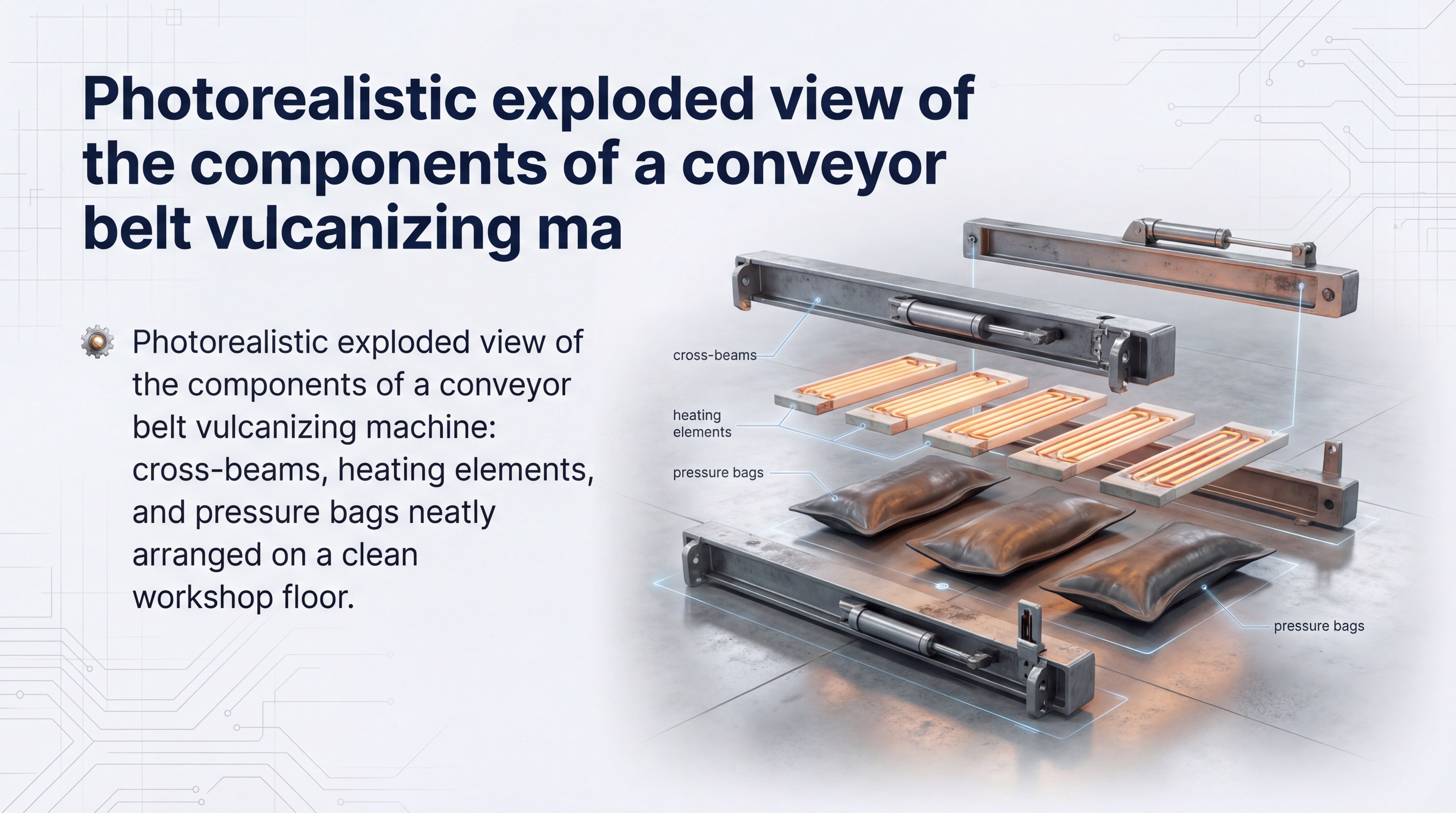
A standard vc rubber conveyor belt splicing machine consists of several key components: the heating platens, the pressure system (either a pressure bag or hydraulic cylinders), the cross-beams, and the control unit. The heating platens are designed with internal resistive elements to provide consistent thermal energy. You use the cross-beams to lock the entire assembly together, ensuring that the pressure generated is directed entirely into the belt joint rather than being lost to frame flex.
How does the control system manage the cure?
You should understand that the control box is the “brain” of the operation, monitoring thermocouples within the platens to adjust the power flow. It ensures that the temperature remains within a narrow band to achieve perfect vulcanization.
- Heavy-duty cross-beams for structural rigidity.
- Flexible heating platens for consistent belt contact.
- Uniform pressure bag for 360-degree force.
- Automatic cooling systems (water or air).
You may find it hard to believe, but even the smallest component, like a thermocouple, can determine the success of a million-dollar belt.
Key Takeaway: Every component must work in perfect harmony to ensure the chemical bond of the rubber is complete.
| Component | Function | Material | |
|---|---|---|---|
| Heating Platen | Provides thermal energy | Aluminum/Silicone | |
| Pressure Bag | Applies uniform force | Reinforced Rubber | |
| Control Box | Regulates cycle timing | Industrial Electronics |
A deep understanding of these components allows your team to troubleshoot and maintain the equipment for decades of service.
How to maintain vc rubber conveyor belt splicing machine?
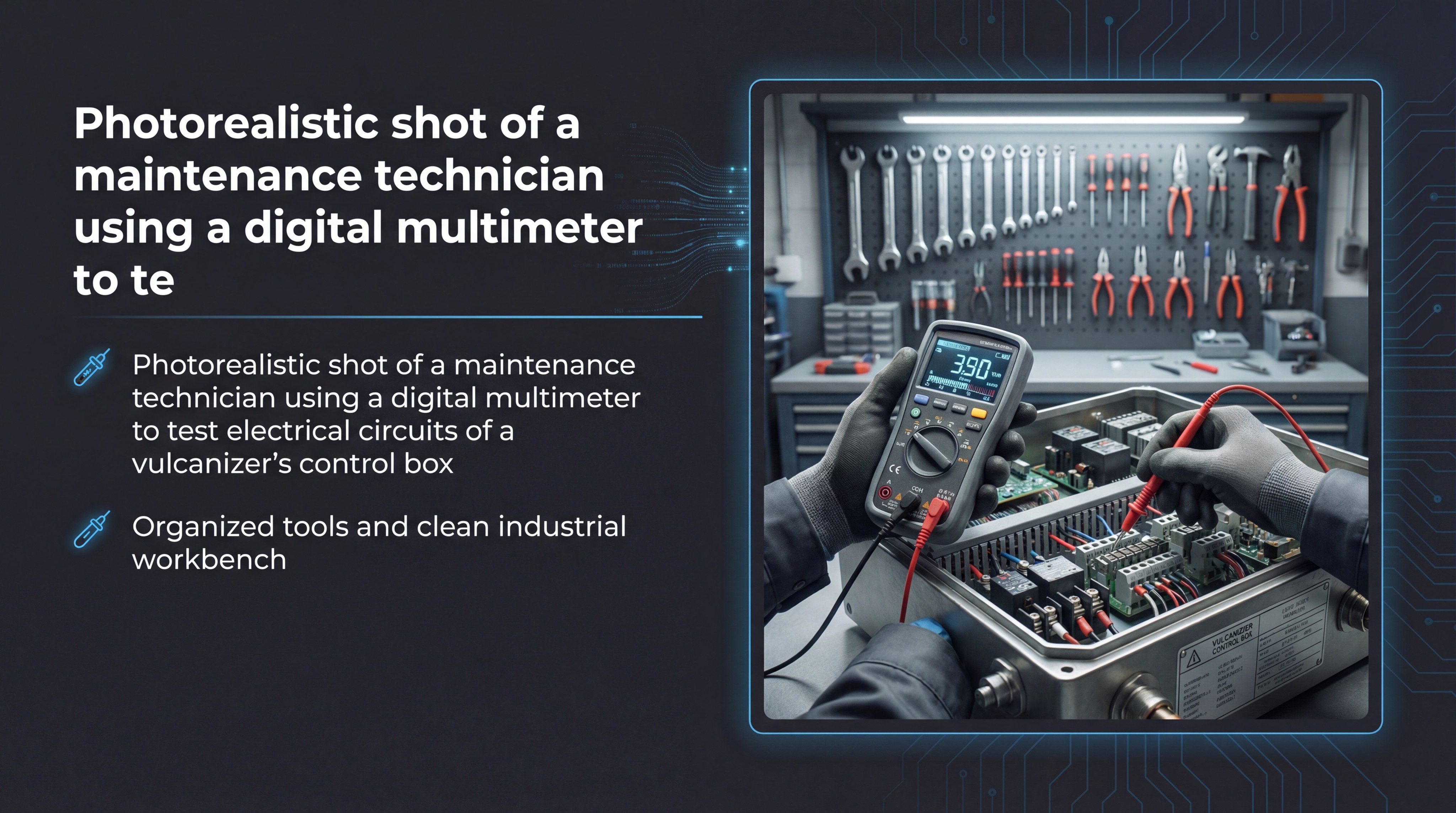
Maintaining your vc rubber conveyor belt splicing machine involves regular electrical testing of the heating elements and inspection of the pressure bag for leaks or wear. You should clean the platens after every use to prevent burnt rubber buildup, which can cause uneven heat transfer in future splices. It is also vital to check the structural bolts and cross-beams for any signs of fatigue or bending that could compromise the safety of the unit under high pressure.
What are the essential monthly checks?
You might be wondering what specific parts fail most often in these heavy-duty machines. Generally, the electrical cables and connectors suffer the most wear due to the harsh environments in which they are deployed.
- Continuity testing of all heating circuits.
- Pressure testing the bag or hydraulic system.
- Calibration of the temperature sensors and PLC.
But here is the kicker: five minutes of inspection today can prevent a major malfunction during your next emergency repair.
Key Takeaway: A well-maintained vulcanizer is a reliable insurance policy against the high costs of conveyor downtime.
How do I store the equipment correctly?
When you are not using the machine, you must store it in a dry, covered area to prevent corrosion of the electrical pins and oxidation of the aluminum. Keeping the components in specialized flight cases or racks ensures they remain organized and ready for immediate deployment.
- Keep heating plates flat to prevent warping.
- Store electrical cables in loose coils.
- Apply anti-corrosion spray to steel bolts.
Key Takeaway: Proper storage and routine maintenance ensure your splicing machine is ready to perform when minutes matter most.
| Maintenance Task | Frequency | Purpose | |
|---|---|---|---|
| Platen Cleaning | After every use | Ensures even heat transfer | |
| Cable Inspection | Monthly | Prevents electrical shorts | |
| Calibration | Yearly | Maintains joint quality |
Following a strict maintenance schedule protects your investment and ensures the safety of your technicians on the job site.
FAQ
Can I use a rubber vulcanizer on a steel cord belt?Yes, but you must ensure the machine is rated for high-pressure hydraulic output to effectively penetrate the rubber around the steel cables.
What’s the best temperature for standard rubber splicing?The standard temperature is typically 145°C, as this provides the optimal balance for chemical cross-linking without damaging the belt surface.
How do I know if my splice was successful?A successful splice will be seamless, show no signs of air bubbles, and have a hardness rating that matches the original belt material.
Can I perform vulcanization in the rain?No, you must provide a sheltered environment because moisture is the leading cause of splice failure and electrical hazards.
How long does a typical vulcanizing cycle take?The total time usually ranges from 4 to 8 hours, including setup, heating, dwelling, and the mandatory cooling period.
Conclusion
At the core of every efficient industrial operation is the ability to maintain a continuous flow of materials. As your global partner for conveyor belt solutions, we understand that a single joint failure can ripple through your entire supply chain. Our commitment to engineering excellence ensures that every vc rubber conveyor belt splicing machine we provide meets the highest standards of safety, durability, and performance. Whether you are operating in the deepest mines or the busiest ports, our technology is designed to empower your team to achieve shop-quality results in the field. To learn more about our complete range of high-performance belts and vulcanizing equipment, or to request a customized solution for your facility, contact us today and let us help you build a more resilient conveyor infrastructure.