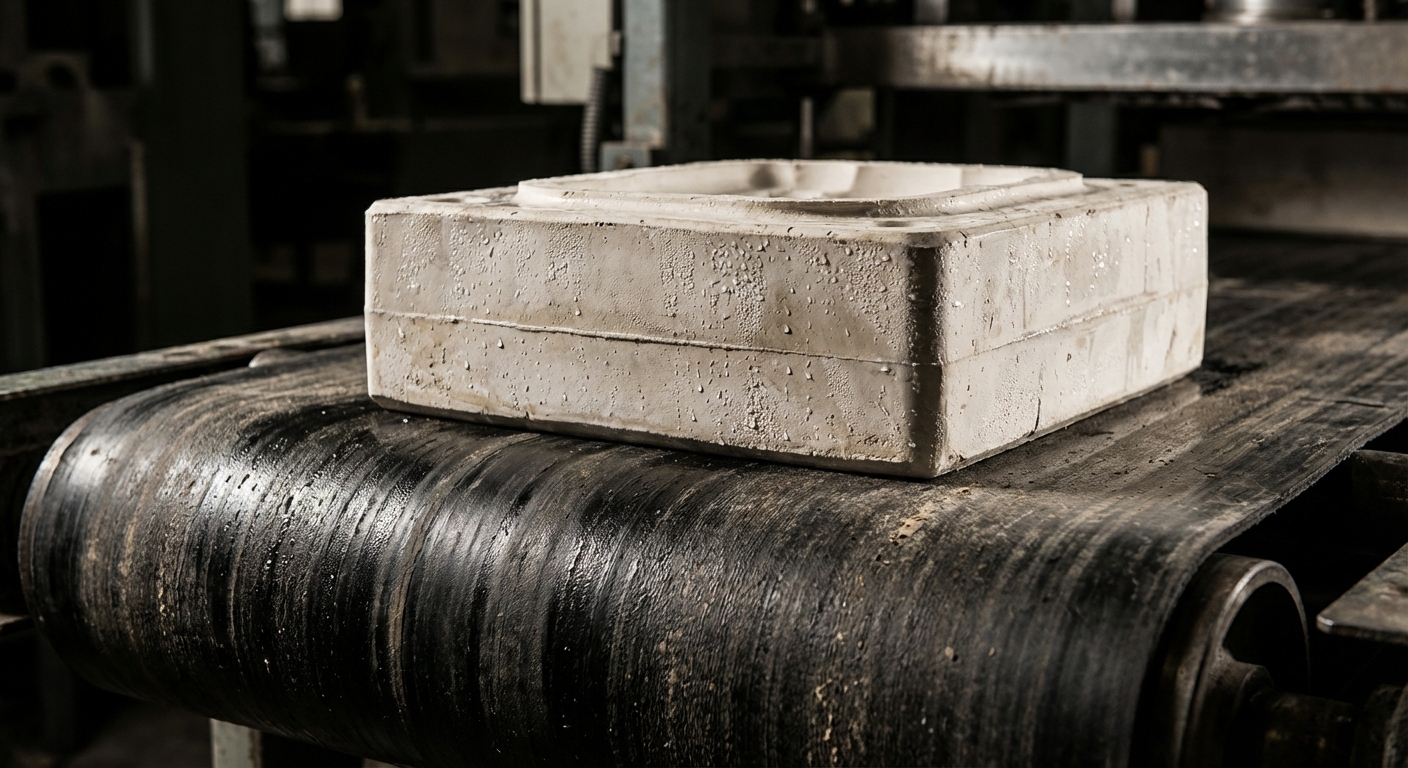
By supplying custom conveyor belt rubber strips, manufacturers improve sealing, alignment, and heat resistance in plaster casting, reducing downtime and ensuring efficient, high-quality production.
What Are Custom Conveyor Belt Solutions for Plaster Casting?
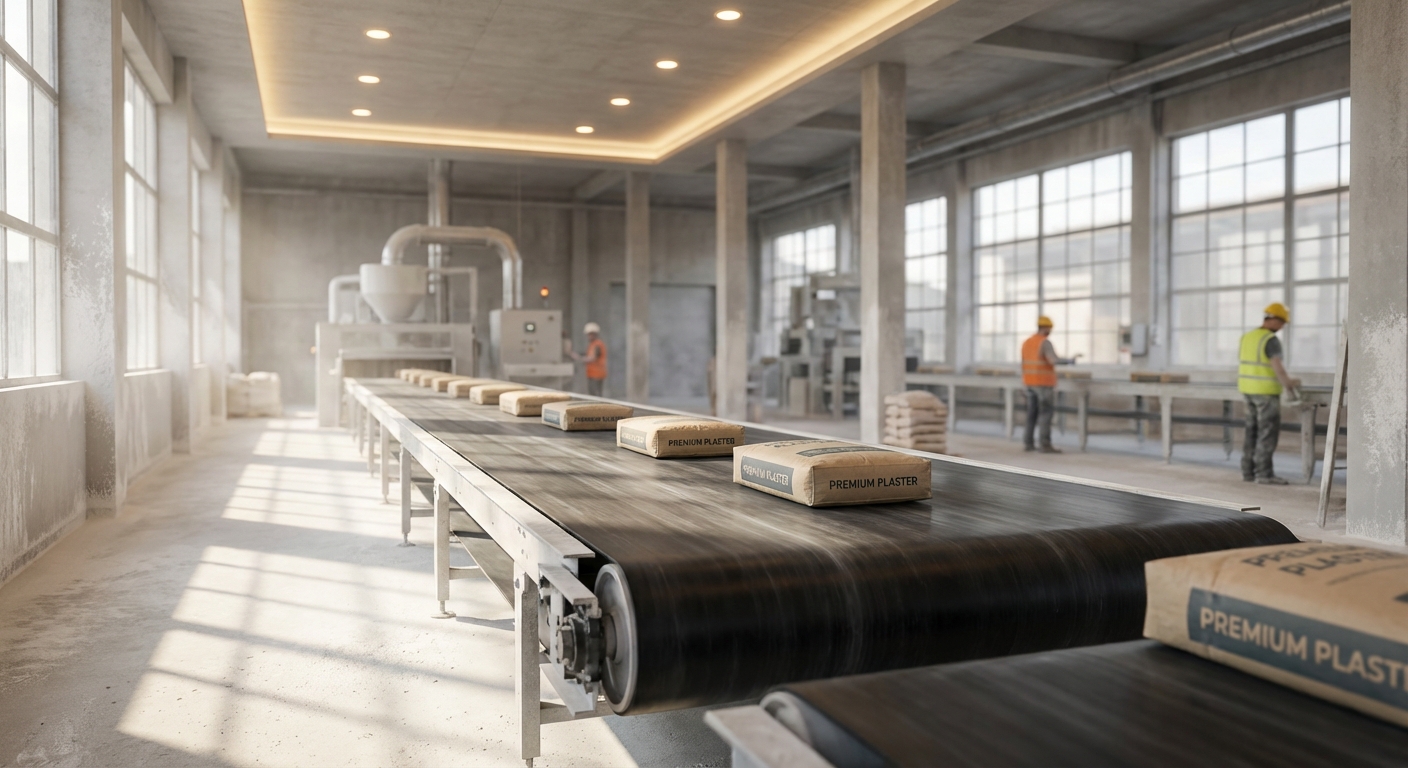
Custom solutions for plaster casting are bespoke industrial belts designed specifically for the chemical composition and physical weight of gypsum-based products. When we focus on supplying custom conveyor belt rubber strips, we ensure the material properties match your specific plant environment. These systems prevent common issues like material slippage and belt warping during the sensitive exothermic setting phase.
How do they differ from standard belts?
Custom solutions differ by using specific rubber polymers that resist the high pH levels of wet plaster and the abrasive nature of dry dust. You will find that these belts are manufactured to exact width and thickness tolerances to minimize product waste.
- Enhanced chemical resistance to gypsum additives.
- Precision-ground surfaces for a smooth casting finish.
- High tensile strength to support heavy wet molds.
Think about it: A standard belt might last months, but a custom-engineered strip is built for years of continuous service.
Is thickness precision really necessary?
Thickness precision is the foundation of a level casting line, ensuring that every architectural mold remains perfectly flat during cooling. If your belt has even slight variations, the plaster blocks or boards may develop structural weaknesses or surface irregularities.
- Uniform heat distribution across the entire belt width.
- Consistent dampening of vibrations during mold settling.
- Elimination of surface marking on the base of the plaster.
The best part? You can achieve zero-tolerance measurements that significantly improve your “Grade A” yield percentages.
Key Takeaway: Custom solutions provide the chemical resilience and dimensional precision that standard industrial belts cannot offer in gypsum environments.
| Feature | Custom Plaster Belt | Standard Rubber Belt | |
|---|---|---|---|
| Surface Finish | Precision Ground | General Smooth | |
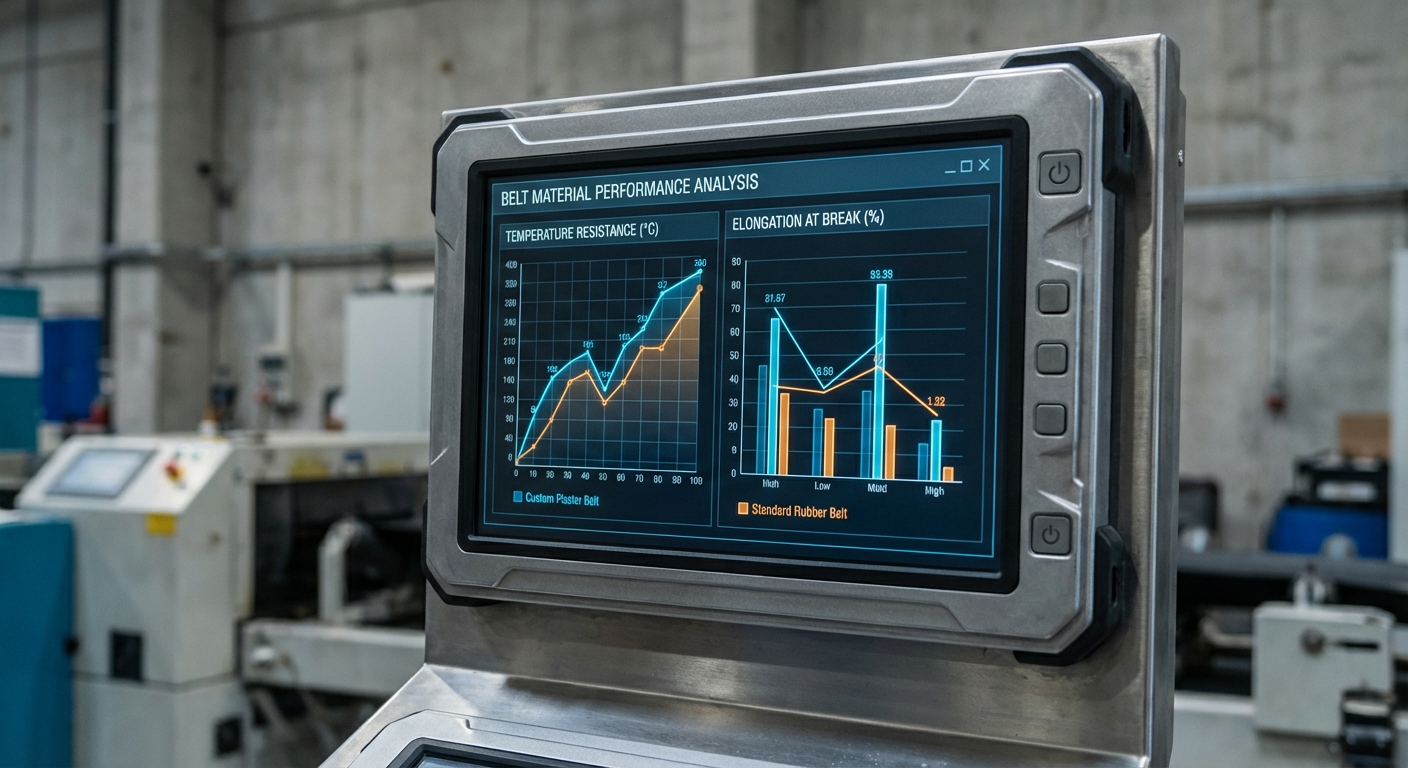
| Heat Resistance | Up to 150°C | Up to 80°C | |
| Elongation | <0.5% | 1.5% – 2.5% |
Customized belts offer nearly double the heat resistance and significantly lower elongation compared to generic alternatives.
How Does a Custom Conveyor Belt Work in Plaster Casting?
A custom conveyor belt works by providing a stable, non-stick platform that transports wet slurry through the setting and drying phases. While supplying custom conveyor belt rubber strips , we optimize the friction levels to ensure molds do not shift during acceleration. This stability is critical for maintaining the integrity of the plaster as it transitions from a liquid to a solid state.
How is heavy load tension managed?
Tension is managed through reinforced internal fabric or steel layers that prevent the belt from stretching under the weight of water-saturated plaster. You can rely on these reinforced cores to maintain perfect tracking even across long production spans.
- High-modulus fabric layers to reduce belt elongation.
- Automated tracking features integrated into the belt edges.
- Variable speed compatibility for different plaster grades.
Look: Without these reinforcements, your belt will sag, causing the plaster to crack before it reaches the end of the line.
What is the role of surface texture?
Surface texture acts as a built-in release agent, allowing you to remove set plaster molds without any sticking or damaging the edges. We customize the top cover of the rubber strips to provide the exact level of “tack” or smoothness your process demands.
- Non-stick silicone-infused rubber compounds for easy release.
- Micro-textured finishes to prevent vacuum suction under molds.
- Easy-clean surfaces that resist the accumulation of plaster dust.
As it turns out, the right surface texture can reduce your manual cleaning time by up to 30% per shift.
Key Takeaway: The mechanism relies on internal reinforcement for stability and specialized surface chemistry for clean mold separation.
| Component | Function | Technical Benefit | |
|---|---|---|---|
| Inner Core | Load Support | Prevents sagging and cracking | |
| Top Cover | Mold Interface | Ensures clean, damage-free release | |
| Edge Strips | Alignment | Maintains tracking at high speeds |
The combination of core strength and surface chemistry directly impacts the mechanical reliability of your entire casting line.
Where Are Custom Conveyor Belt Rubber Strips Used?
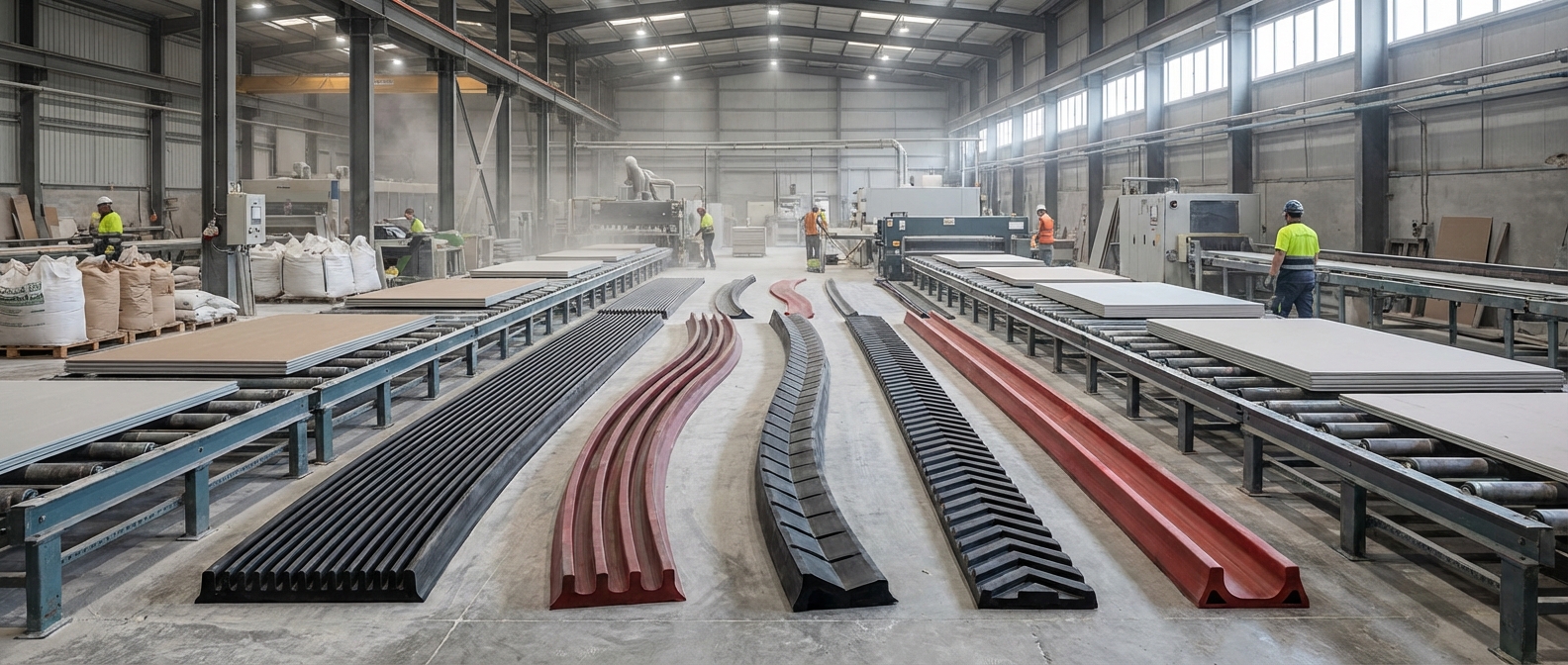
Custom conveyor belt rubber strips are used at the pouring station, the setting tunnel, and the final drying oven transition zones. By supplying custom conveyor belt rubber strips, we help you seal the edges of your main belt to prevent slurry overflow. You will find these strips integrated into high-wear areas where standard components typically fail due to moisture or heat.
How are they used in edge sealing?
Edge-sealing strips are used to create a flexible “tub” on the main conveyor, containing the liquid plaster slurry until it hardens. You can install these custom-profiled strips to protect your conveyor’s motor and rollers from corrosive plaster buildup.
- Flexible sidewall profiles for deep-pour applications.
- Reinforced rubber skirting for dust and slurry containment.
- Custom-angled profiles to guide material flow toward the center.
Believe it or not, improper edge sealing is the primary cause of bearing failure in plaster plant machinery.
Where do they fit in drying phases?
In drying phases, these strips serve as heat-resistant supports that allow air to circulate around the plaster blocks while moving through high-temp ovens. You need compounds that do not off-gas or become brittle when exposed to the consistent heat required for curing.
- Perforated rubber strips for enhanced mold ventilation.
- Low-thermal-conductivity compounds to protect the belt core.
- High-grip profiles for inclined drying tunnels.
The result? Your drying times become more predictable, allowing for a faster and more efficient production cycle.
Key Takeaway: Custom strips are critical for containment during the liquid phase and protection during the high-heat curing phase.
| Application | Strip Type | Material Goal | |
|---|---|---|---|
| Pouring | Flexible Skirting | Prevent slurry leakage | |
| Curing | Heat-Resistant Profile | Support molds at 100°C+ | |
| Packaging | Friction Strips | Precise alignment for boxing |
Strategic placement of custom strips solves the most common “bottleneck” issues found in standard plaster production lines.
What Is the Process of Supplying Custom Conveyor Belt Rubber Strips?
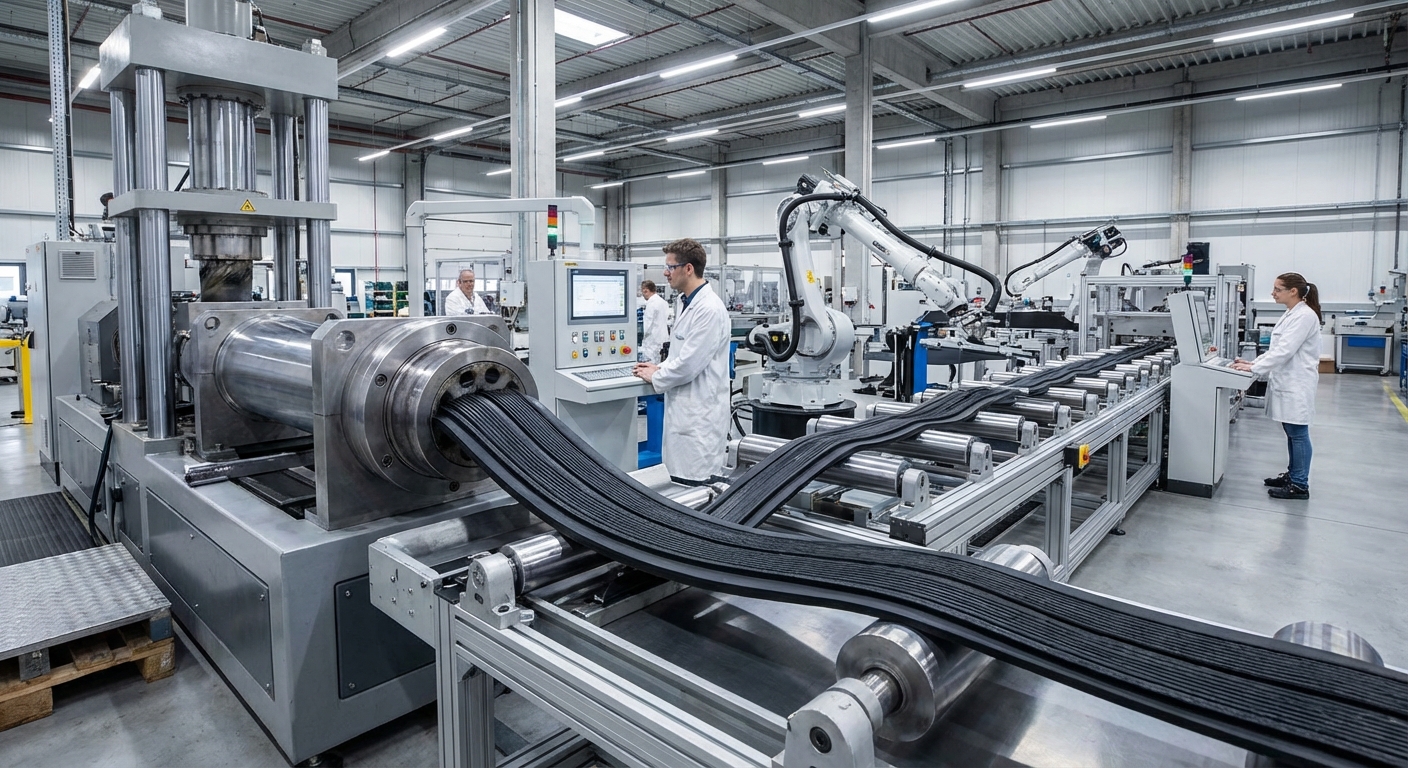
The process involves a technical machinery audit followed by material compounding and precision vulcanization to meet your plant’s specs. When supplying custom conveyor belt rubber strips , we analyze the specific chemicals in your gypsum to ensure the rubber won’t degrade. You receive a solution that is tailored in shore hardness and reinforcement type for your specific load requirements.
How do we select the rubber compound?
Selecting the compound involves testing various rubber samples against your specific plaster additives and operational temperature ranges. You can choose from EPDM for extreme heat or Nitrile if your process uses oil-based release agents.
- Laboratory friction analysis of different rubber polymers.
- High-temperature stress testing for drying tunnel compatibility.
- Chemical immersion checks for resistance to gypsum additives.
It’s simpler than you think: Choosing the right material upfront eliminates the need for emergency belt repairs later.
What steps ensure precision manufacturing?
Manufacturing involves high-pressure extrusion or molding to create strips with exact cross-sectional dimensions for your machinery. We use laser-guided calibration to verify that the thickness remains uniform throughout the entire production run.
- Computer-controlled extrusion for complex sealing profiles.
- Multi-stage curing to ensure structural and chemical uniformity.
- Laser-guided cutting for precise width and edge finishing.
The bottom line? Precision manufacturing ensures that the strips integrate perfectly with your existing frames on the first attempt.
Key Takeaway: The supply process is a data-driven journey from material analysis to precision extrusion, ensuring a perfect functional fit.
| Step | Action | Outcome | |
|---|---|---|---|
| Compounding | Mixing Polymers | Chemical stability | |
| Extrusion | Shaping Profiles | Dimensional accuracy | |
| Vulcanization | Heat Curing | Structural durability |
Advanced manufacturing techniques ensure that every meter of rubber strip meets the exact specifications required for high-volume plaster casting.
Why Are Custom Solutions Essential for Plaster Casting?
Custom solutions are essential because the combination of moisture, abrasive grit, and heat quickly destroys generic industrial belts. By supplying custom conveyor belt rubber strips, we provide the durability needed to prevent frequent production shutdowns for cleaning or repair. You will see a measurable increase in your plant’s uptime when using belts designed for the unique environment of gypsum.
How do custom belts reduce downtime?
Custom belts reduce downtime by eliminating tracking issues and edge fraying that occur when non-specific materials are used on specialized machinery. You can spend less time adjusting tensioners and more time overseeing the actual output of your plant.
- Impact-resistant layers to protect against mold placement.
- Anti-static properties to prevent dry plaster dust buildup.
- Reinforced edges that resist mechanical wear and snagging.
Wait, there’s more: Custom belts are often designed for faster cleaning, further reducing the time required for shift transitions.
Can they impact final product quality?
Yes, the impact on quality is seen in the flawless surface finish of your products, free from the marks left by standard belt seams. You can achieve the high-end architectural finish that customers demand, allowing you to command a premium price.
- Seamless construction to prevent patterns on the plaster base.
- Vibration-absorbing cores for uniform material setting.
- Consistent speed control to prevent slurry rippling.
You’ll find that a more stable belt directly translates to a more consistent and higher-quality plaster product.
Key Takeaway: Customization is the only way to balance the conflicting needs of heat resistance, chemical stability, and surface perfection.
| Benefit | Custom Solution | Business Result | |
|---|---|---|---|
| Durability | 3x Longer Life | Lower replacement costs | |
| Finish | Zero-Mark Surface | Higher product pricing | |
| Alignment | Self-Tracking | Lower labor maintenance |
Investing in custom-designed belts offers a high ROI by simultaneously reducing costs and increasing the value of your final goods.
What Are the Material Advantages of Custom Rubber Strips?
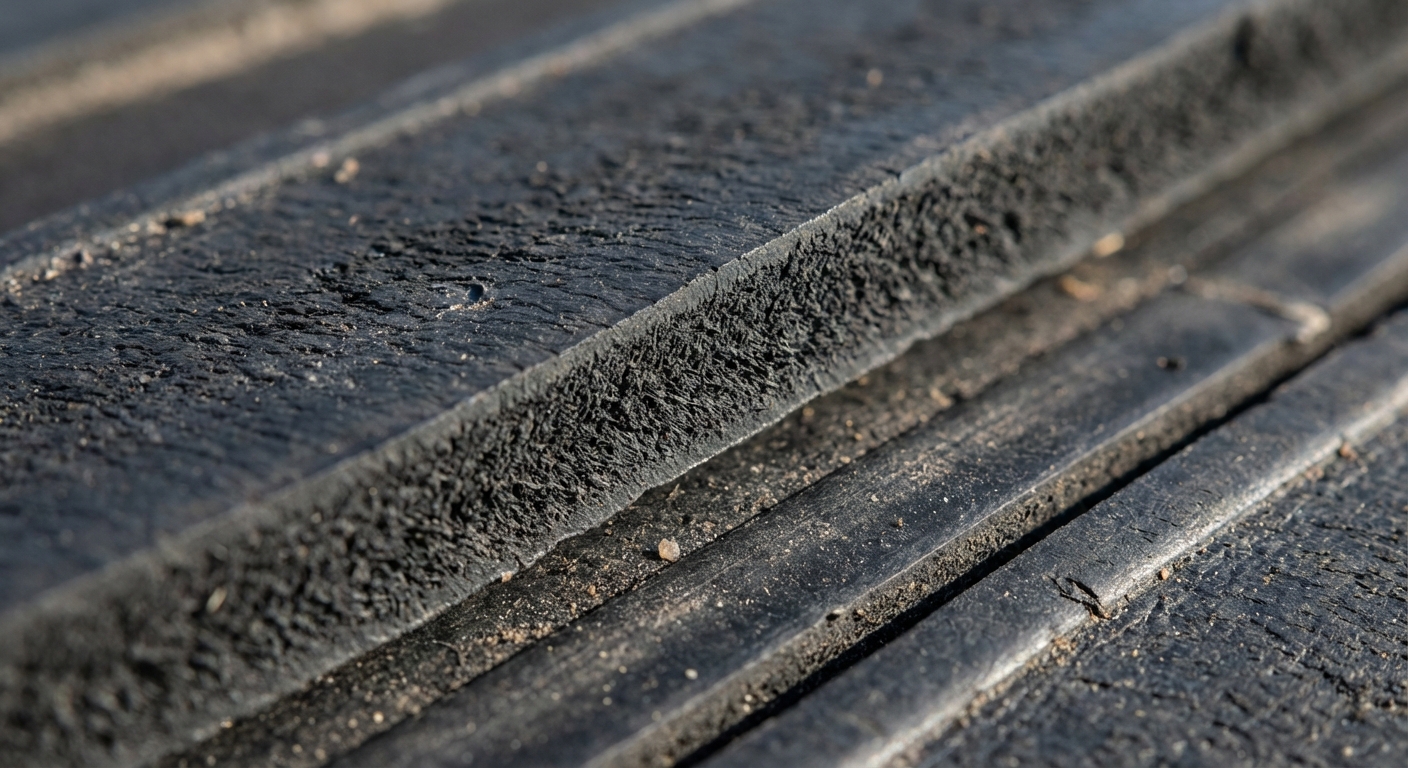
The material advantages include superior elastic memory and high resistance to the “caking” of dry plaster on the belt surface. When supplying custom conveyor belt rubber strips , we use high-grade polymers that maintain their flexibility after thousands of cycles. You will notice that these materials do not crack or become brittle even under the repetitive stress of pulley transitions.
Why use EPDM for drying tunnels?
EPDM offers exceptional resistance to heat and weathering, making it the perfect choice for belts that must pass through high-temperature curing zones. You can maintain constant drying temperatures without worrying about the rubber surface degrading or off-gassing.
- Operational range up to 150°C (302°F) for curing.
- High resistance to UV and ozone in industrial plants.
- Superior flexibility at both high and low temperatures.
Think about it: If your belt can survive the heat, your entire production line stays moving without interruption.
Does shore hardness matter for molds?
Shore hardness customization allows you to select a surface that is soft enough to protect delicate molds but hard enough to resist permanent indentations. You can specify different durometer ratings to match the specific weight and fragility of your various plaster products.
- Soft compounds for intricate architectural cornices and moldings.
- Medium hardness for standard wallboards and ceiling tiles.
- High durometer for heavy industrial casting applications.
The best part? You can customize different sections of the same belt with different hardness levels for specialized lines.
Key Takeaway: Advanced materials like EPDM and tailored durometers protect the belt from heat while safeguarding the integrity of the molds.
| Material Property | Advantage | Best For | |
|---|---|---|---|
| EPDM Polymer | High Heat Resistance | Drying Tunnels | |
| Shore A 60 | Balanced Flexibility | Standard Casting | |
| Low Surface Energy | Easy Mold Release | High-Speed Lines |
Tailoring the chemical and physical properties of the rubber ensures that every part of the belt serves its specific functional purpose.
How Do Custom Belts Improve Production Speed?
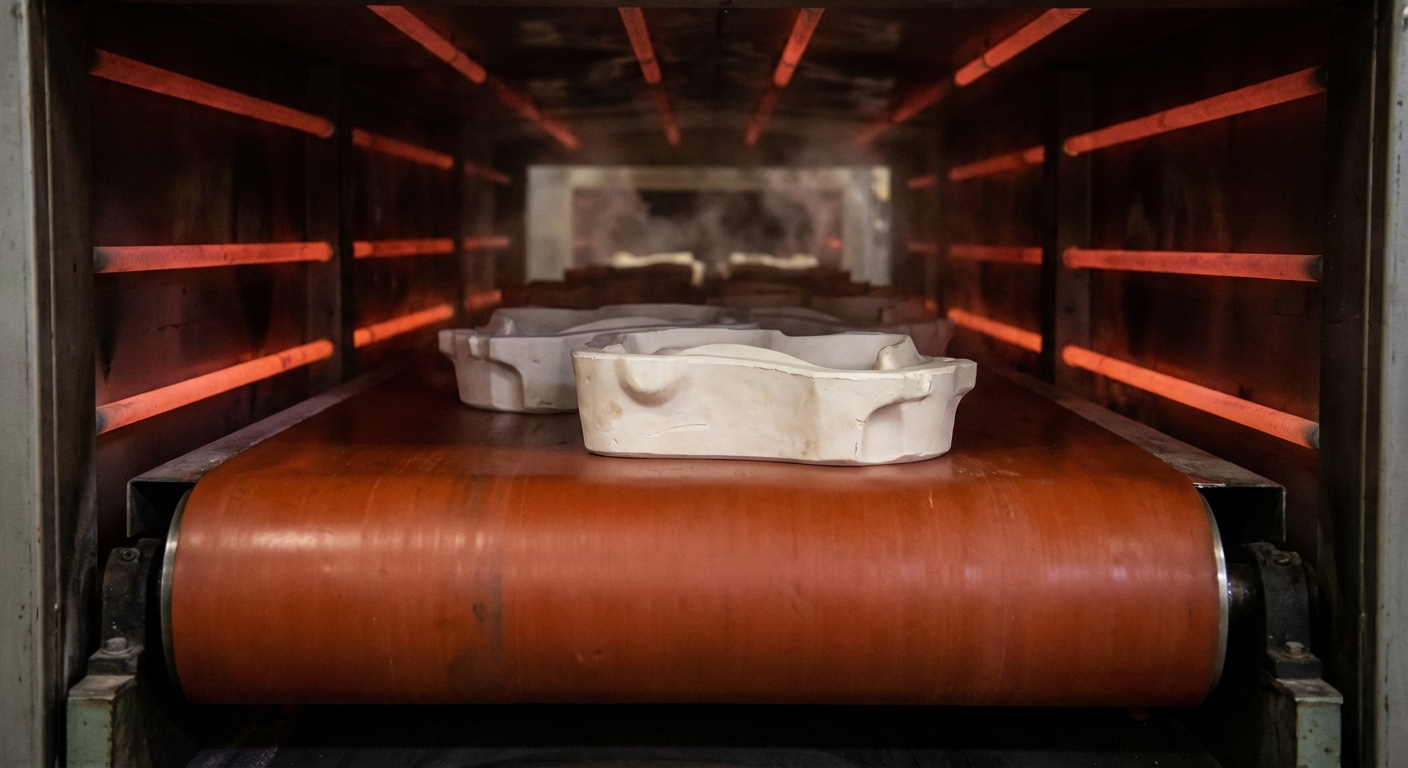
Custom belts improve speed by allowing for higher conveyor velocities without the risk of wet plaster molds shifting or deforming. By supplying custom conveyor belt rubber strips, we enable your system to handle faster acceleration and deceleration cycles with confidence. You can maximize your daily throughput and meet more demanding delivery schedules without compromising on product quality.
Can V-guides increase your RPM?
Integrated V-guides on the underside of the belt prevent “snaking” at high speeds, ensuring the belt stays perfectly centered on the pulleys. You can run your motors at higher RPMs because the mechanical risk of a belt jumping the track is virtually eliminated.
- Integrated V-guides for perfect, self-correcting alignment.
- Low-friction bottom covers to reduce motor and energy load.
- Precision-balanced belt weight for smooth, high-speed rotation.
Here is the deal: High speed is only useful if the belt stays straight, and custom guides provide that stability.
How do quick-release surfaces help?
Quick-release surfaces allow the plaster to be de-molded sooner, effectively shortening the time each product spends on the conveyor line. You can increase the total number of cycles per shift, which significantly raises your total monthly production output.
- Specialized non-stick coatings to reduce “dwell time.”
- Improved thermal transfer for faster cooling of the plaster.
- Minimal residue buildup for faster belt cleaning cycles.
As it turns out, saving just five seconds per mold can add up to an extra hour of production every single day.
Key Takeaway: Production speed is enhanced through mechanical tracking stability and surface technologies that shorten the cooling and de-molding process.
| Speed Factor | Custom Feature | Production Gain | |
|---|---|---|---|
| Tracking | Integrated V-Guides | +20% RPM | |
| De-molding | Silicone-Rubber Blend | -15% Cycle Time | |
| Uptime | Self-Cleaning Profile | +10% Availability |
Increasing velocity and reducing downtime through customization leads to a significant compounding effect on your total plant efficiency.
What Technical Standards Apply to Plaster Casting Belts?
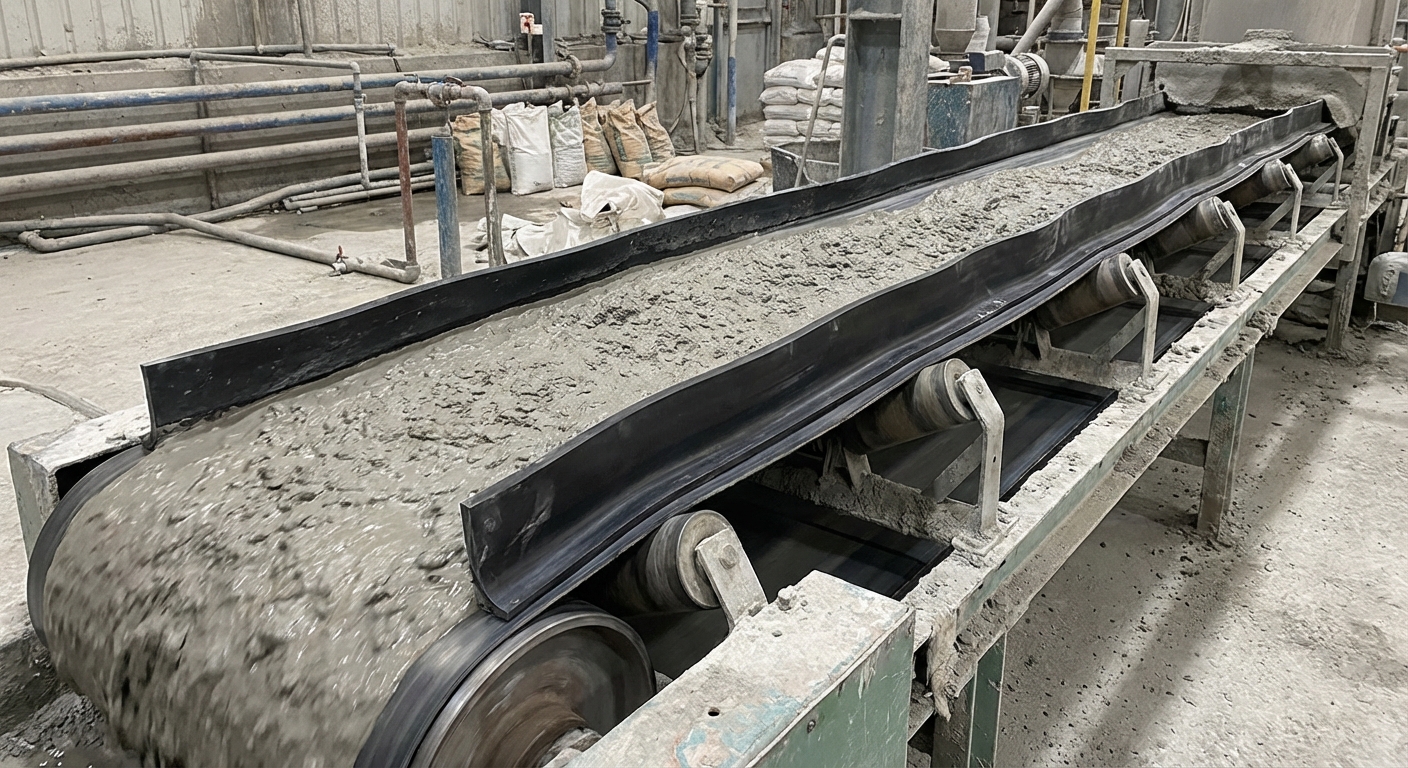
Technical standards include ISO 9001 for manufacturing quality and specific DIN standards for abrasion and heat resistance. When supplying custom conveyor belt rubber strips , we adhere to global performance benchmarks to ensure your equipment is safe and compliant. You can request full documentation and test reports to verify that our belts meet international industrial regulations.
What are the ISO requirements?
ISO requirements ensure that the tensile strength and elongation of the rubber meet rigorous safety margins for heavy industrial use. You can be certain that your belt will not snap or deform under the maximum rated load of your machinery.
- ISO 284 for electrical conductivity and safety standards.
- ISO 340 for flame retardancy in industrial environments.
- ISO 10247 for high-quality rubber cover grades.
Think about it: Certified belts aren’t just about performance; they are about protecting your workforce and your facility.
How is abrasion resistance measured?
Abrasion resistance is measured using the DIN 53516 test, which calculates how much material is lost when subjected to constant friction. You should look for low “volume loss” numbers to ensure your belt survives the grinding effect of dry plaster dust.
- Standard DIN-Y for general abrasion resistance.
- Premium DIN-X for high-impact and heavy-wear zones.
- Custom compounds for extreme grit and dust resistance.
The bottom line? A high-grade abrasion rating can double the lifespan of your conveyor belt in a dusty gypsum plant.
Key Takeaway: Adherence to ISO and DIN standards guarantees that your custom belts are both safe and durable for harsh plaster environments.
| Standard | Area of Focus | Requirement | |
|---|---|---|---|
| ISO 22721 | Fabric Construction | Minimum Tensile Strength | |
| DIN 22102 | Rubber Cover | Maximum Abrasion Loss | |
| EN 12882 | Operational Safety | Flame & Static Resistance |
Compliance with these standards ensures that your investment is protected by globally recognized quality and safety metrics.
How Can You Choose a Reliable Supplier for These Belts?
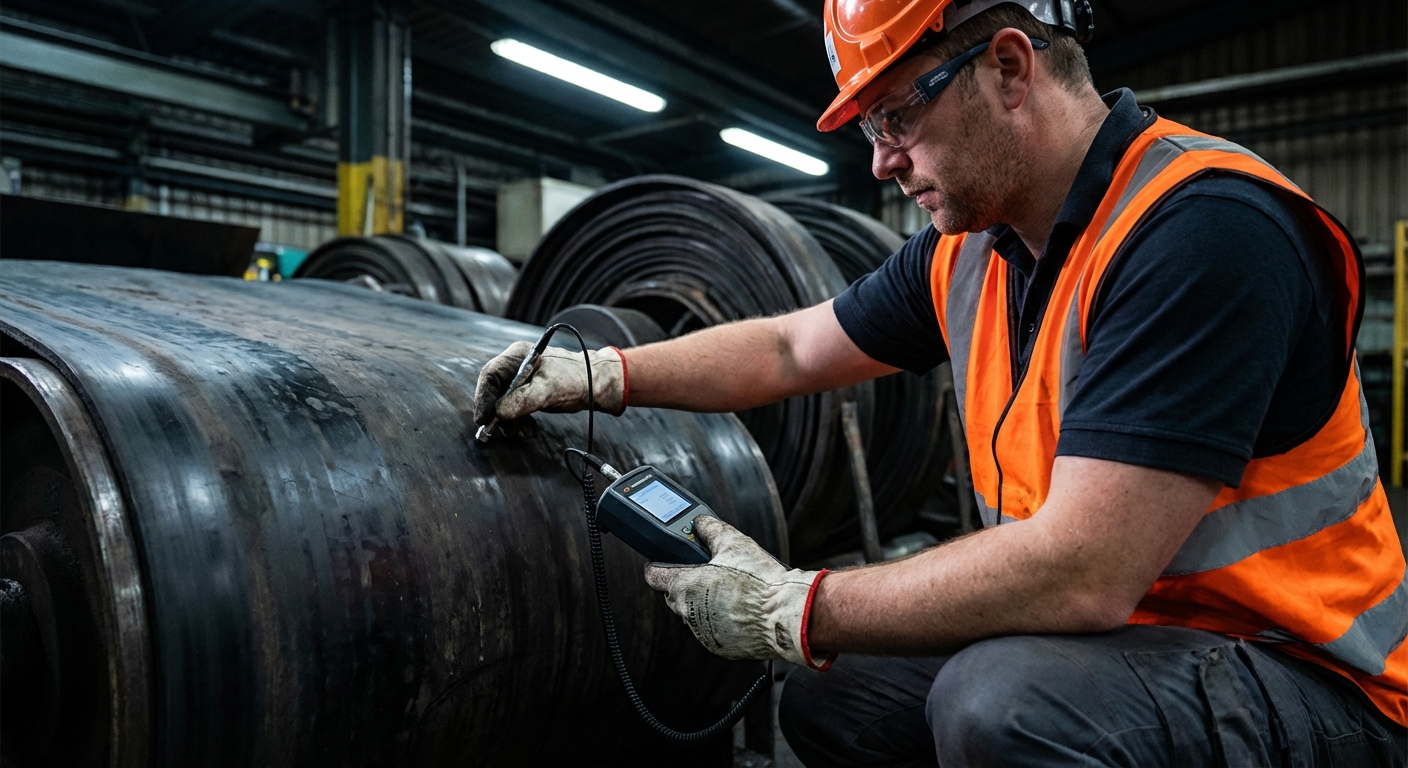
Choosing a reliable supplier requires evaluating their experience in the gypsum industry and their ability to provide custom engineering. By supplying custom conveyor belt rubber strips, we demonstrate a commitment to providing long-term technical solutions rather than just generic products. You should look for a partner who controls the entire manufacturing process, from raw rubber mixing to the final quality check.
What should you look for in a factory?
Look for a supplier with in-house R&D and advanced vulcanization equipment capable of handling wide belts up to 3200mm. You will benefit from a manufacturer that can customize every aspect of the belt, including its width, profile, and chemical compound.
- ISO-certified production facilities for consistent quality.
- Dedicated testing labs for rubber chemistry and durability.
- Modern extrusion machinery for complex custom profiles.
Here is the deal: If a supplier doesn’t make the rubber themselves, they cannot guarantee the specific performance specs you need.
Why is post-sale support critical?
Technical support is critical because plant conditions can change, requiring adjustments to belt tension, tracking, or surface treatments. You need a supplier who can provide rapid troubleshooting and on-site repair services to keep your production line moving.
- 24/7 emergency response for unexpected belt failures.
- On-site splicing and jointing services for fast repairs.
- Quarterly maintenance audits to identify issues early.
As it turns out, the most valuable part of a supplier relationship is the support they provide a year after the installation.
Key Takeaway: A reliable supplier is a manufacturer who controls their own production and offers ongoing technical field support.
| Criteria | Why It Matters | Our Capability | |
|---|---|---|---|
| Experience | Industry Knowledge | 40+ Years in Rubber | |
| Customization | Machine Fit | Precise Widths & Profiles | |
| Support | Uptime | 24/7 Technical Hotline |
Choosing a manufacturer with deep industry expertise ensures that your custom belts will perform as expected in real-world conditions.
How Should You Maintain Custom Made Conveyor Belts?
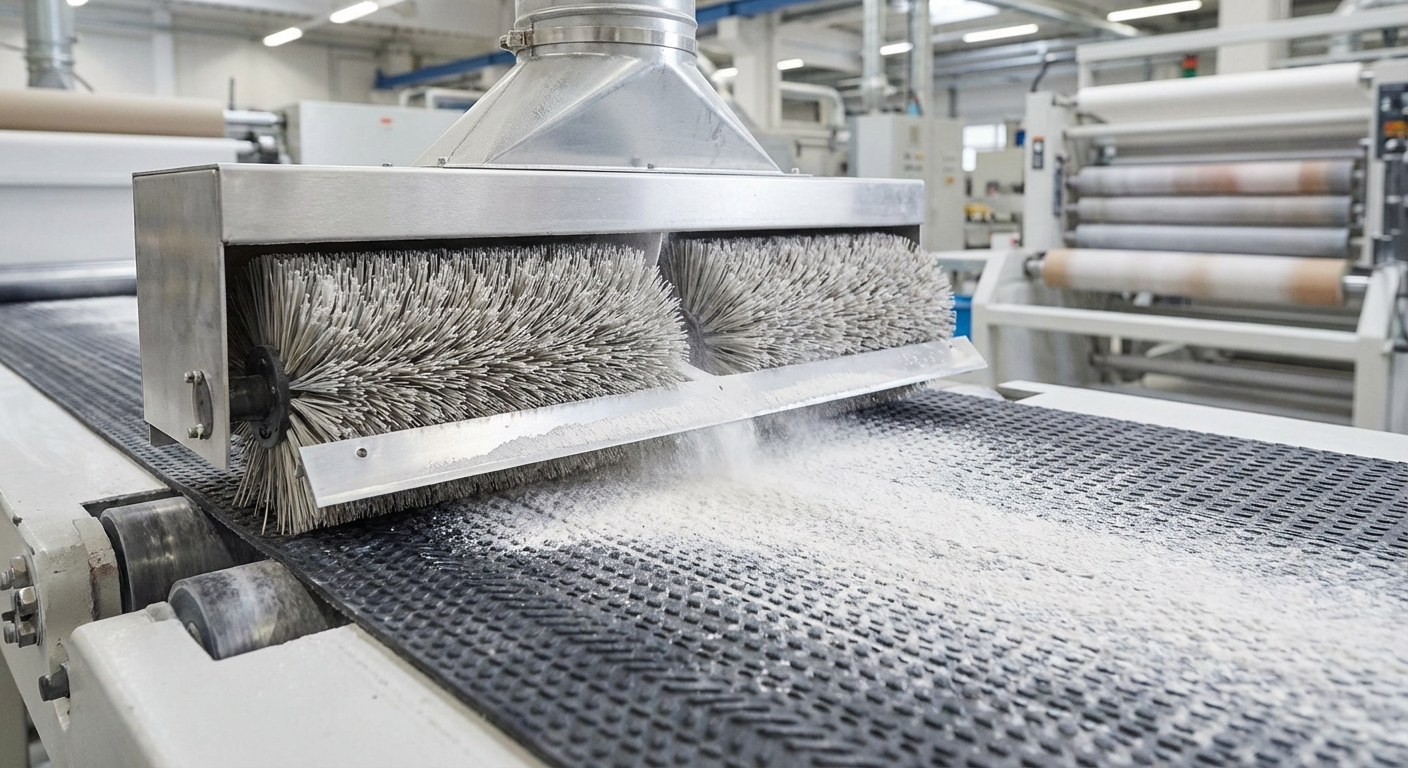
Maintaining custom belts involves regular cleaning of plaster residue and periodic inspection of the edges and splices. When supplying custom conveyor belt rubber strips , we recommend a preventative maintenance schedule that aligns with your volume. You can extend the life of your investment by ensuring that the belt never runs with excessive material buildup or “caking.”
What is the best way to clean residue?
The best way to clean residue is using specialized rubber scrapers and high-pressure air systems that remove dust without damaging the surface. You should avoid using harsh metal scrapers that can gouge or scratch the custom rubber cover.
- UHMWPE scrapers for gentle but effective cleaning.
- Automated brush systems for removing dry plaster dust.
- Water-mist systems for clearing wet slurry before it sets.
Believe it or not, a clean belt can last up to 40% longer than one that is allowed to accumulate dried plaster.
How often should you check tension?
You should check tension and tracking at the start of every shift to ensure that thermal expansion has not caused the belt to slacken. You can also use automated sensors to monitor tracking in real-time, alerting your team to issues before they cause a shutdown.
- Daily visual inspection of belt edges for signs of wear.
- Weekly checks of splice integrity and surface condition.
- Monthly lubrication of pulleys and tracking bearings.
The result? You avoid catastrophic belt failures by identifying and fixing small mechanical issues before they escalate.
Key Takeaway: Preventative maintenance, focused on cleaning and tension monitoring, is the secret to maximizing the ROI of your custom belts.
| Task | Frequency | Objective | |
|---|---|---|---|
| Scraper Check | Daily | Prevent material buildup | |
| Edge Inspection | Weekly | Identify tracking issues | |
| Splice Check | Quarterly | Ensure joint stability |
A disciplined maintenance routine protects your investment and ensures that your plaster production remains at peak efficiency.
Conclusion
Custom made conveyor belt solutions for plaster casting solve the most persistent problems in the gypsum industry: slurry leakage, premature belt failure, and surface defects. By providing tailored rubber compounds and precision-engineered profiles, we address the specific abrasive and thermal challenges of your plant. Whether you are dealing with high-heat drying tunnels or delicate architectural molds, our custom strips ensure your facility operates with maximum uptime and minimal waste.
Our vision is to pioneer the most durable and efficient material handling solutions for the global construction industry. We are committed to helping you reduce operational costs and improve product quality through superior rubber technology. If you are ready to eliminate downtime and enhance your production standards, contact us today for a technical consultation and a customized quote for your facility.
Frequently Asked Questions
Can I order custom rubber strips for a system not built by you?Absolutely. We specialize in retrofitting existing conveyor frameworks with modern, high-performance rubber materials designed to your exact dimensions. You only need to provide the specifications of your current machinery for a perfect fit.
What’s the best rubber compound for high-temperature ovens?The best choice is typically EPDM (Ethylene Propylene Diene Monomer) because of its exceptional heat resistance. It is specifically formulated to withstand continuous exposure to temperatures up to 150°C without losing its structural integrity.
How do I determine the shore hardness I need for my molds?The choice depends on the weight and surface detail of your products; generally, 60-70 Shore A is ideal for standard boards, while 40-50 Shore A is better for delicate moldings. Our engineers can provide samples to help you find the perfect balance.
Are custom rubber strips more expensive than standard options?While the initial cost may be slightly higher, custom strips are far more cost-effective because they last 2-3 times longer and reduce product scrap. You will see a significant reduction in your total cost of ownership over the belt’s lifespan.
Do you provide on-site installation and maintenance support?Yes, we offer comprehensive on-site services, including precision splicing, belt installation, and regular maintenance audits. Our goal is to ensure your custom conveyor solution performs at its peak throughout its entire service life.