
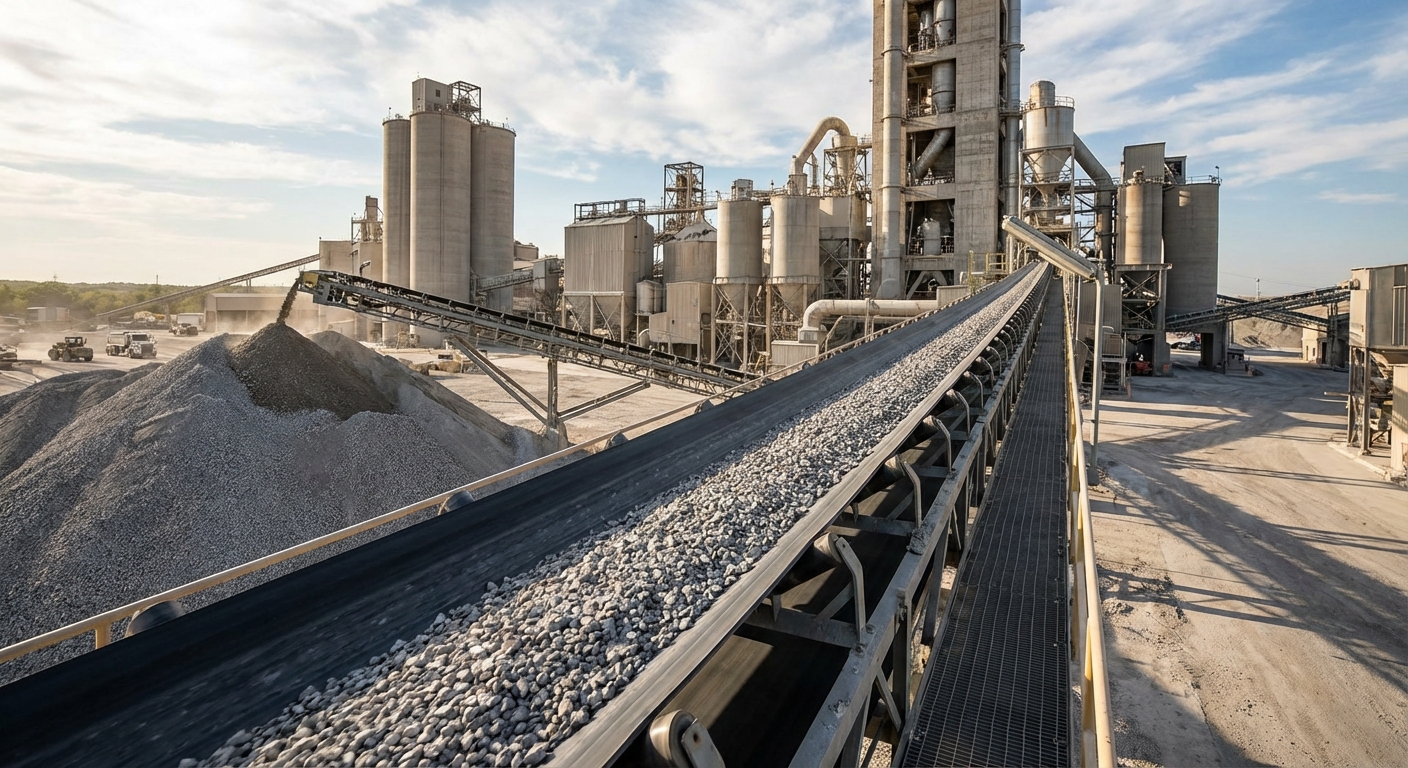
A precise rubber belt conveyor specification ensures proper material selection, strength, and durability, reducing failures, improving safety, and maximizing uptime in industrial applications.
Why is precise specification the backbone of your project?
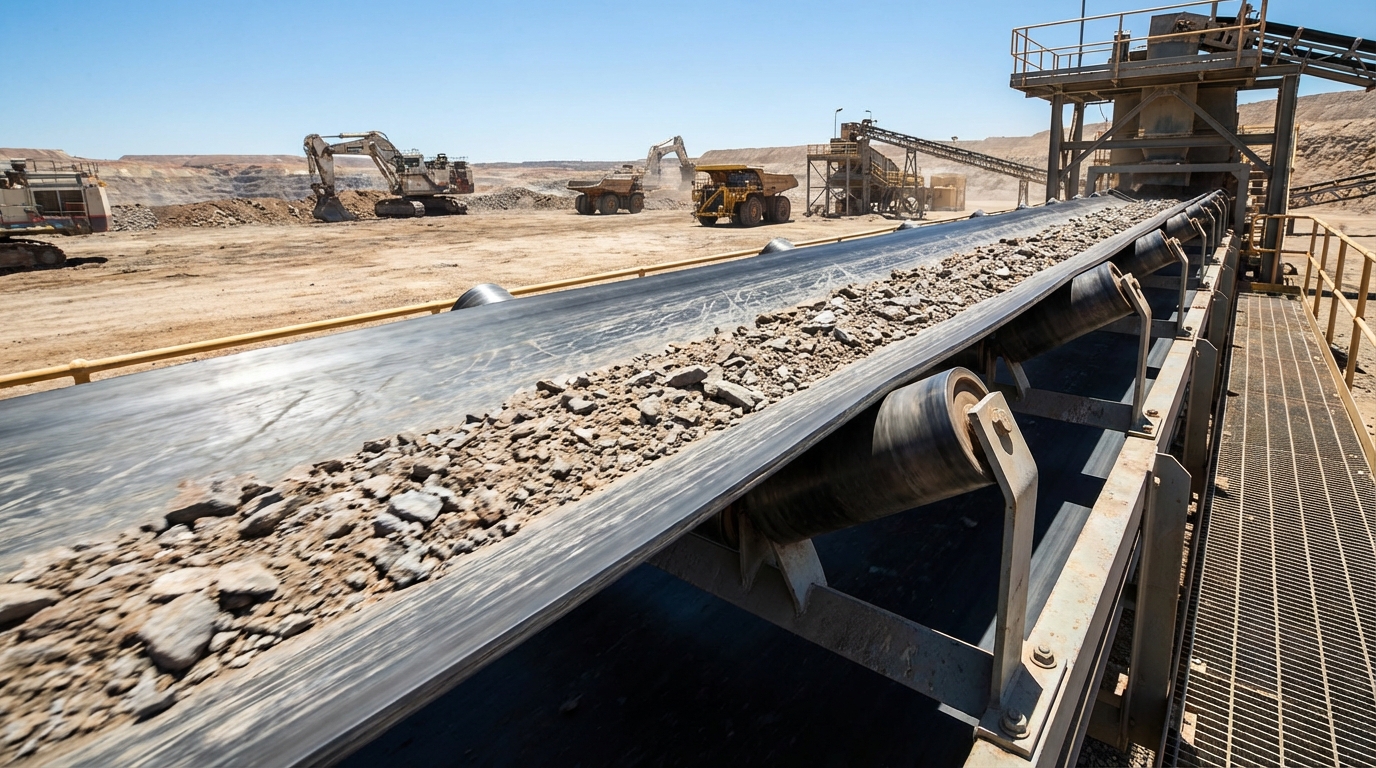
A precise rubber belt conveyor specification ensures that every mechanical component, from pulleys to drive motors, operates within its intended engineering limits. This document acts as the technical contract between you and the manufacturer to guarantee performance. Without these details, you risk receiving a product that cannot handle your specific load or troughing requirements.
Does application data matter?
Think about this: a belt designed for grain will fail instantly if placed in a sharp rock quarry. You must define the density, temperature, and abrasiveness of your materials before finalizing your order.
- Material lump size and weight.
- Operating temperature ranges.
- Environmental exposure (UV, oil, or chemicals).
- Inclination angles and feed heights.
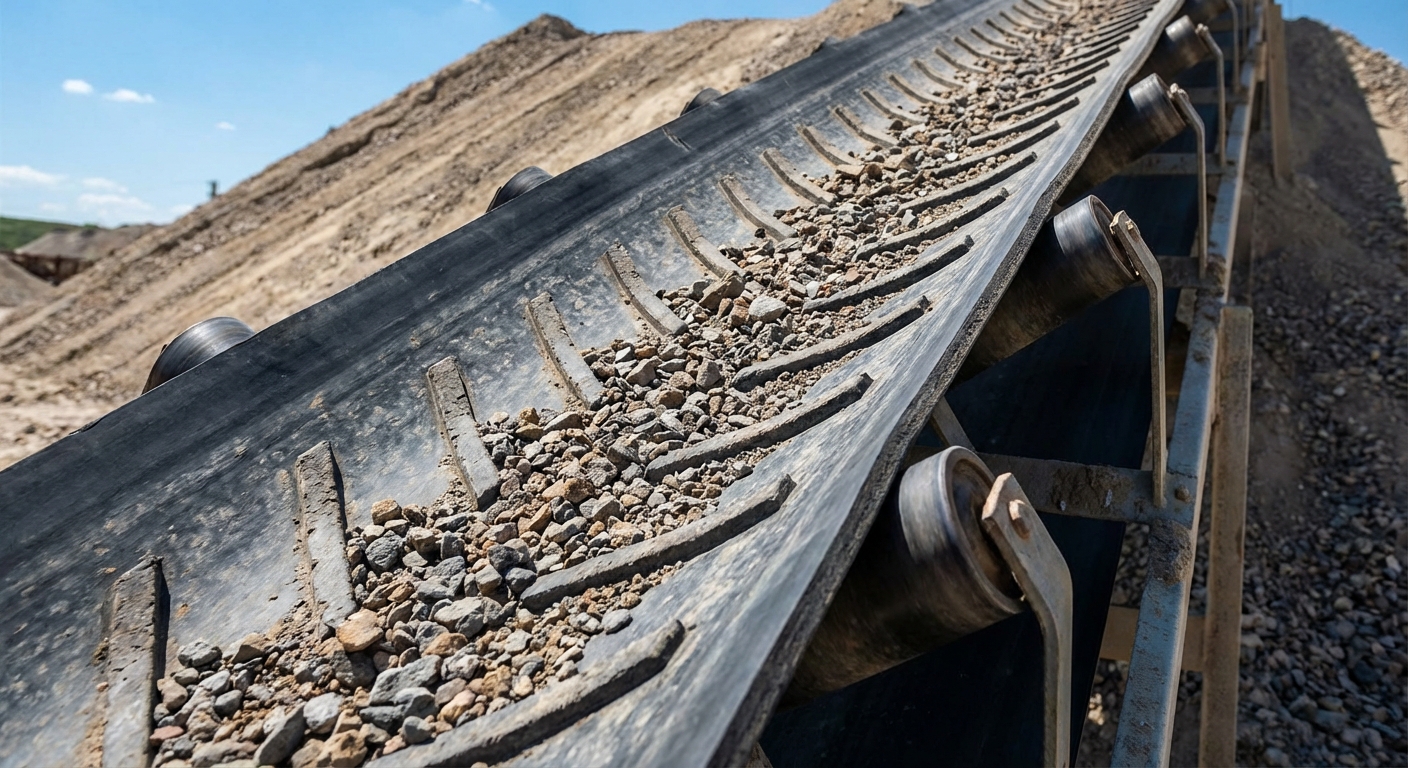
Believe it or not, choosing the wrong pattern, like a standard flat belt for a steep incline instead of a chevron conveyor belt , is a leading cause of material rollback. You need to verify these details to protect your equipment.
Key Takeaway: Precision in the initial documentation prevents mechanical mismatches that lead to early belt fatigue and system vibration.
| Parameter | Impact on Operation | Risk of Omission | |
|---|---|---|---|
| Material Profile | Determines belt texture | Product slippage | |
| Troughing Angle | Defines load capacity | Spillage and waste | |
| Speed (m/s) | Affects motor sizing | Drive system burnout |
Guidance: Always match your material’s physical properties to the belt’s surface design to maximize throughput efficiency.
How do you read carcass and tensile strength ratings?
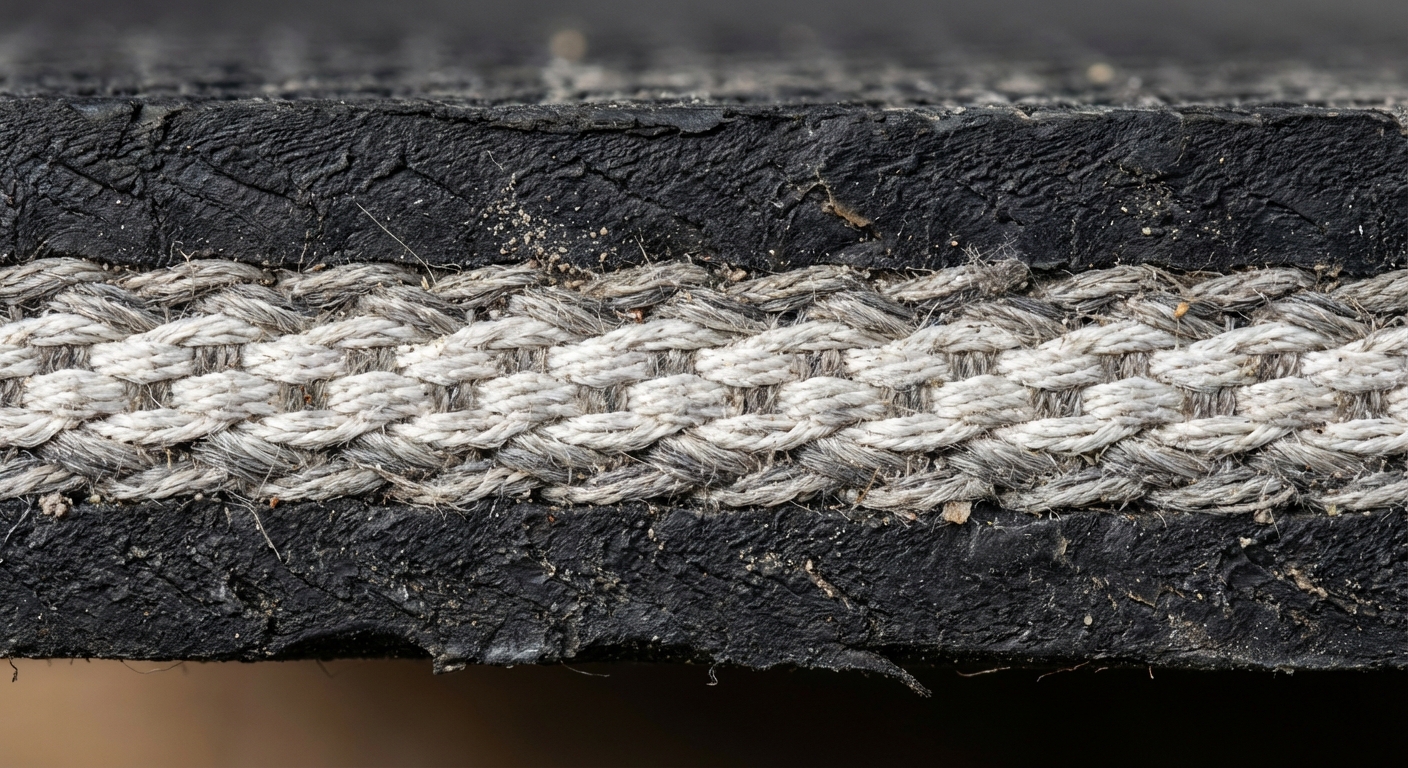
You read carcass ratings by identifying the synthetic material code and the numerical value representing the total breaking strength in Newtons per millimeter. The rubber belt conveyor specification defines the “skeleton” of your belt, which handles all the pulling force of the system. If the rating is too low, the belt will stretch excessively or snap under a full load.
What is the difference between EP and NN?
Here is the deal: most modern plants prefer EP (Polyester/Nylon) because it offers lower elongation and higher stability than pure nylon. You should choose the material based on the length and tension of your specific conveyor line.
- EP (Polyester Warp/Nylon Weft): Best for long-distance stability.
- NN (Nylon/Nylon): Superior impact resistance for heavy loading zones.
- CC (Cotton): Used mainly for light-duty, traditional applications.
When you invest in a high-quality fabric textile conveyor belt , you are essentially buying insurance against belt stretch. This selection directly affects your take-up travel distance requirements.
Key Takeaway: The carcass material determines how much your belt will stretch over time and how it reacts to heavy impact.
| Carcass Code | Material Mix | Primary Advantage | |
|---|---|---|---|
| EP | Polyester + Nylon | Low stretch / high stability | |
| NN | Nylon + Nylon | High flexibility / impact | |
| ST | Steel Cords | Extreme tension / long life |
Guidance: Select EP carcasses for most industrial applications to minimize maintenance adjustments and tracking issues.
What does the technical chart reveal about belt performance?
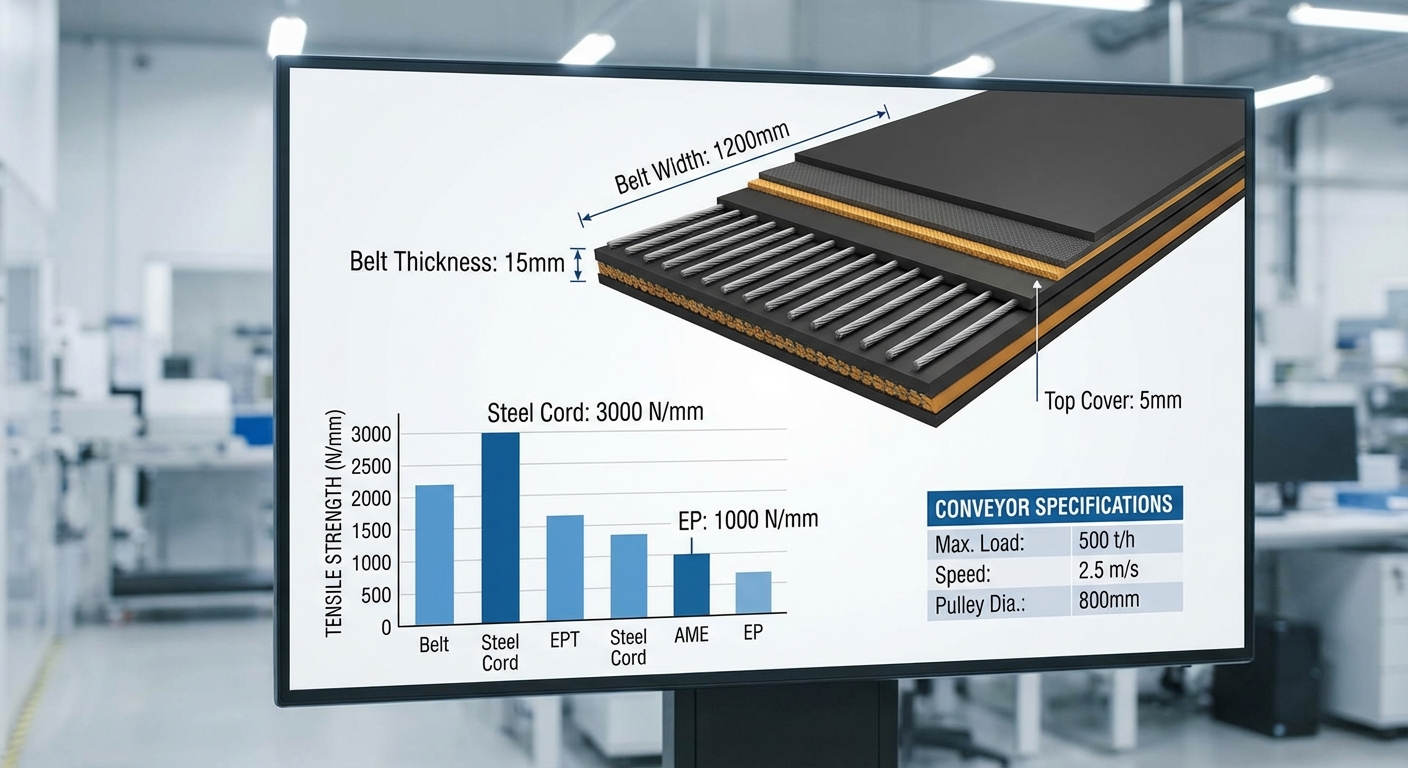
The technical chart reveals the mathematical relationship between tensile strength, ply count, and the minimum allowable pulley diameter for your rubber belt conveyor specification . You can use these charts to verify if your existing conveyor frame can handle a stronger belt. If the belt is too stiff for your pulleys, it will suffer from delamination and cracking.
How do you use tensile charts?
Let’s be honest, looking at numbers can be overwhelming, but the chart is your best friend during the engineering phase. It prevents you from installing a belt that is too “heavy” for your motor to pull.
- Compare N/mm against ply count.
- Identify the minimum pulley diameter.
- Calculate the total belt thickness.
- Estimate the weight per square meter.
Believe it or not, a belt that is too thick can actually waste energy by creating unnecessary rolling resistance. You must balance strength with flexibility for optimal power consumption.
Key Takeaway: Technical charts provide the engineering boundaries that ensure your belt remains flexible enough to wrap around pulleys without internal damage.
| Metric | Importance | Troubleshooting | |
|---|---|---|---|
| Ply Count | Structural integrity | Delamination if too high | |
| Belt Weight | Motor load calculation | Motor overheating | |
| Flex Limit | Pulley compatibility | Surface cracking |
Guidance: Reference the technical chart to ensure your pulley diameters meet the minimum requirements for the chosen ply count.
Why does rubber cover grade determine your belt’s lifespan?
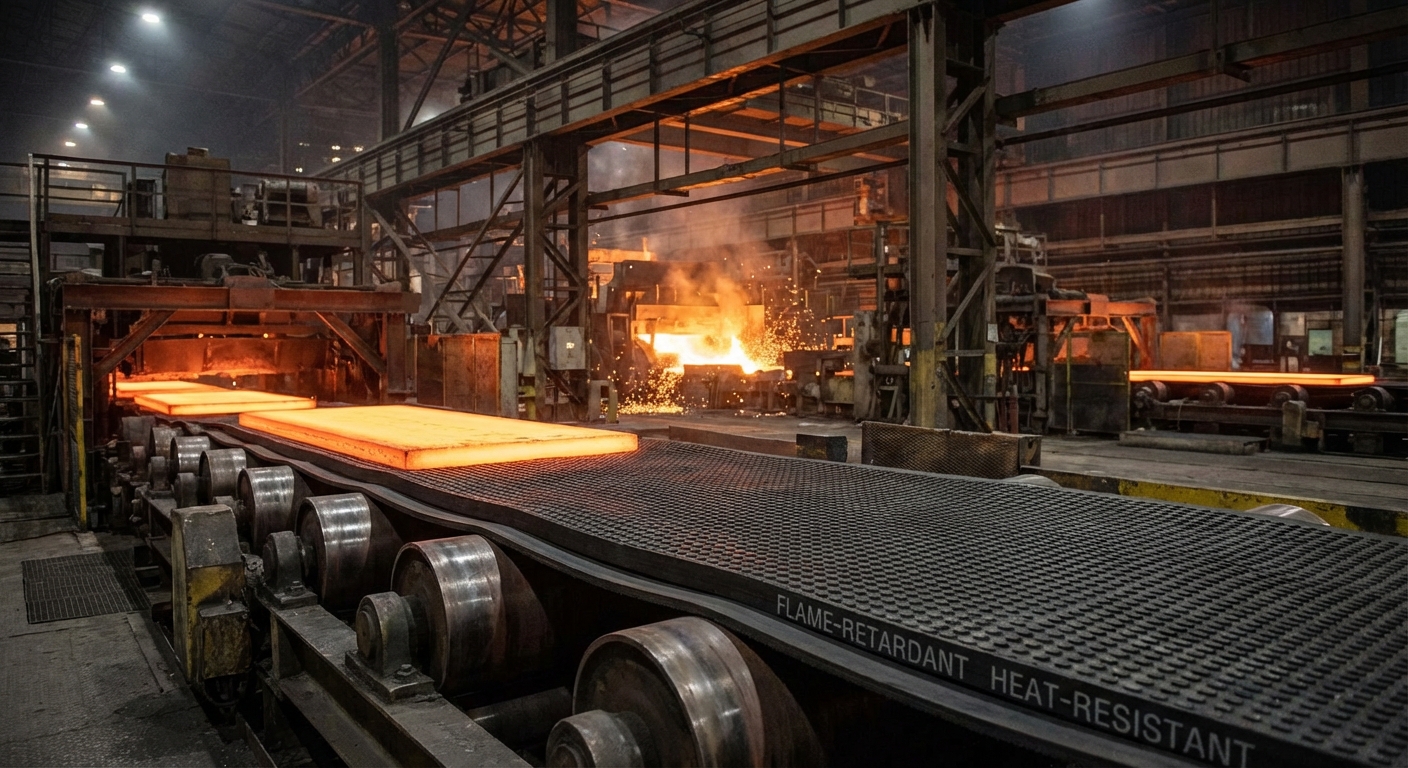
Rubber cover grade determines lifespan because it dictates how the belt surface reacts to heat, sharp edges, and corrosive chemicals. Your rubber belt conveyor specification must include a grade like DIN-X or RMA-1 to ensure the rubber doesn’t wear away prematurely. Without the correct compound, a belt that should last five years might fail in six months.
Are you choosing the right heat resistance?
Now it gets interesting: if you are moving hot clinker or sintered ore, standard rubber will harden and crack. You must specify a heat-resistant (HR) compound to maintain flexibility under extreme thermal stress.
- T1 Grade: Resists temperatures up to 100°C.
- T2 Grade: Handles continuous heat up to 125°C.
- T3 Grade: Designed for extreme loads up to 150°C.
- Super HR: Specialized compounds for peaks over 200°C.
You need to be precise because over-specifying a heat grade can be expensive, while under-specifying leads to catastrophic failure. Finding that “sweet spot” is where your profit is protected.
Key Takeaway: The rubber compound is your first line of defense against the specific destructive forces of your industry.
| Grade | Environment | Main Protection | |
|---|---|---|---|
| Abrasion Resistant | Mining / Quarry | Cutting and gouging | |
| Heat Resistant | Steel / Cement | Thermal cracking | |
| Oil Resistant | Fertilizer / Grain | Swelling and softening |
Guidance: Use DIN-W or DIN-X grades for heavy mining to resist the gouging effects of sharp, heavy ores.
How does belt width impact your entire conveyor system?
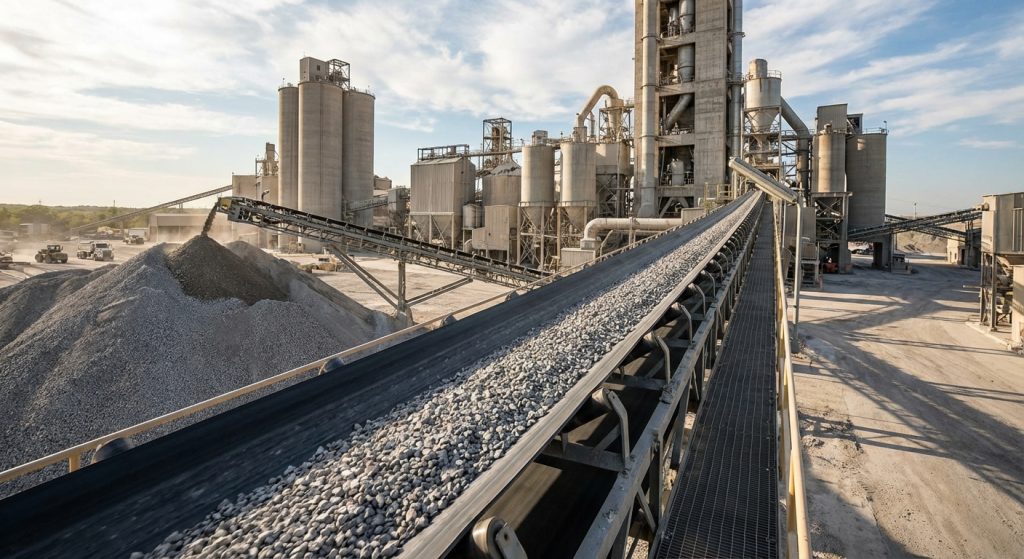
Belt width impacts your system by defining the volumetric capacity and the required spacing for idlers and structure. When you finalize a rubber belt conveyor specification , you must ensure the width matches your troughing idlers to prevent edge damage. A belt that is too narrow for its load will cause massive spillage and environmental hazards.
Can width cause tracking issues?
Make no mistake about it, an incorrectly sized belt width is the primary reason for edge wear and mistracking. You need the belt to sit perfectly within the idler set to maintain a stable center of gravity.
- Standard widths range from 400mm to 2200mm.
- Wider belts require higher tensile strength.
- Load area should occupy the center two-thirds.
- Edge clearance prevents frame contact.
If your project involves steep inclines or confined spaces, you might consider a sidewall conveyor belt to increase volume without widening the footprint. This allows you to move more material in a tighter space.
Key Takeaway: Width is not just about capacity; it is the fundamental dimension that dictates the mechanical geometry of your entire conveyor line.
| Width (mm) | Capacity (t/h) | Common Application | |
|---|---|---|---|
| 600-800 | 100-300 | Aggregate / Sand | |
| 1000-1200 | 500-1200 | Cement / Power | |
| 1400+ | 2000+ | High-tonnage Mining |
Guidance: Maintain a consistent width specification across your facility to simplify spare parts inventory and roller replacements.
What role does cover thickness play in protection?
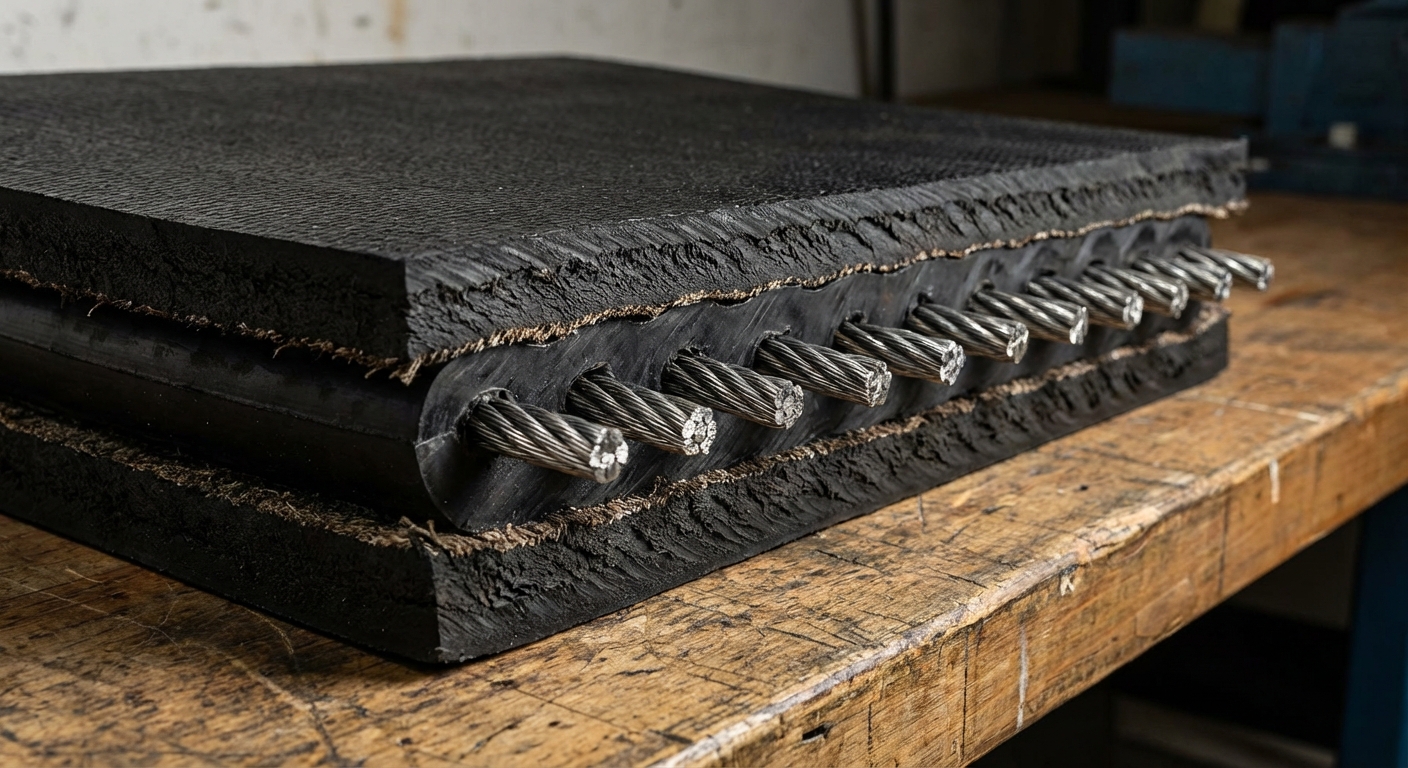
Cover thickness provides a sacrificial layer of rubber that absorbs the impact energy of falling materials and resists abrasive wear over time. Your rubber belt conveyor specification should list both top and bottom thicknesses, such as 6mm + 2mm. The top cover handles the material abuse, while the bottom cover protects the carcass from the idlers and pulleys.
Why is the top cover thicker?
Think of it this way: the top surface is the one getting hit by rocks and scraped by scrapers. You want enough rubber there so that the carcass remains untouched for years of operation.
- Top covers are usually 3mm to 10mm thick.
- Bottom covers are typically 1.5mm to 4mm thick.
- Heavy impact zones require extra thickness.
- Thicker covers add significant weight.
Believe it or not, adding too much thickness can make the belt difficult to trough properly. You must find a balance where you have enough protection without sacrificing the belt’s ability to form a “U” shape on the idlers.
Key Takeaway: Cover thickness is your “wear budget”; once it is gone, the carcass fails and the belt must be replaced.
| Top/Bottom (mm) | Duty Level | Typical Material | |
|---|---|---|---|
| 3 + 1.5 | Light | Grain / Woodchips | |
| 6 + 2 | Medium | Limestone / Coal | |
| 10 + 3 | Heavy | Iron Ore / Copper |
Guidance: Increase your top cover thickness by 2mm in high-impact loading zones to extend the overall service intervals.
When should you transition to steel cord specifications?
You should transition to steel cord when your conveyor length exceeds one kilometer or when your required tensile strength goes beyond 2500 N/mm. A rubber belt conveyor specification for steel cord uses internal cables to provide near-zero stretch and extreme durability. These are the gold standard for high-tonnage mining and overland transport.
Why choose steel over fabric?
Here is the kicker: fabric belts can stretch several meters over a long distance, requiring massive take-up towers. You can eliminate this problem by switching to a steel cord conveyor belt which stays stable regardless of the load.
- Superior longitudinal strength.
- Excellent troughing characteristics.
- High resistance to thermal expansion.
- Easier to monitor for internal damage.
Believing that fabric is always cheaper is a common mistake; for long-haul systems, the reduced maintenance of steel cord actually saves you money over the life of the mine.
Key Takeaway: Steel cord belts are essential for massive industrial projects where elongation must be strictly controlled to prevent system failure.
| Feature | Fabric Belt | Steel Cord | |
|---|---|---|---|
| Elongation | 1.5% – 2.5% | < 0.2% | |
| Strength | Up to 3150 N/mm | Up to 7500 N/mm | |
| Splice Life | Moderate | Very High |
Guidance: Evaluate steel cord options for any project with a center-to-center distance greater than 800 meters to ensure structural stability.
How do international standards protect your procurement?
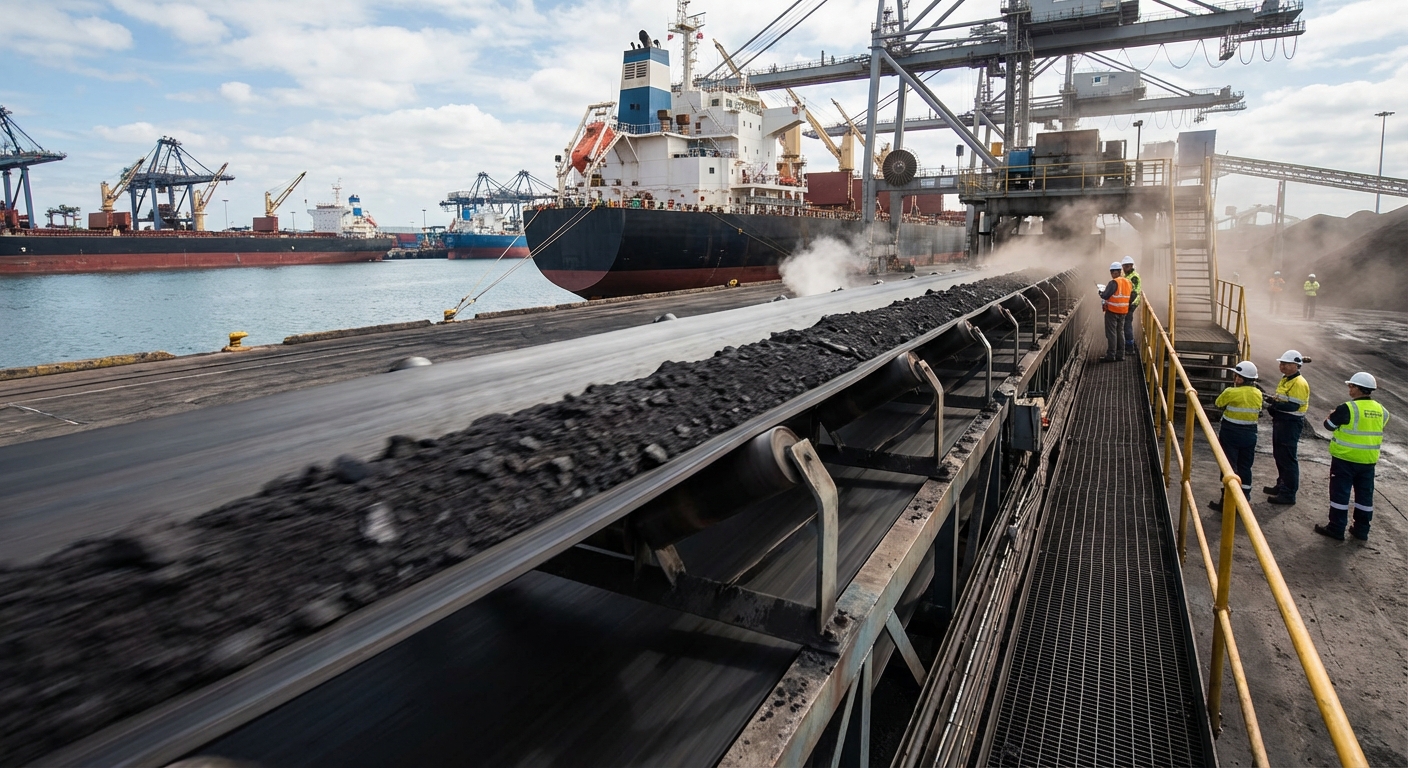
International standards protect you by ensuring that a belt ordered in one country meets the exact quality and safety metrics required in your home facility. Your rubber belt conveyor specification should reference standards like ISO, DIN (German), or AS (Australian) to ensure testing consistency. This prevents “quality fade” where a manufacturer might use cheap fillers to lower the price.
Which standard should you follow?
It is quite simple: DIN 22102 is the most recognized global benchmark for rubber belt quality. You should ask your supplier for a laboratory test report that proves the belt meets these specific requirements.
- ISO 10247: International standard for cover grades.
- DIN 22102: Standard for fabric conveyor belts.
- AS 1332: Australian standard for heavy-duty mining.
- RMA: American standard for abrasion and safety.
Believe it or not, many “economy” belts fail because they lack the proper anti-static or flame-retardant additives required by law. You must verify these certifications to avoid legal and safety liabilities.
Key Takeaway: Adhering to international standards ensures that you receive a predictable, high-performance product regardless of the manufacturing location.
| Standard | Focus Area | Region | |
|---|---|---|---|
| DIN 22102 | General Quality | Europe / Global | |
| ISO 340 | Flame Resistance | International | |
| AS 1333 | Steel Cord | Australia |
Guidance: Always request an independent third-party test report (like SGS) to verify compliance with your specified international standards.
Why is roll length a critical factor for installation?
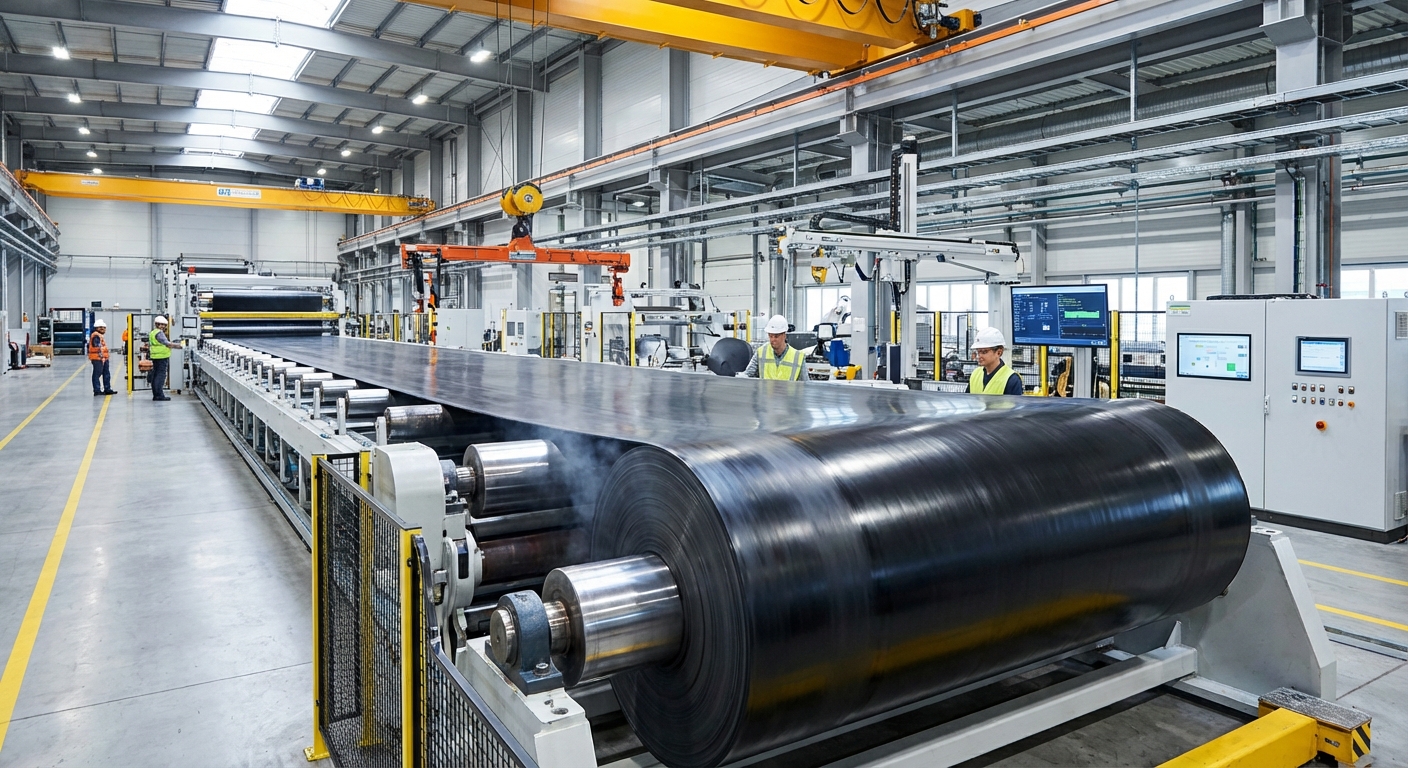
Roll length is critical because it determines how many times your team will need to splice the belt during a rubber belt conveyor specification implementation. Every splice is a potential point of failure and adds significant labor costs. If you order rolls that are too short, you increase the “weak points” in your conveyor line.
How do you optimize roll length?
Think about this: shipping containers have size limits, so you can’t just order a 5-kilometer roll. You need to coordinate with the factory to maximize the length per roll while staying within shipping and site handling capabilities.
- Standard rolls are often 200m to 250m.
- Longer rolls reduce the number of joints.
- Total length must include extra for splicing.
- Consider the weight limit of your site cranes.
Using a proper rubber conveyor belt jointing solution is vital when connecting these rolls. You want the splice to be as strong as the belt itself.
Key Takeaway: Strategic roll length planning reduces on-site labor and eliminates unnecessary splice points that could lead to future downtime.
| Roll Length | Pros | Cons | |
|---|---|---|---|
| Short (100m) | Easy to handle | Many splices | |
| Standard (250m) | Container optimized | Balanced | |
| Custom (500m+) | Fewer joints | Hard to transport |
Guidance: Order your belt in the longest possible rolls allowed by your logistics provider to minimize the risk of splice failure.
How can you verify specs during a factory inspection?

You verify specs by performing physical tests on raw material samples and the finished product to ensure they match your rubber belt conveyor specification . You should look for adhesion strength between plies and the actual thickness of the rubber covers. A visual inspection alone is never enough to confirm the internal quality of the belt.
What should you check first?
Here is the truth: the “smell” and “feel” of rubber can tell you a lot, but you need data. You should demand a live demonstration of the tensile strength test in the factory lab.
- Adhesion strength between rubber and fabric.
- Abrasion loss (mm3) under DIN 53516.
- Breaking strength and elongation at break.
- Surface hardness (Shore A).
Believe it or not, some factories skip the cooling phase, which can lead to “built-in” stresses. You need to ensure the manufacturing process follows a strict quality control protocol to prevent premature warping.
Key Takeaway: Factory inspections turn a paper specification into a verified reality, ensuring you get exactly what you paid for.
| Inspection Item | Method | Acceptance Criteria | |
|---|---|---|---|
| Adhesion | Peeling test | > 10 N/mm | |
| Thickness | Digital Caliper | +/- 0.5mm | |
| Abrasion | Rotating Drum | < 120 mm3 (Grade X) |
Guidance: Hire a local inspection agent to monitor the production of your belt from raw material mixing to final roll-up.
Conclusion
Mastering the rubber belt conveyor specification is the only way to guarantee that your investment delivers long-term value and operational safety. By focusing on carcass materials, rubber grades, and international standards, you take control of your facility’s uptime. If you are ready to upgrade your system with engineered reliability, contact us today for a technical consultation.
Our vision at Zhenxing Rubber is to provide the world’s most durable conveyor solutions through precision engineering and transparent manufacturing. We believe that a high-quality belt is the silent engine of global industry.
FAQ: Rubber Conveyor Belt Specifications
Can I use a fabric belt for a 5-kilometer overland system?No. While it is technically possible, the massive elongation and required take-up space make it impractical; you should use a steel cord belt for distances over 1km.
What’s the best rubber grade for moving hot cement clinker?The best choice is a T3 heat-resistant grade (ISO 4195) designed for continuous temperatures of 150°C and peaks up to 180°C.
How do I know if my pulley diameter is too small for my new belt?Check the technical chart for your specific carcass rating; if your pulley is smaller than the recommended minimum, the belt will suffer from internal ply separation.
Can I order a custom width like 1050mm?Yes. Manufacturers can provide custom widths, but keep in mind that standard widths like 1000mm or 1200mm are much easier to source rollers and idlers for.
What’s the best way to prevent the belt from stretching too much?Specify an EP (Polyester/Nylon) carcass rather than a pure Nylon (NN) carcass, as polyester has significantly lower natural elongation.