
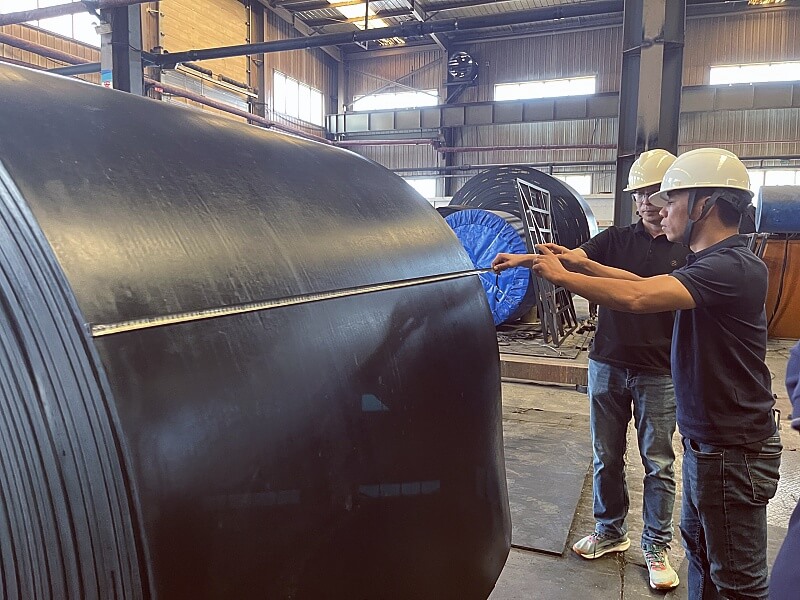
Understanding the rubber conveyor belt manufacturing process helps industries select durable, efficient belts, reduce downtime, and ensure reliable material handling in demanding environments.
1. What is the rubber conveyor belt manufacturing process?
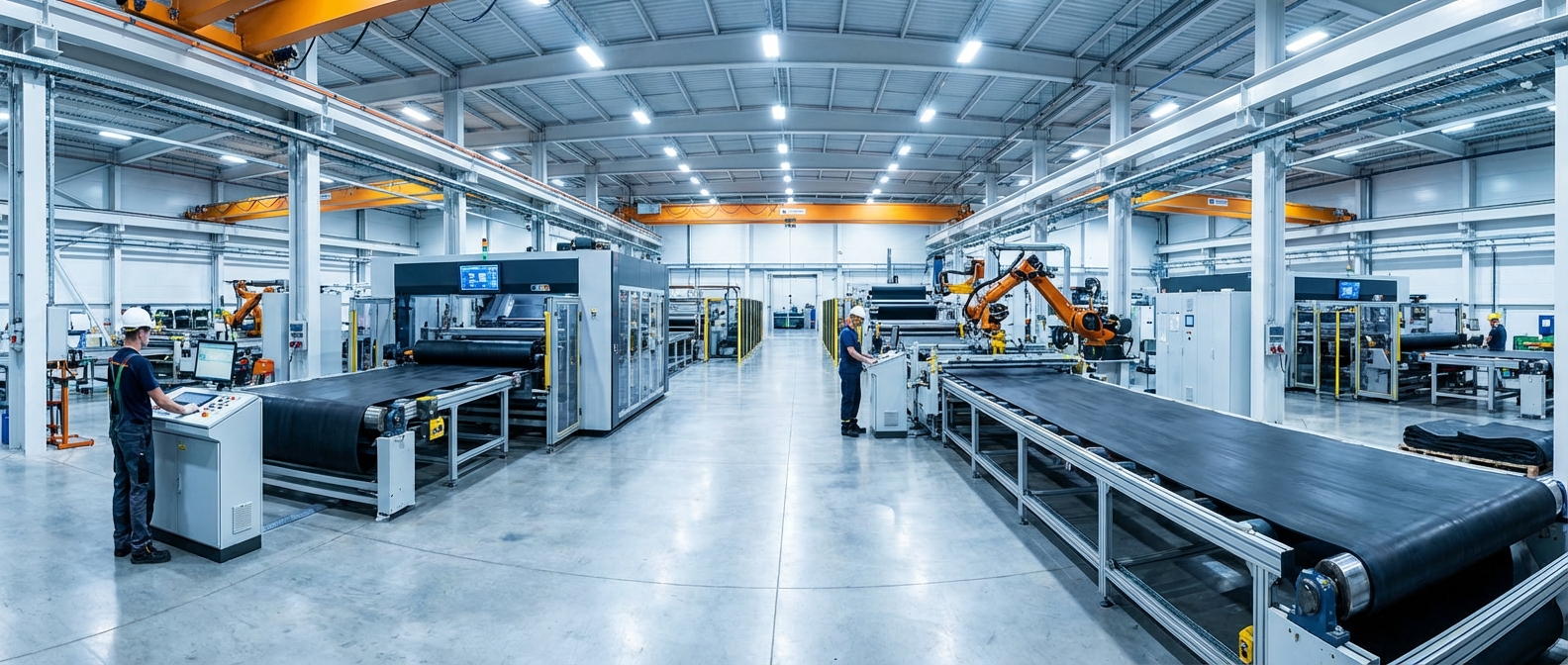
The rubber conveyor belt manufacturing process is a multi-stage engineering method that integrates a reinforcement carcass with protective rubber covers to create a high-tensile material handling solution. You will find that this process transforms raw polymers and fabrics into a composite structure designed to handle extreme stress. It is the foundation of modern bulk logistics.
Primary Components of Industrial Belts
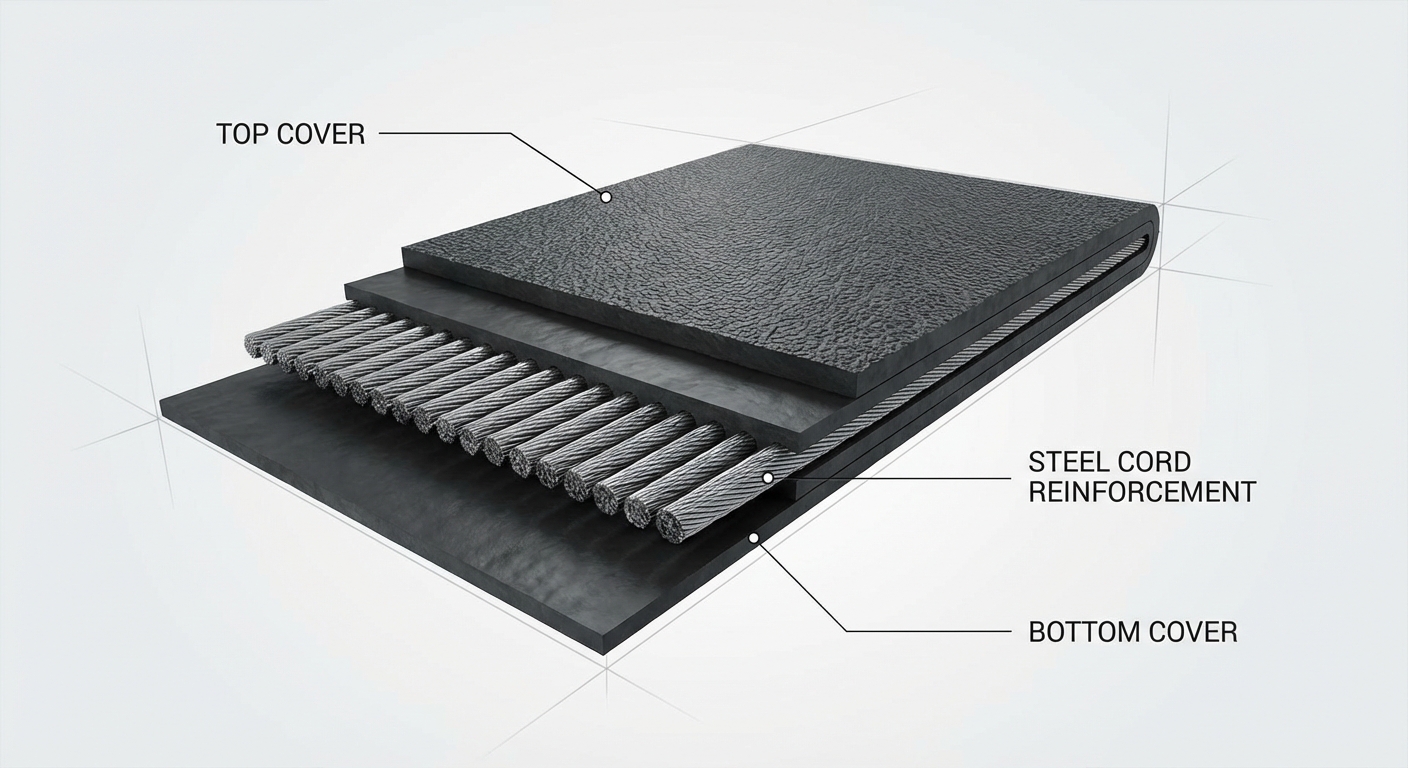
Industrial belts consist of three primary layers: the top cover for wear resistance, the internal carcass for strength, and the bottom cover for pulley interaction. But that’s not all. The top cover is specifically engineered to shield the delicate internal carcass from sharp minerals or abrasive bulk cargo.
The Role of Multi-Ply Carcass Design
A multi-ply carcass uses several layers of fabric or cord to provide both flexibility and a high load-bearing capacity. Here is the kicker: Integrating these layers ensures that the belt can navigate curves and pulleys without suffering from structural fatigue.
Key Takeaway: The core of any high-quality belt lies in the synergy between its reinforcement carcass and the protective rubber covers applied during the assembly phase.
| Component | Function | Material Examples | |
|---|---|---|---|
| Top Cover | Protects carcass from abrasion | Natural/Synthetic Rubber | |
| Carcass | Provides tensile strength | EP Fabric, Steel, Aramid | |
| Bottom Cover | Provides pulley friction | Specialized Rubber Compounds |
Analysis: This layered structure ensures that each part of the belt handles a specific physical demand, from surface impact to internal tension.
2. How does the rubber conveyor belt manufacturing process start?
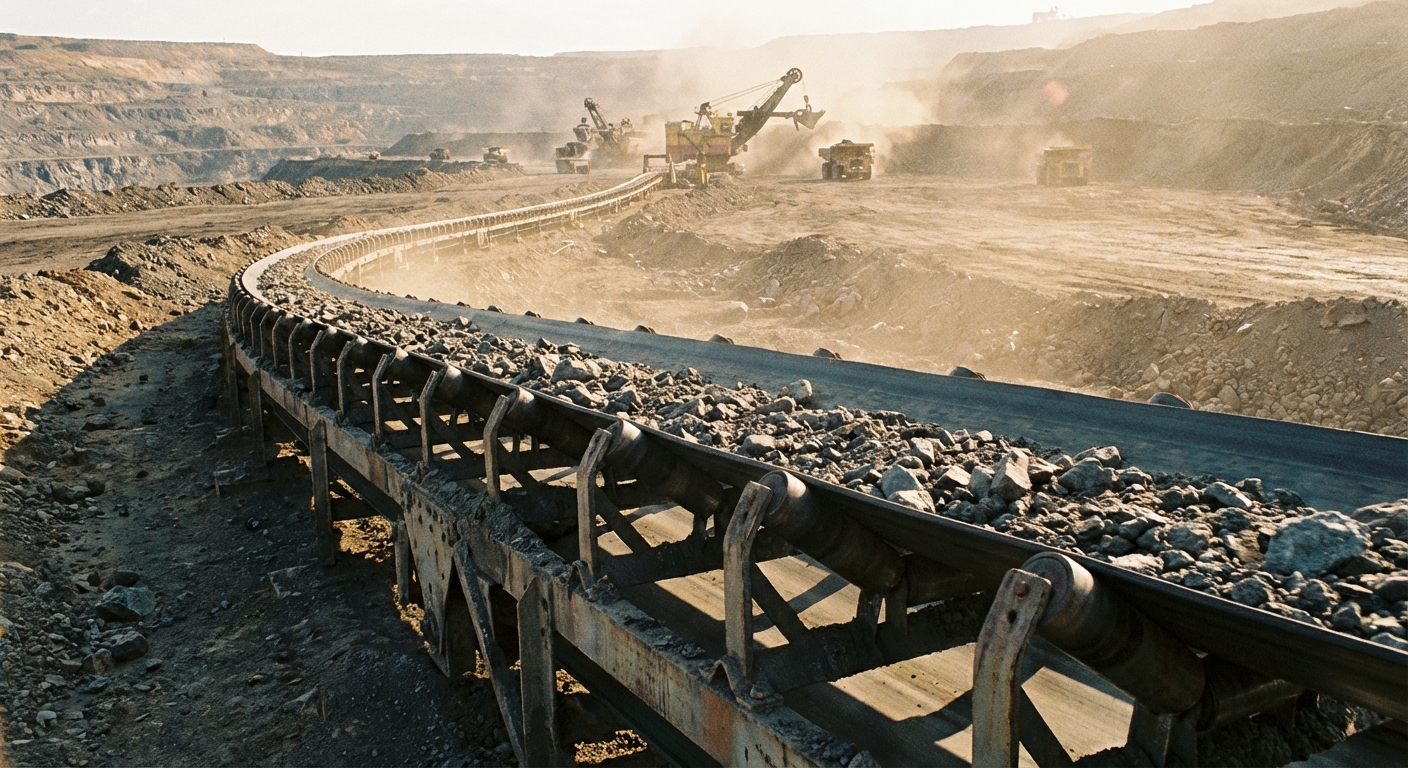
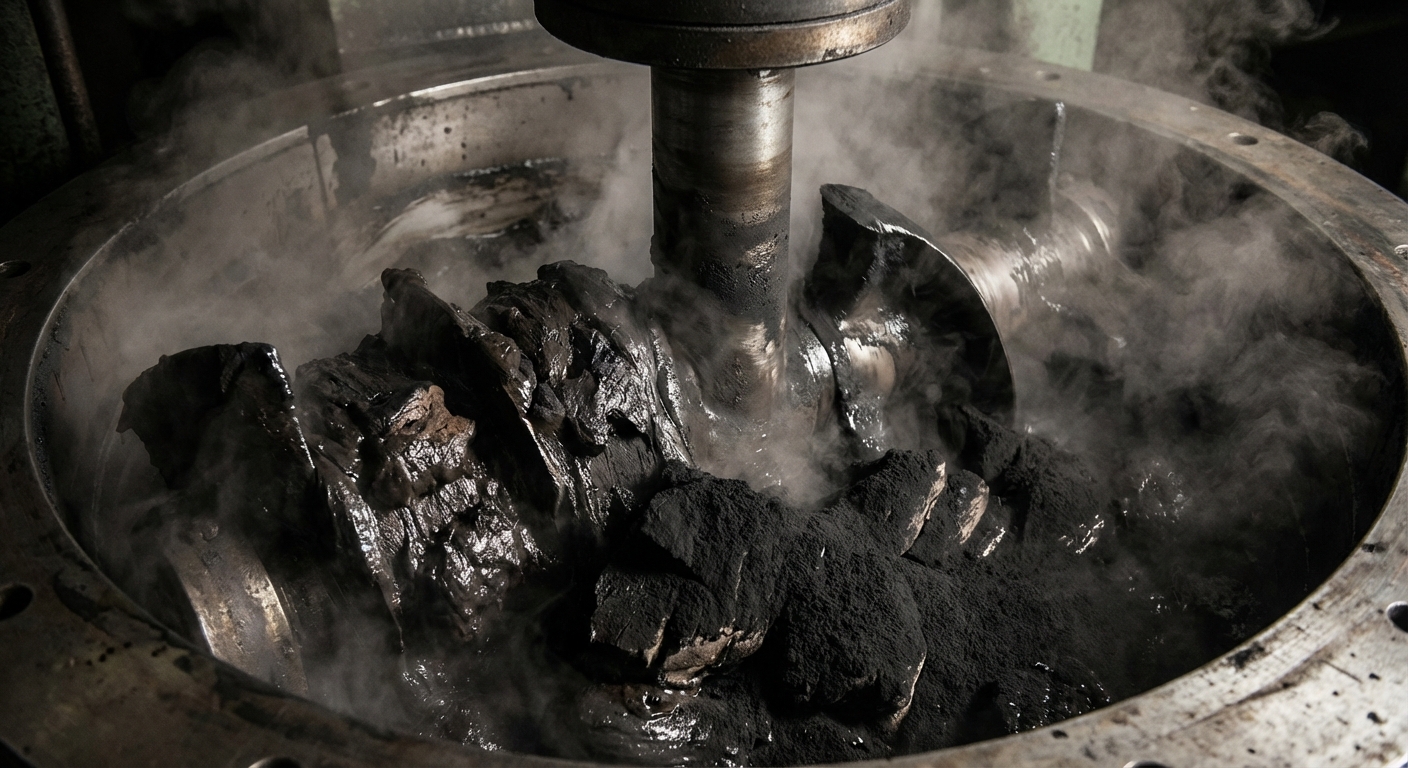
The manufacturing process begins with the precision mixing of raw rubber compounds and the calendering of these materials into a steel cord conveyor belt or textile reinforcement. You must ensure that the chemical “recipe” is exactly right before moving to the assembly stage. This initial phase dictates the belt’s resistance to heat, oil, or abrasion.
Mixing Specialized Rubber Compounds
Manufacturers mix raw polymers with carbon black, accelerators, and antioxidants to create a compound tailored for specific environmental conditions. Here is the kicker: A single mistake in the chemical ratio can lead to premature cracking or poor adhesion once the belt is in operation.
Precision Calendering for Ply Adhesion
Calendering involves pressing the rubber compound into the fabric or steel reinforcement under immense pressure. But that’s not all. This stage ensures that the rubber penetrates the carcass fibers to prevent future delamination during heavy use.
Key Takeaway: Precision in the early calendering stage is vital to prevent future ply separation under heavy industrial loads.
| Stage | Description | Outcome | |
|---|---|---|---|
| Compounding | Mixing raw rubber and additives | Specific resistance properties | |
| Calendering | Pressing rubber into carcass | Uniform thickness and adhesion |
Analysis: Successful material preparation ensures that the reinforcement and the protective covers act as a single, inseparable unit.
3. Why is vulcanization in the rubber conveyor belt manufacturing process?
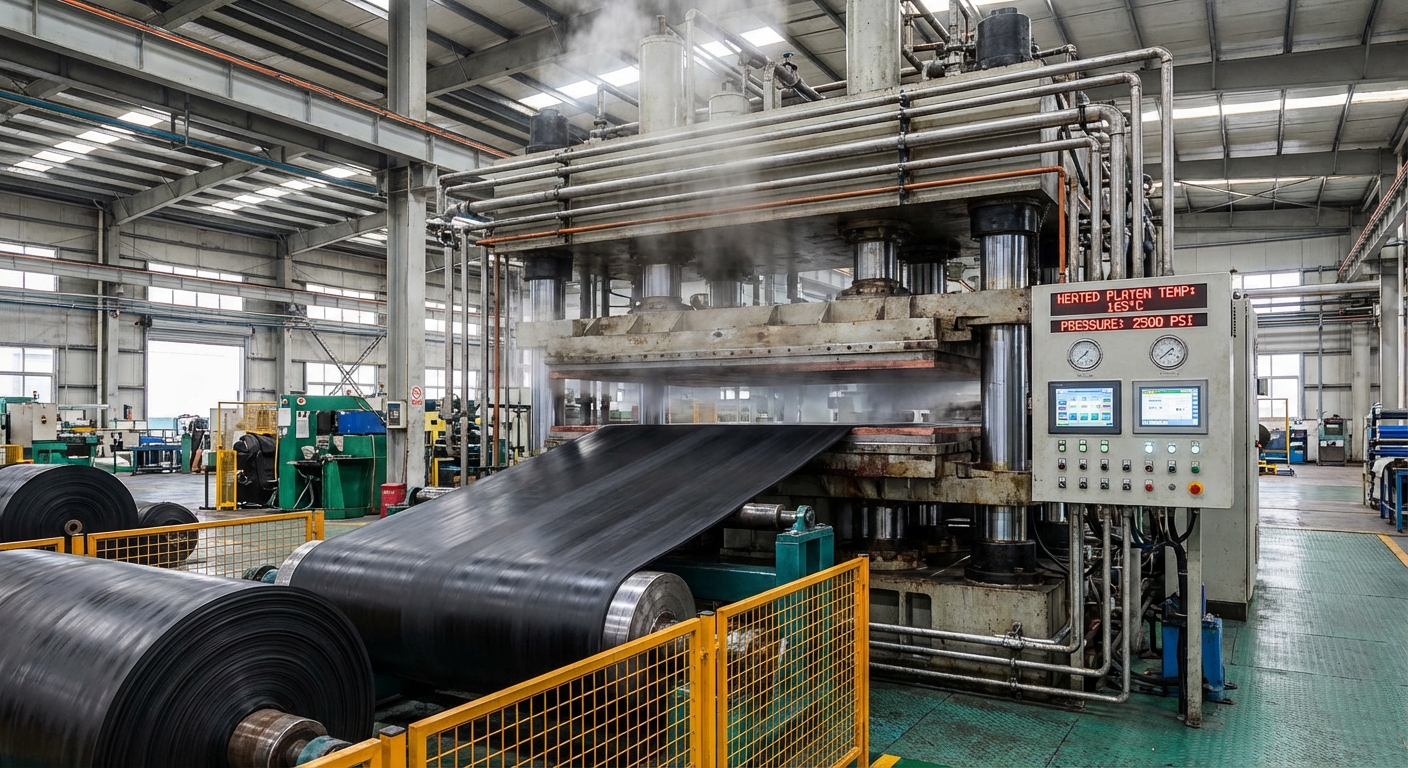
Vulcanization is included in the rubber conveyor belt manufacturing process to trigger a chemical reaction that transforms soft, raw rubber into a durable and elastic finished product. You cannot achieve industrial-grade durability without this critical heat and pressure application. It essentially “cooks” the belt into its permanent shape and strength.
Chemical Transformation Under Heat
During vulcanization, sulfur cross-linking occurs between rubber molecules to create a stable, interconnected molecular grid. But that’s not all. This transformation allows the belt to maintain its shape even when subjected to high-temperature cargo or extreme weather.
Ensuring Long-Term Durability
Applying specific pressure levels during the curing process eliminates air pockets that could weaken the belt’s structure. Here is the kicker: Maintaining the perfect balance of time and temperature is the only way to ensure the belt remains flexible yet tough.
Key Takeaway: Vulcanization is the “hardening” step that gives the belt its final mechanical properties and resistance to environmental degradation.
| Factor | Role in Vulcanization | Impact on Performance | |
|---|---|---|---|
| Temperature | Triggers chemical links | Hardness and flexibility | |
| Pressure | Removes air pockets | Structural integrity | |
| Time | Completes reaction | Long-term wear life |
Analysis: Without proper vulcanization, the rubber would remain a plastic-like substance that would deform or melt under typical industrial tension.
4. Is the rubber conveyor belt manufacturing process used for mining?
Yes, the process is essential for mining because it produces specialized solutions like a sidewall conveyor belt to move heavy ores across treacherous terrain. You can use these belts to replace entire truck fleets in remote canyon or mountain locations. This reduces the need for expensive permanent road infrastructure.
Handling Bulk Materials in Harsh Terrain
Conveyor systems move extracted materials like gold, silver, or coal directly from the pit to the processing plant. Here is the kicker: Continuous belt transport is significantly more energy-efficient than using diesel-powered trucks for the same volume of material.
Vertical and Steep Incline Solutions
Customized carcass constructions allow you to move materials at steep angles without worrying about fallback or spillage. But that’s not all. These designs maximize space in deep mining operations where horizontal room is often limited.
Key Takeaway: In mining, the choice of belt design directly impacts the ability to overcome topographical obstacles while maintaining a continuous 24/7 workflow.
| Terrain Challenge | Recommended Feature | Benefit | |
|---|---|---|---|
| Steep Inclines | Sidewalls and Cleats | Prevents material spillage | |
| Long Distances | Steel Cord Carcass | Minimal elongation issues | |
| Rough Topography | Pipe/Tubular Design | Enclosed, dust-free transport |
Analysis: Tailoring the manufacturing process to mining conditions allows for a seamless flow of material from deep underground to the surface.
5. Which industries use the rubber conveyor belt manufacturing process?
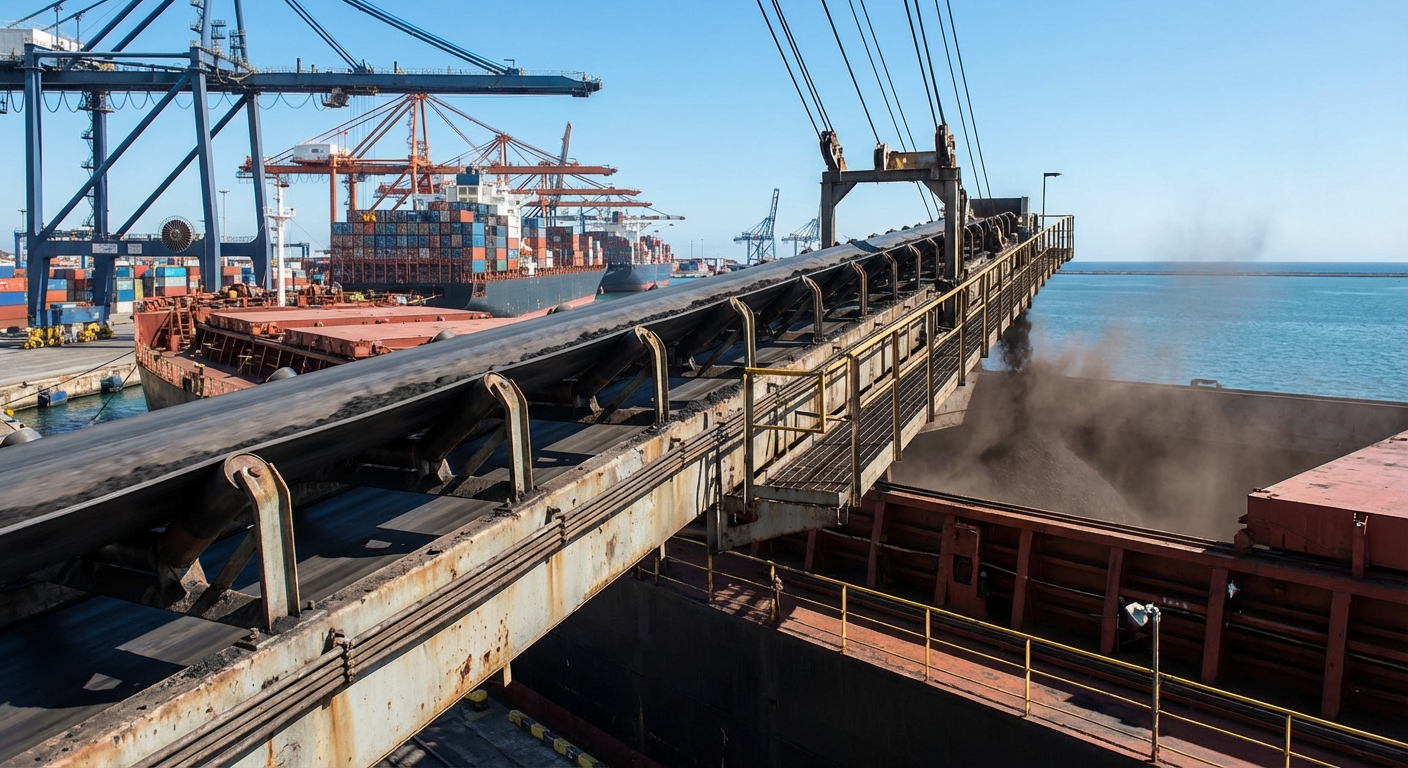
Heavy-duty industries like global logistics, cement production, and steel manufacturing rely heavily on the rubber conveyor belt manufacturing process to sustain their daily operations. You will see these belts in any facility where large volumes of abrasive or heavy goods must move quickly. They are the arteries of modern industrial infrastructure.
Port Terminals and Ship Loading
High-speed belts are vital at port terminals for loading bulk minerals and grains onto international cargo vessels. But that’s not all. The ability to move thousands of tons per hour makes belts the only viable solution for global trade hubs.
Heavy Duty Industrial Applications
Steel mills and cement plants use rubber belts to handle hot sinter, slag, or limestone under extreme conditions. Here is the kicker: Specialized heat-resistant compounds allow these belts to operate even when carrying materials over 150°C.
Key Takeaway: The versatility of rubber belts makes them the primary technological solution for replacing wheeled vehicles in bulk material logistics.
| Industry | Typical Load | Critical Property | |
|---|---|---|---|
| Ports | Bulk Commodities | High speed and capacity | |
| Steel Mills | Hot Sinter/Slag | Extreme heat resistance | |
| Cement | Limestone/Clinker | High abrasion resistance |
Analysis: The broad application of these belts across sectors proves their status as an essential tool for high-volume material handling.
6. Can the rubber conveyor belt manufacturing process create patterns?
Yes, the manufacturing process can integrate molded profiles to create a chevron conveyor belt designed for superior grip on inclines. You can choose from various “V” or “Y” shaped patterns depending on the consistency of the material you are moving. These patterns are typically molded into the top cover during the final curing stage.
Molded Profiles for Material Grip
Integrating profiles directly into the rubber cover prevents loose materials from sliding backward on steep slopes. But that’s not all. The molded design is far more durable than glued-on cleats, which often strip off under high tension.
Custom Patterns for Incline Stability
You can match the height and pitch of the chevron pattern to the specific angle of your conveyor system. Here is the kicker: This customization allows for conveyor angles of up to 40 degrees, which is impossible with standard flat belts.
Key Takeaway: Profiled belts allow for steeper conveyor angles, which significantly reduces the footprint and length of industrial installations.
| Pattern Type | Incline Angle | Best Application | |
|---|---|---|---|
| Low Profile | 15° – 25° | Sand and fine grains | |
| High Profile | 25° – 40° | Large coal or minerals | |
| Open Patterns | Variable | Self-cleaning requirements |
Analysis: Patterned belts provide a mechanical solution to gravity, allowing facilities to be built more compactly and efficiently.
7. Does the rubber conveyor belt manufacturing process affect strength?
The rubber conveyor belt manufacturing process directly determines the tensile strength of the finished product by the choice of internal reinforcement like aramid conveyor belts . You must choose the right carcass material to prevent the belt from stretching or snapping under load. Strength is the most critical factor in long-distance system design.
Reinforcement Selection: Steel vs. Textile
Steel cord belts offer the highest tensile strength, while textile (EP) belts provide better flexibility for shorter systems. Here is the kicker: Aramid reinforcements can offer five times the strength of steel at only 20% of the weight.
Managing Elongation and Tensile Strength
Controlling the “stretch” of the belt during manufacturing prevents sagging and tracking issues on the conveyor line. But that’s not all. Properly managed tension during assembly ensures the belt remains straight and centered throughout its service life.
Key Takeaway: For long-distance conveying (over 500m), steel cord is often the only viable solution due to its superior longitudinal flexibility and minimal elongation.
| Reinforcement | Maximum Strength | Suggested Length | |
|---|---|---|---|
| EP (Textile) | Medium | Under 500 meters | |
| Steel Cord | Very High | Over 500 meters | |
| Aramid | High (Lightweight) | Medium to Long Dist. |
Analysis: Selecting the correct reinforcement during manufacturing ensures the belt can handle the specific tension required by the system length.
8. How does the rubber conveyor belt manufacturing process ensure safety?
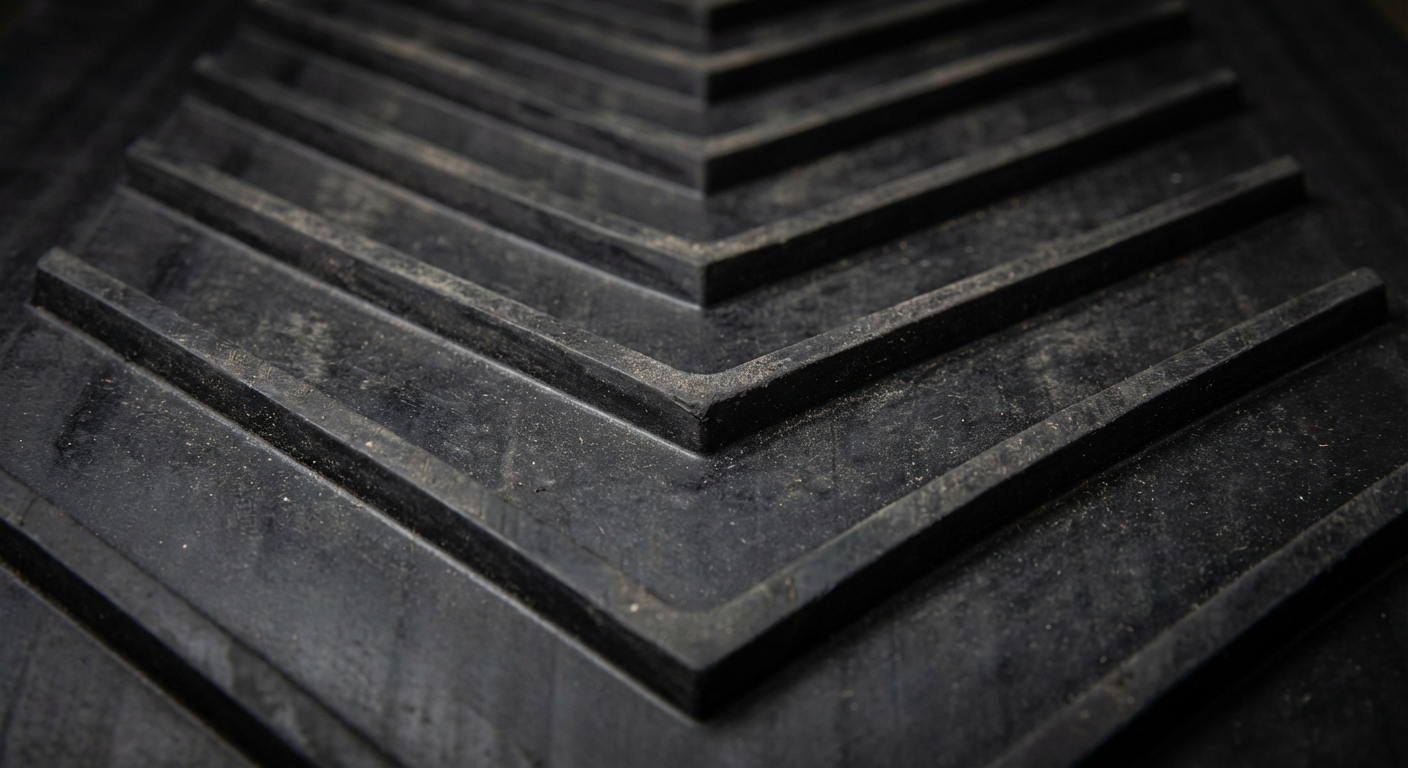
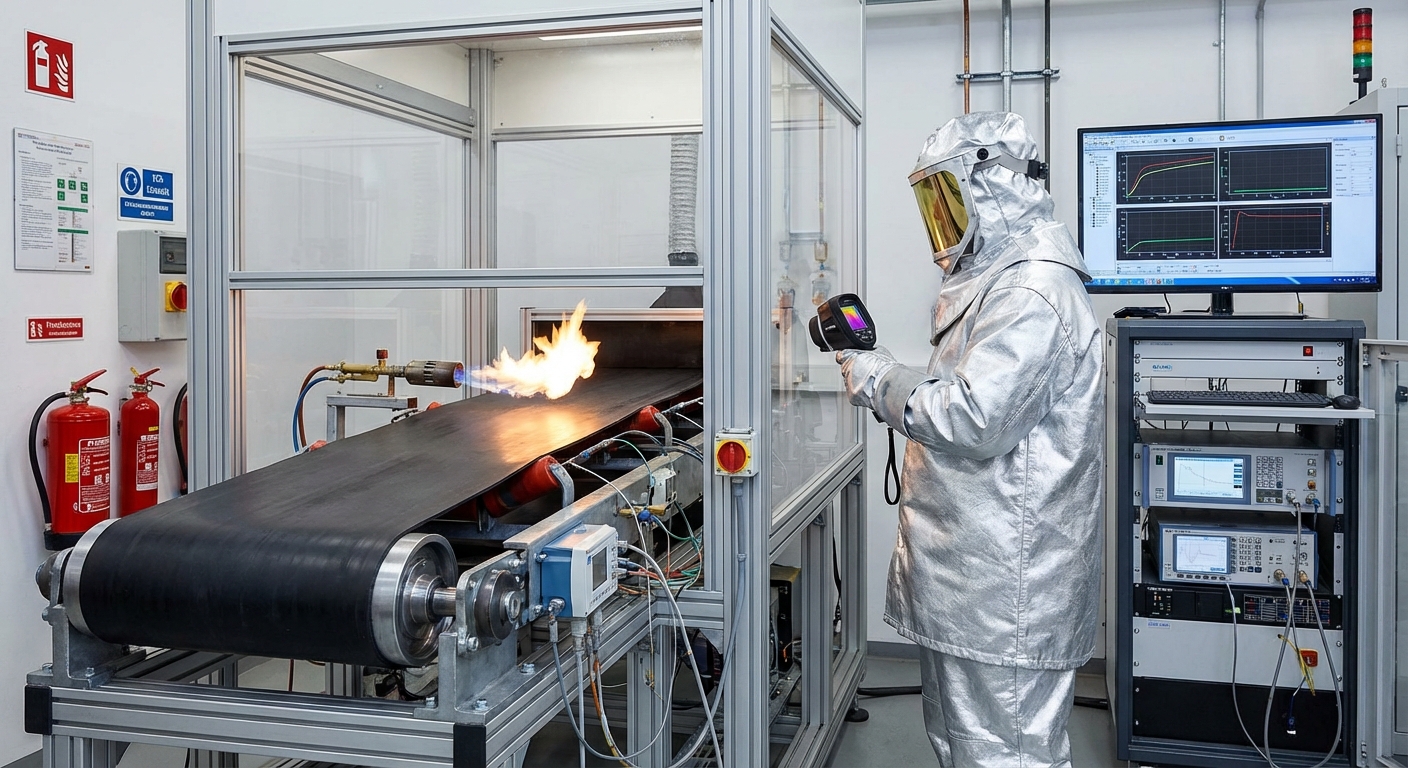
Safety is ensured by integrating chemical additives during the process to produce a flame retardant conveyor belt that resists ignition. You can protect your workforce and facility from catastrophic fire hazards by selecting these specialized grades. These safety features are mandatory in underground mining and grain handling.
Heat and Fire Resistance Standards
Specific rubber compounds allow belts to self-extinguish within seconds if they are exposed to an open flame. But that’s not all. Anti-static properties also prevent the buildup of electricity that could cause sparks in explosive environments.
Environmental Impact and Pollution Control
Closed-loop systems like pipe conveyors use the manufacturing process to create a belt that seals material inside. Here is the kicker: This preventing dust pollution and chemical runoff into the local ecosystem, ensuring your operation remains compliant with green regulations.
Key Takeaway: Modern manufacturing allows for specialized belts that protect both the workforce and the environment from industrial hazards.
| Safety Feature | Primary Benefit | Standard Compliance | |
|---|---|---|---|
| Flame Retardant | Prevents fire spread | ISO/DIN Safety Specs | |
| Heat Resistant | Handles 150°C+ loads | High-temp industrial | |
| Anti-Static | Prevents spark ignition | Underground (ATEX) |
Analysis: Building safety directly into the belt’s chemistry is the most effective way to manage risk in high-stakes industrial zones.
9. How to optimize the rubber conveyor belt manufacturing process choice?
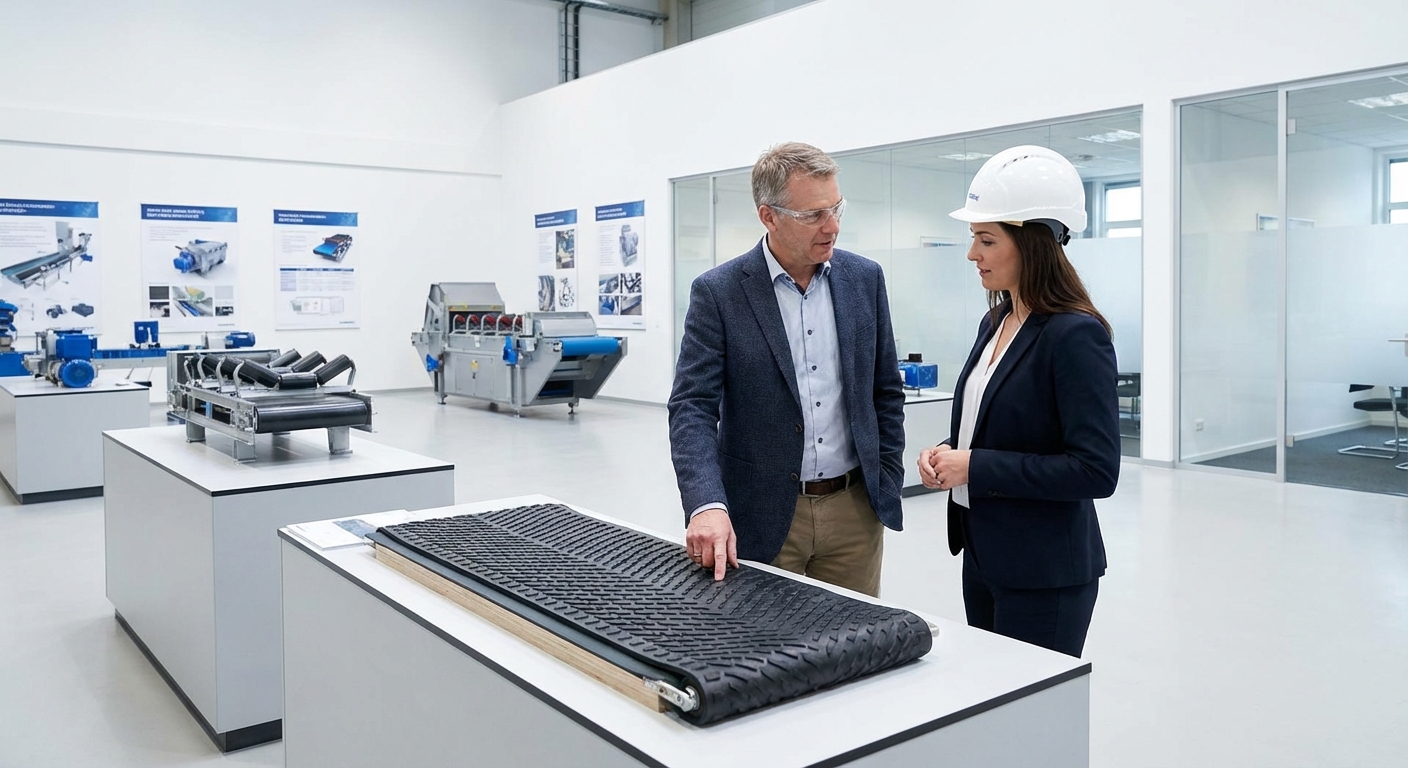
Optimization involves conducting a thorough analysis of your material’s abrasiveness and the overall system length before starting the rubber conveyor belt manufacturing process . You must balance initial capital expenditure against the long-term cost of maintenance and replacement. A well-optimized belt can last twice as long as a generic alternative.
Assessing Material Abrasiveness and Weight
You should determine the necessary thickness of the top cover based on how sharp or heavy your cargo is. Here is the kicker: Adding extra sacrificial rubber to the top cover is a small upfront cost that significantly extends the belt’s lifespan.
Matching Belt Design to System Length
Longer systems require reinforcements with minimal elongation to prevent the belt from jumping off the pulleys. But that’s not all. Short systems can benefit from the cost-effectiveness and flexibility of multi-ply fabric belts.
Key Takeaway: Optimization requires a holistic view of the entire conveying system, ensuring the belt is neither under-specified nor over-engineered.
| Analysis Factor | Impact on Selection | Resulting Spec | |
|---|---|---|---|
| Material Sharpness | Cover thickness | High-Abrasion Grade | |
| Conveyor Length | Carcass type | Steel vs. Fabric | |
| Weight per Meter | Tensile Rating | Breaking strength (N/mm) |
Analysis: Strategic planning before manufacturing ensures you get the maximum possible value and uptime from your conveyor investment.
10. What FAQs cover the rubber conveyor belt manufacturing process?
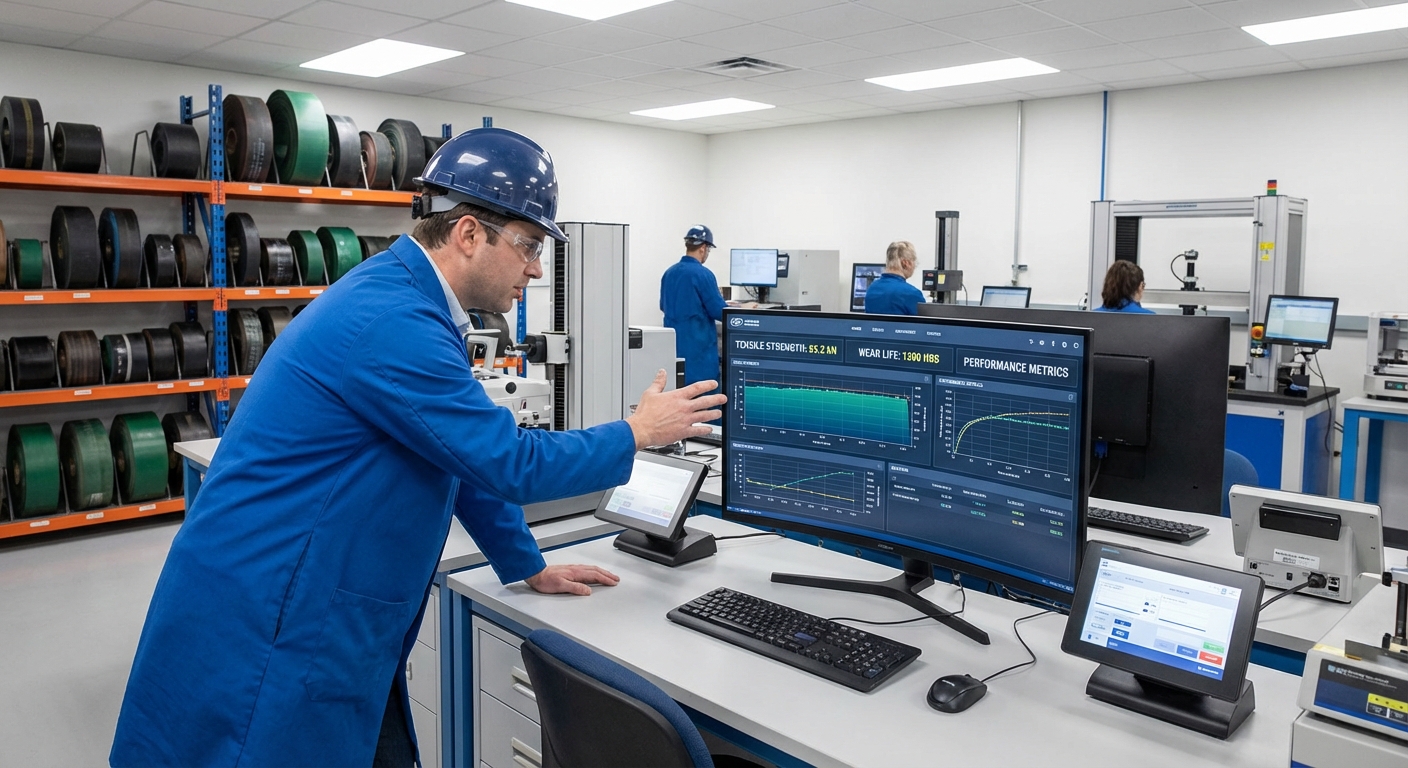
Technical inquiries regarding the manufacturing process often focus on customization options and performance metrics for extreme industrial environments. You can work directly with a factory to tailor the specifications of your belt for maximum durability.
- Can I customize the cover thickness for abrasive materials?Yes. Manufacturers can adjust the calendering process to increase the top cover thickness, providing extra protection against sharp rocks or ores.
- What’s the best belt for long-distance mining?Steel cord belts. They are the superior choice for distances exceeding 500 meters because they do not suffer from the elongation issues common in textile belts.
- How does vulcanization prevent belt delamination?By chemical bonding. Creating a permanent molecular bond between the rubber and the carcass ensures the layers act as a single, cohesive unit under stress.
- Why should I choose aramid over steel cord?Energy efficiency. Aramid provides similar strength to steel at a much lighter weight, which can lead to energy savings of 15-25% during operation.
- Where can I find high-capacity industrial belts?Direct factory manufacturers. Sourcing directly provides the most reliable way to obtain belts tailored to specific industrial safety and performance standards.
Conclusion: Securing Your Industrial Workflow
Implementing a high-performance conveyor system is about more than just moving material; it is about optimizing your entire financial and environmental footprint. By choosing the correct specifications through an expert-led approach, you can eliminate emissions, reduce maintenance costs, and ensure a continuous flow of goods. For specialized advice on your next project, feel free to contact us today to discuss your specific requirements.